
Adult & Pediatric Assessment with the Littmann Classic III
The Littmann Classic III stands as one of the most versatile diagnostic stethoscopes available, trusted by healthcare professionals worldwide for its ability to assess patients across the entire age spectrum. From examining newborns in the nursery to assessing elderly patients with complex cardiac conditions, the Classic III's dual-sided chestpiece design provides the acoustic versatility needed for comprehensive patient care.
Understanding how to properly use both sides of the Classic III chestpiece maximizes its diagnostic potential and ensures you're getting optimal acoustic performance for each patient encounter. This guide provides practical instruction on mastering the Classic III for adult and pediatric assessment, helping you leverage this popular stethoscope's full capabilities.
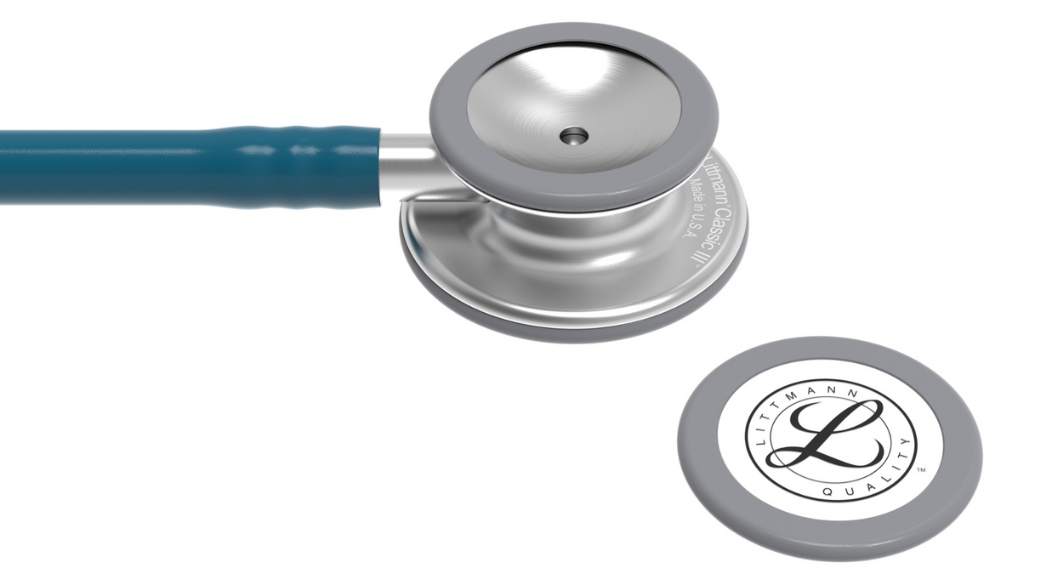
Dual-Sided Chestpiece Explained
The Classic III features a dual-sided chestpiece that provides two distinct acoustic capabilities in a single instrument. Understanding the design and function of each side is fundamental to using this stethoscope effectively across different patient populations and clinical scenarios.
The Adult Side (Larger Diaphragm)
The larger side of the Classic III chestpiece features a tunable diaphragm approximately 1.7 inches in diameter. This side is optimized for adult patient assessment and general clinical use.
Tunable Diaphragm Technology
The adult side incorporates Littmann's innovative tunable diaphragm technology. This single-piece diaphragm responds to the pressure you apply during examination:
- Firm Pressure (Diaphragm Mode): Delivers excellent high-frequency sound transmission, ideal for breath sounds, bowel sounds, and most heart sounds
- Light Pressure (Bell Mode): Enhances low-frequency sounds, useful for detecting heart murmurs, bruits, and certain abnormal heart sounds
This pressure-responsive design eliminates the need to remove the stethoscope and flip the chestpiece when you want to alternate between diaphragm and bell functions during examination.
The Pediatric Side (Smaller Diaphragm)
The smaller side features a pediatric-sized diaphragm approximately 1.3 inches in diameter, specifically designed for examining infants, children, and accessing hard-to-reach areas on adult patients.
The pediatric side also incorporates tunable diaphragm technology, functioning identically to the adult side but in a smaller form factor. The reduced size provides better acoustic contact on smaller body surfaces and allows precise localization of sounds in pediatric patients.
Open Bell Conversion
A unique feature of the Classic III pediatric side is its ability to convert to a traditional open bell. By removing the small diaphragm (the non-chill rim pops off easily), you expose the metal bell underneath. This traditional open bell configuration is preferred by some clinicians for specific low-frequency auscultation tasks, particularly in pediatric cardiology.
Note: Most clinicians find the tunable diaphragm in bell mode (light pressure) sufficient for their needs and keep the small diaphragm in place. The open bell conversion is an option, not a necessity.

When to Use the Adult Diaphragm
The larger adult side of the Classic III serves as the primary examination tool for most clinical encounters. Understanding when and how to use this side optimally ensures you're capturing the acoustic information you need for accurate assessment.
Optimal Applications for the Adult Side
| Clinical Application | Pressure Technique | What You're Listening For |
|---|---|---|
| Breath Sounds | Firm pressure (diaphragm mode) | Vesicular breath sounds, wheezes, rhonchi, crackles, diminished sounds |
| Normal Heart Sounds (S1, S2) | Firm pressure (diaphragm mode) | S1 and S2 heart sounds, splitting, intensity variations |
| High-Pitched Murmurs | Firm pressure (diaphragm mode) | Aortic regurgitation, mitral regurgitation, high-frequency components |
| Low-Pitched Heart Sounds | Light pressure (bell mode) | S3, S4, mitral stenosis, low-frequency murmurs |
| Bowel Sounds | Firm pressure (diaphragm mode) | Presence, frequency, and character of bowel sounds |
| Carotid/Peripheral Bruits | Light to moderate pressure | Turbulent blood flow in arteries |
| Blood Pressure | Firm or light pressure | Korotkoff sounds (some prefer bell mode for BP) |
Proper Technique for Adult Assessment
Position Correctly
Place the larger diaphragm firmly against the patient's skin, ensuring full contact around the entire rim for optimal acoustic seal
Adjust Pressure
Apply firm pressure for most assessments (diaphragm mode). Reduce to light pressure when you need to hear low-frequency sounds (bell mode)
Eliminate Movement
Hold the chestpiece steady without sliding it across skin. Movement creates artifact noise that obscures sounds you're trying to hear
Control Environment
Minimize ambient noise, ensure patient isn't talking or moving excessively, and avoid contact between tubing and patient or surfaces
💡 Pro Tip: Mastering Pressure Modulation
The difference between firm and light pressure is subtle but important. Firm pressure means pressing hard enough to slightly indent the skin. Light pressure means just enough contact to maintain seal without significant indentation. Practice alternating between pressures during cardiac exams to appreciate the difference in sound quality and frequency response.
Pediatric Side & Open Bell Conversion
The smaller pediatric side of the Classic III is specifically designed for examining infants and children, though it has valuable applications in adult patients as well. Understanding when and how to use this side enhances your assessment capabilities across all patient populations.
When to Use the Pediatric Side
Neonates & Infants (0-12 months)
Primary side for all assessments. The smaller diameter provides better acoustic contact on tiny chests and allows precise sound localization.
Toddlers & Preschoolers (1-5 years)
Excellent for cardiac and pulmonary assessment. Size allows examination of specific lung fields and cardiac areas without overlap.
School-Age Children (6-12 years)
Use for focused cardiac examination. May use adult side for general lung assessment as chest size increases.
Adolescents (13+ years)
Transition to adult side for most assessments. Pediatric side useful for precise cardiac auscultation in smaller teens.
Pediatric Side Applications in Adult Patients
The pediatric side isn't just for children—it has valuable applications in adult assessment:
Adult Use Cases for Pediatric Side
- Precise Cardiac Auscultation: The smaller diameter allows precise positioning over specific cardiac auscultation areas (aortic, pulmonic, tricuspid, mitral) without picking up sounds from adjacent areas
- Supraclavicular Assessment: Fits easily in the supraclavicular fossa for lung apex examination
- Between Ribs: Navigates intercostal spaces more easily than the larger diaphragm
- Cachectic or Thin Patients: Better acoustic contact on very thin patients with prominent bony landmarks
- Pediatric-Sized Adult Patients: Petite adults benefit from pediatric-side assessment
Converting to Open Bell
The Classic III's pediatric side can be converted from a tunable diaphragm to a traditional open bell by removing the non-chill rim and small diaphragm. Here's when and how to use this feature:
Remove Diaphragm
Gently pull the non-chill rim and small diaphragm assembly away from the chestpiece. It snaps off easily without tools.
Expose Bell
This reveals the traditional open bell underneath—a small metal cup designed for low-frequency sound transmission.
Use with Light Touch
Traditional bells require very light skin contact. Pressing too firmly stretches skin over the bell, converting it back to diaphragm-like function.
Replace After Use
Snap the diaphragm assembly back onto the chestpiece when finished. Most clinicians keep it installed permanently.
⚠️ Important Consideration
While the open bell conversion is available, most clinicians find the tunable diaphragm in bell mode (light pressure) provides equivalent or superior low-frequency sound transmission without the hassle of removing and replacing the diaphragm. The conversion feature is optional, not necessary for effective low-frequency auscultation. Many Classic III users never remove the small diaphragm throughout the stethoscope's entire service life.
Preventing Debris with the Small Diaphragm
One often-overlooked benefit of keeping the small diaphragm installed on the pediatric side is debris protection. The diaphragm assembly serves as a protective barrier that prevents foreign material from entering the acoustic chamber of the chestpiece.
Why Debris Protection Matters
When you convert to the open bell configuration by removing the small diaphragm, you expose the interior acoustic chamber. This opening can accumulate debris over time, potentially affecting acoustic performance and creating hygiene concerns.
Common Debris Sources
- Pocket Lint: Stethoscopes carried in pockets accumulate lint and fabric fibers that can enter the open bell
- Skin Cells and Oil: Direct skin contact introduces microscopic debris into the acoustic chamber
- Environmental Dust: Clinical environments expose stethoscopes to airborne particles that settle in open cavities
- Cleaning Solution Residue: Disinfectants can pool in the open bell if not thoroughly dried
Acoustic and Hygienic Benefits of Keeping Diaphragm Installed
Maintaining the small diaphragm on the pediatric side provides several advantages beyond just convenience:
Protection Benefits
- Sealed Acoustic Chamber: Prevents debris accumulation that could dampen sound transmission or cause rattling
- Easier Cleaning: The smooth diaphragm surface is much easier to clean and disinfect than the recessed open bell
- No Hidden Contamination: Eliminates hard-to-clean crevices where microorganisms might harbor
- Consistent Performance: Maintains acoustic integrity without periodic cleaning of the bell cavity
- Ready for Any Patient: Both sides are immediately ready for use without configuration changes
If You Choose to Use the Open Bell
Some clinicians prefer the traditional open bell for specific applications, particularly in pediatric cardiology. If you choose to remove the diaphragm for open bell use, follow these maintenance practices:
Regular Inspection
Check the bell cavity weekly for debris accumulation, especially if carrying the stethoscope in pockets
Periodic Cleaning
Clean the bell cavity monthly with a cotton swab and alcohol, ensuring thorough drying before use
Protective Storage
Store in a stethoscope case rather than loose in pockets to minimize debris exposure
Reinstall When Not Needed
Snap the diaphragm back on when not actively using bell mode to protect the chamber between uses
💡 Best Practice Recommendation
For most clinical applications, keeping the small diaphragm installed and using the tunable diaphragm technology (alternating between firm and light pressure) provides all the acoustic versatility you need while maintaining optimal hygiene and acoustic integrity. Reserve open bell conversion for specialized situations where you specifically prefer traditional bell performance.
One Stethoscope for All Patient Ages
The Classic III's greatest strength is its versatility across the entire patient age spectrum. Understanding how to leverage both sides of the chestpiece allows you to confidently assess any patient with a single, reliable instrument.
Clinical Versatility in Practice
Consider the diverse patient encounters you might face during a typical clinical day, and how the Classic III adapts to each scenario:
Morning: Primary Care Clinic
8:00 AM - Well-Child Visit (2-year-old): Use the pediatric side for complete cardiac and pulmonary assessment. The smaller diaphragm provides excellent contact on the toddler's small chest, allowing you to confidently assess all lung fields and cardiac areas.
9:00 AM - Adult Hypertension Follow-up (55-year-old): Switch to the adult side for blood pressure measurement and cardiac assessment. Use firm pressure to clearly hear S1 and S2, then switch to light pressure to listen for an S4 (atrial gallop common in hypertensive heart disease).
10:00 AM - Adolescent Sports Physical (16-year-old): Start with adult side for general assessment, switch to pediatric side for precise cardiac examination to screen for conditions that might contraindicate athletic participation.
Afternoon: Hospital Rounds
1:00 PM - Neonatal Assessment (3-day-old): Pediatric side is essential for examining this tiny patient. Detect heart murmur that requires cardiology consultation for possible patent ductus arteriosus.
2:30 PM - Post-Surgical Patient (68-year-old): Adult side for comprehensive pulmonary assessment post-operatively, listening for crackles or diminished breath sounds that might indicate atelectasis or early pneumonia.
4:00 PM - Pediatric Asthma (8-year-old): Pediatric side for detailed lung examination, clearly identifying wheezing and its response to bronchodilator treatment.
Side Selection Quick Reference
| Patient Population | Primary Side | Key Considerations |
|---|---|---|
| Neonates (0-1 month) | Pediatric | Small diaphragm essential for tiny chest; allows precise localization |
| Infants (1-12 months) | Pediatric | Optimal size for infant assessment; both cardiac and pulmonary |
| Toddlers (1-3 years) | Pediatric | Pediatric side for most assessments; adult side may be too large |
| Preschool (3-5 years) | Pediatric | Consider adult side for general lung assessment in larger children |
| School Age (6-12 years) | Both sides | Adult for general assessment, pediatric for focused cardiac exam |
| Adolescents (13-17 years) | Adult | Primarily adult side; pediatric for precise cardiac auscultation |
| Adults (18-64 years) | Adult | Adult side for almost all assessments; pediatric for specific sites |
| Elderly (65+ years) | Adult | Adult side standard; pediatric useful in cachectic or very thin patients |
Why One Versatile Stethoscope Matters
Having a single stethoscope that handles all patient ages provides practical and clinical benefits that enhance your practice:
Practical Advantages
- Simplified Equipment: No need to carry multiple stethoscopes or decide which one to bring to each patient encounter
- Cost Effectiveness: One quality instrument instead of separate adult and pediatric stethoscopes
- Consistency: Familiarity with a single instrument improves your auscultation skills and diagnostic confidence
- Always Prepared: Ready for any patient regardless of age or size without equipment changes
- Professional Appearance: A quality stethoscope like the Classic III presents a professional image with all patient populations
Maximizing the Classic III's Versatility
To get the most from your Classic III across all patient ages, develop these habits and techniques:
Master Both Sides
Practice using both adult and pediatric sides regularly, even when one might seem sufficient, to maintain proficiency with both
Optimize Eartip Fit
Ensure proper eartip size and headset tension for excellent acoustic seal across all examinations
Practice Pressure Control
Develop consistent technique for alternating between firm and light pressure to leverage tunable diaphragm effectively
Maintain Properly
Keep both sides clean, diaphragms intact, and all components in good condition for consistent performance
💡 Clinical Pearl
When transitioning between adult and pediatric patients, take a moment to verify you're using the appropriate side before beginning your examination. This simple check prevents awkward mid-exam adjustments and demonstrates attention to detail that patients and families appreciate. Make switching sides a natural part of your examination routine.
Frequently Asked Questions
Chestpiece & Side Selection
Tunable Diaphragm & Open Bell
Technique & Maintenance
Experience the Classic III's Versatility at SurgoMed
The Littmann Classic III's dual-sided design makes it the ideal choice for healthcare professionals who assess patients across the age spectrum. From neonates to elderly adults, one stethoscope delivers reliable performance for every patient encounter.
Browse our complete selection of Littmann Classic III stethoscopes in all available colors at SurgoMed. Our expert staff can help you select the perfect stethoscope and accessories for your practice.
