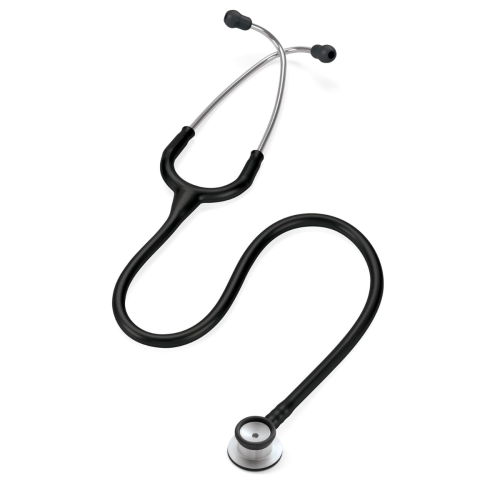
- Home
- Littmann Classic II Pediatric & Infant Stethoscopes Complete Guide
Littmann Classic II Pediatric & Infant Stethoscopes:
Features, Performance & Clinical Applications
Complete clinical guide for nurses, pediatricians, NPs, medical students, and NICU clinicians

Quick Answer
Which Littmann Do You Need for Pediatric Patients?
Classic II Pediatric
Neonates through early adolescence. Tunable floating diaphragm, open bell, dual-sided chestpiece.
Classic II Infant
Premature and full-term newborns. Optimized for NICU and nursery settings. Tunable floating diaphragm, open bell.
Available at SurgoMed with fast US shipping.
Shop Littmann at SurgoMed →

What Are the Littmann Classic II Pediatric & Infant Stethoscopes?
The 3M Littmann Classic II line has long been a benchmark for reliable, professional acoustic performance across clinical settings. Within that family, 3M developed two specialist variants targeting young patients:
Infants through Early Adolescence
Classic II Pediatric
Designed for infants, toddlers, and children through early adolescence. The go-to option for general pediatric practice, outpatient clinics, and pediatric rotations. Features the Classic II dual-sided chestpiece tuned for the pediatric patient population.
Neonates & Premature Infants
Classic II Infant
Optimized for neonates, premature infants, and NICU/nursery environments where chestpiece size is a critical clinical variable and acoustic precision is a patient safety issue. Smaller chestpiece and refined acoustic tuning for the most vulnerable patients.
Shared Classic II Platform Features
Both models share the Classic II platform but differ in chestpiece size, acoustic tuning, and intended patient population — distinctions that matter clinically when selecting between the two.
Did You Know?
A neonate's resting heart rate of 120–160 bpm compresses the cardiac cycle significantly compared to an adult's. Sounds overlap more, timing distinctions are harder to catch, and acoustic sensitivity matters far more than in adult auscultation. Standard adult stethoscopes are not optimized for this — the Littmann Classic II Infant is.
Why Pediatric & Infant Auscultation Requires Specialized Design
Adult stethoscopes are calibrated for larger thoracic structures, greater body mass, and the lower-frequency cardiac and pulmonary sounds those structures produce. Pediatric and neonatal patients present a fundamentally different acoustic environment that standard instruments are not built to handle reliably.
Smaller chest walls transmit sound differently
Less soft tissue damping means signal quality is affected by even minor chestpiece misalignment. Placement precision matters far more than in adult auscultation.
Higher heart rates compress the cardiac cycle
A neonate's resting HR of 120–160 bpm makes precise differentiation of S1/S2 sounds, murmurs, and gallops significantly harder with a standard instrument not tuned for this range.
Higher-pitched murmurs are more prevalent
Newborns and infants produce murmurs in the mid-to-high frequency range that adult stethoscopes are specifically designed to de-emphasize, making them a poor diagnostic tool in this population.
Oversized chestpieces introduce acoustic bleed
An adult-sized chestpiece placed on a small infant chest extends beyond the target auscultation zone, capturing ambient environmental noise and degrading signal clarity, a problem uniquely amplified in NICU environments.
Why a Purpose-Built Design Matters
A pediatric Littmann stethoscope addresses all four of these factors through purposeful size reduction, acoustic retuning, and patient-focused ergonomic design. These are not compromises, they are engineering choices that make the instrument more clinically accurate for its intended patient population. None of these outcomes are achievable by simply using a smaller adult stethoscope.
Dual-Sided Chestpiece Explained
Both the Classic II Pediatric and Classic II Infant feature a dual-sided chestpiece with a tunable diaphragm on one face and an open bell on the other. To switch between them, the clinician rotates the chestpiece stem — allowing seamless switching between acoustic modes without removing the instrument from the patient.
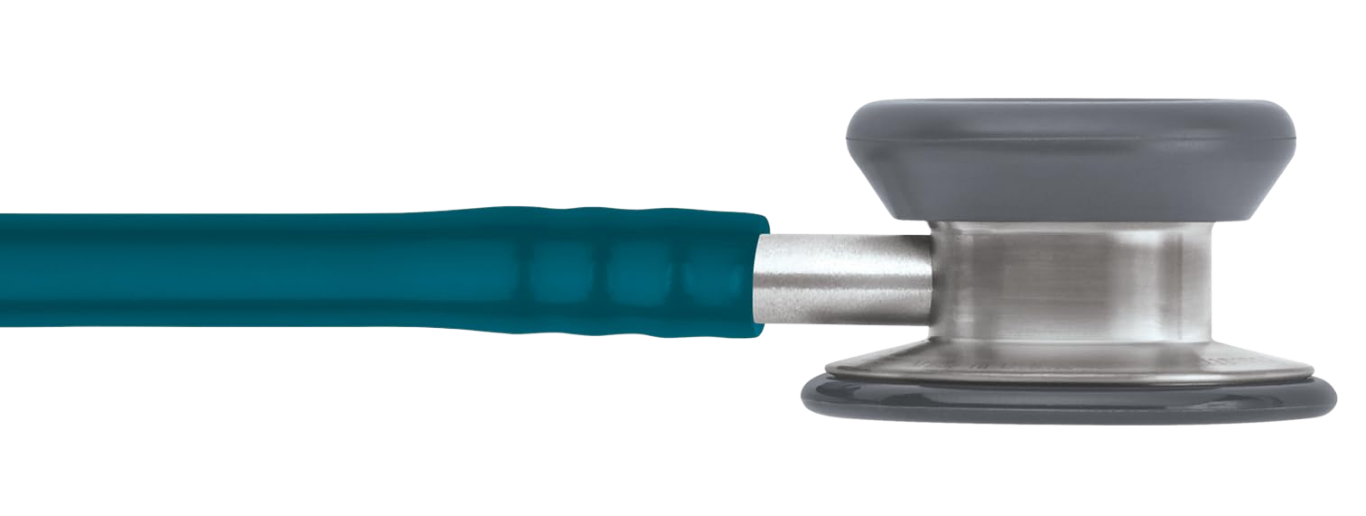
High-Frequency Sounds
Tunable Diaphragm Side
- Breath sounds & lung fields
- Normal S1/S2 heart sounds
- High-pitched murmurs
- Bowel sounds
Vary pressure to tune: light pressure for lower frequencies, firm pressure for higher frequencies — no mode switch needed.
Low-Frequency Sounds
Open Bell Side
- S3 & S4 gallops
- Low-pitched diastolic murmurs
- Mitral stenosis sounds
- Venous hums
Apply light skin contact only — pressing firmly converts the bell to a diaphragm, losing low-frequency fidelity.

How the Rotation Mechanism Works
Diaphragm Active
Aligned with tubing — bell port sealed & acoustically inactive
Rotate Stem 180°
No repositioning on patient — no disturbance to exam
Bell Active
Diaphragm port now sealed — low-frequency mode engaged
Critical in NICU Settings
The rotation mechanism is particularly valuable where minimizing patient stimulation is a formal clinical priority. For fragile premature infants, every unnecessary touch carries risk — the ability to switch acoustic modes without repositioning the chestpiece is not a convenience feature. It is a patient safety consideration.
Floating Diaphragm & Open Bell Technology
Primary Face
Tunable (Floating) Diaphragm
By varying the pressure applied during auscultation, the clinician shifts the acoustic response of the instrument — giving two distinct acoustic modes within a single diaphragm.
🤲 Light Pressure → Bell Mode
Lower-frequency sounds. Best for S3/S4 gallops, low-pitched murmurs, and subtle cardiac abnormalities.
👋 Firm Pressure → Diaphragm Mode
Higher-frequency sounds. Ideal for breath sounds, normal S1/S2 tones, bowel sounds, and high-pitched pediatric murmurs.
This pressure-sensitive tuning reduces the need to constantly switch to the bell, streamlining the examination — particularly valuable during fast-paced pediatric ED assessments or busy NICU rounds.
Reverse Face
Open Bell
Captures low-frequency sounds using the patient's own skin as a resonating membrane when lightly applied. The most effective method for detecting soft, low-pitched cardiac murmurs in neonates.
Clinical Tip
Skilled clinicians often use both sides during a single examination. The rotation mechanism makes switching fast and non-disruptive to the patient.
Clinical Note: Pressure Matters
With a tunable diaphragm, applying too much pressure when trying to hear low-frequency sounds will shift the acoustic response toward higher frequencies — potentially masking exactly what you're listening for. Practice consistent, deliberate pressure variation to get the most out of the floating diaphragm technology.
Acoustic Sensitivity for Small Bodies
3M Littmann engineers the full acoustic pathway, chestpiece bore diameter, tube wall thickness, tubing material composition, and earpiece geometry — to maximize sensitivity in the frequency ranges most clinically relevant to small patients.
Smaller chestpiece diameter — reduced acoustic crosstalk
Limits signal capture to the precise target auscultation zone. On a premature infant whose entire anterior chest may be smaller than an adult-sized bell, this is not a comfort feature, it is a diagnostic necessity.
Thick-walled tubing — improved signal-to-noise ratio
Reduces ambient noise transmission through the tube walls, critical in noisy clinical environments like busy NICU bays, pediatric emergency departments, and open-plan nurseries.
Anatomically oriented earpieces — improved acoustic seal
Angled to match the natural direction of the ear canal, reducing the pressure required to block environmental noise, important during long clinical shifts where fatigue affects examination technique.
Patient Safety Consideration
NICU Acoustic Sensitivity
For NICU stethoscope use, acoustic sensitivity is not a specification on a product sheet, it is a patient safety variable. The ability to detect the following depends entirely on the signal fidelity of the instrument in the clinician's hands:
Patent Ductus Arteriosus (PDA)
A subtle murmur in a premature infant that may be missed entirely with an inadequate instrument.
Early Respiratory Compromise
Subtle changes in breath quality, air entry asymmetry, or early wheeze in a 28-week infant.
Soft Cardiac Anomalies
Low-amplitude structural findings that require high acoustic fidelity to distinguish from normal neonatal heart sounds.
Comfort & Patient-Friendly Features
Beyond acoustic engineering, both models incorporate design features that reduce patient stress, improve the examination experience, and support clinicians through long shifts.
Patient Comfort
Non-Chill Rim
Minimizes the cold-contact shock that causes infants and young children to startle, cry, and tense their chest muscles — all of which degrade auscultation quality and prolong the examination.
A calm, still patient produces a significantly cleaner acoustic signal than a distressed one.
Clinician Comfort
Lightweight Construction
The smaller chestpiece means reduced overall instrument weight, less neck fatigue during long clinical shifts, and gentler contact pressure on a fragile neonatal chest wall where excessive force is contraindicated.
Reduced weight matters across a full NICU or pediatric ward shift that may span 10–12 hours.
Acoustic Performance
Soft-Sealing Eartips
Provided in multiple sizes, formed to create an acoustic seal that blocks ambient noise without causing ear canal discomfort during extended use.
Key fact: A proper eartip seal is the single most important factor in acoustic performance after correct auscultation technique.
Clinical & Patient Benefits
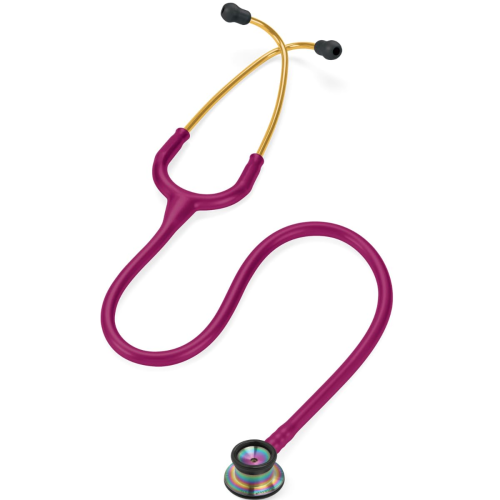
Multiple Colour Options
Available in varied tubing and chestpiece colour combinations — serving two distinct clinical purposes:
Pediatric wards: Colourful equipment reduces patient anxiety — children respond more calmly to visually approachable instruments.
NICU shared environments: Colour differentiation helps clinicians identify their personal instruments quickly in busy shared clinical spaces.
Shop Littmann Classic II Pediatric & Infant Stethoscopes On SurgoMed
Pediatric vs Infant Models: Key Differences
The Classic II Pediatric vs Infant decision comes down to your primary patient population and the body sizes you routinely examine.
| Feature | Classic II Pediatric | Classic II Infant |
|---|---|---|
| Primary Patient Range | Neonates through early adolescents (~0–12 yrs typical use) |
Premature neonates, full-term newborns, young infants |
| Chestpiece Diameter | Larger pediatric size (~38 mm) | Smaller neonatal size (~30 mm) |
| Acoustic Tuning | Balanced mid-range pediatric frequencies | Optimized for higher-frequency neonatal sounds |
| Ideal NICU Use | Older NICU graduates, term infants | Premature infants, micropreemies, active NICU bedside |
| Bell Size | Larger open bell | Smaller open bell — targeted low-frequency detection |
| Typical Clinical Setting | Pediatric ward, ED, outpatient clinic, pediatric rotation | NICU, neonatal ward, nursery, neonatal transport |
| Dual-Sided Chestpiece | ✓ | ✓ |
| Tunable Diaphragm | ✓ | ✓ |
| Latex-Free | ✓ | ✓ |
| Warranty | 5 years | 5 years |
Clinical Rule of Thumb
👶 NICU & Nursery → Classic II Infant
Primarily premature and full-term newborns. The smaller chestpiece provides better acoustic isolation and signal clarity on very small bodies.
🩺 General Pediatrics → Classic II Pediatric
Toddlers, school-age children, and occasional newborns. Versatile across the full age range without sacrificing acoustic performance.
When in doubt: NICU & nursery → Classic II Infant · Everything else pediatric → Classic II Pediatric
Specifications & Performance Overview
| Specification | Classic II Pediatric | Classic II Infant |
|---|---|---|
| Chestpiece Material | Stainless steel | Stainless steel |
| Chestpiece Sides | Dual (diaphragm + bell) | Dual (diaphragm + bell) |
| Diaphragm Type | Tunable (floating) | Tunable (floating) |
| Tube Length | ~28 in / 71 cm | ~28 in / 71 cm |
| Tube Configuration | Single-lumen, dual-tube | Single-lumen, dual-tube |
| Earpiece Type | Soft-sealing, anatomically oriented | Soft-sealing, anatomically oriented |
| Weight | ~118 g | ~113 g |
| Latex Content | ✓ Latex-free | ✓ Latex-free |
| Warranty | 5 years | 5 years |
| Country of Manufacture | USA | USA |
Specifications may vary slightly by colour/edition. Always confirm with 3M Littmann's current product datasheet.
At a Glance: What Both Models Share
Frequently Asked Questions
What is the difference between the Littmann Classic II Pediatric and the Littmann Classic II Infant? +
Classic II Pediatric
Larger chestpiece (~38 mm) · Infancy through early adolescence · General pediatric use
Classic II Infant
Smaller chestpiece (~30 mm) · Premature & newborn infants · NICU & nursery use
Both use the same dual-sided tunable chestpiece design, are fully latex-free, and carry a 5-year warranty.
Is the Littmann Classic II Infant suitable as a NICU stethoscope? +
Can I use the Classic II Pediatric as a neonatal stethoscope? +
Full-term newborns: The Classic II Pediatric performs well and is an appropriate choice.
Premature or very low birth weight infants: The Classic II Infant's smaller chestpiece provides meaningfully better acoustic isolation.
Active NICU bedside with micropreemies: The Classic II Infant is the clinically preferred neonatal stethoscope.
What is the best stethoscope for a pediatric nursing or medical rotation? +
What is the best stethoscope for infants in a nursery or NICU? +
What does "pediatric chestpiece size" mean clinically? +
Chestpiece size refers to the diameter of the acoustic aperture — the diaphragm or bell face — that contacts the patient's chest.
✓ Correctly Sized Chestpiece
Captures sound only from the area it directly covers — clean signal, accurate auscultation.
✗ Oversized Chestpiece
Extends beyond the target zone — captures ambient noise from surrounding tissue, degrading signal quality and diagnostic accuracy.
What is a pediatric rotation stethoscope? +
Are these stethoscopes latex-free? +
How long is the warranty? +
Can the Classic II Pediatric be used on adult patients? +
For clinicians working regularly across both adult and pediatric populations, the Littmann Classic III or Cardiology IV offers greater versatility.
Where can I buy the Littmann Classic II Pediatric or Infant in the US? +
Both models are available at SurgoMed with fast US shipping. SurgoMed carries the full 3M Littmann stethoscope range across all color options and configurations.
Shop Littmann Classic II Pediatric & Infant Stethoscopes SurgoMed →Available Now
Shop Littmann Classic II Pediatric & Infant at SurgoMed
Professional-grade pediatric auscultation. Trusted by clinicians. Built by 3M Littmann.
🩺 Classic II Pediatric
Neonates through early adolescence
👶 Classic II Infant
Premature & full-term newborns · NICU
Sources & Further Reading
The following sources inform the clinical and technical claims in this guide. SurgoMed recommends consulting a qualified clinical specialist for facility-specific equipment protocols.
littmann.com
aap.org
Available at littmann.com or by contacting SurgoMed directly.