

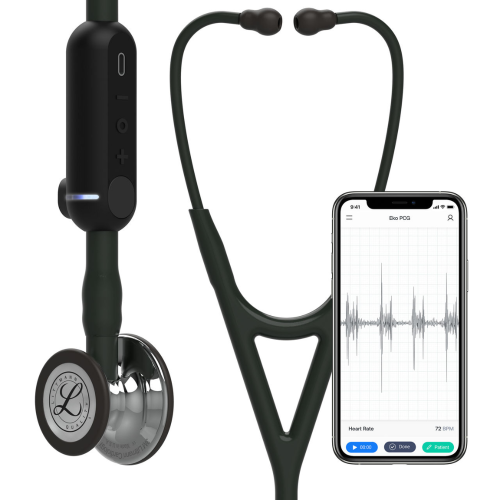
Amplification is one of the most transformative features of the Littmann CORE Digital Stethoscope, offering up 40x louder sound compared to traditional acoustic listening. For clinicians working in noisy environments, or for those assessing complex or subtle cases, this level of enhancement can dramatically improve what you’re able to hear at the bedside. As a modern digital stethoscope (and one of the most advanced electronic stethoscope models available), the CORE delivers amplification that far surpasses earlier generations of electronic auscultation devices.
While digital amplification is not new, the Littmann CORE takes it to a higher level of clarity, stability, and diagnostic usefulness, thanks to the combination of Littmann’s proven acoustics and Eko’s advanced digital processing. This guide breaks down exactly how amplification works, why it matters, and how it can elevate clinical assessments for nurses, physicians, paramedics, respiratory therapists, and students.
Understanding Amplification in the Littmann CORE
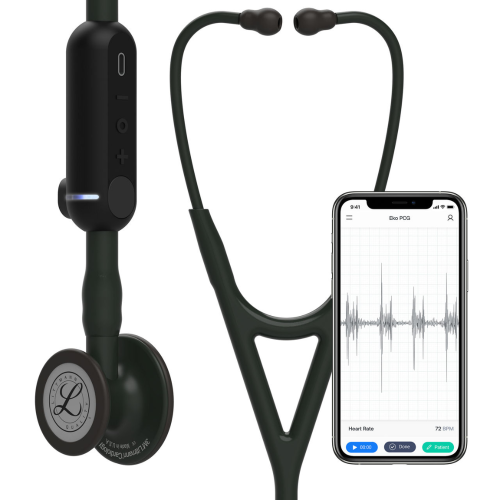
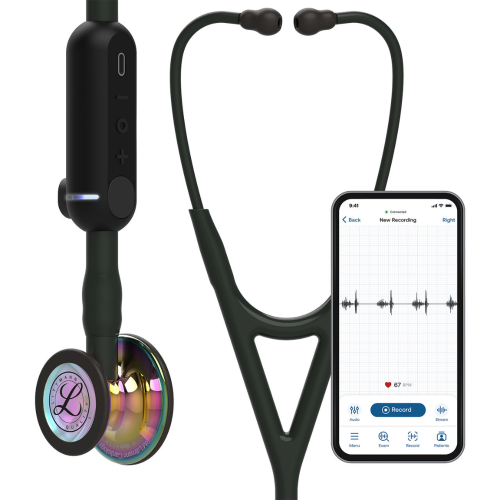
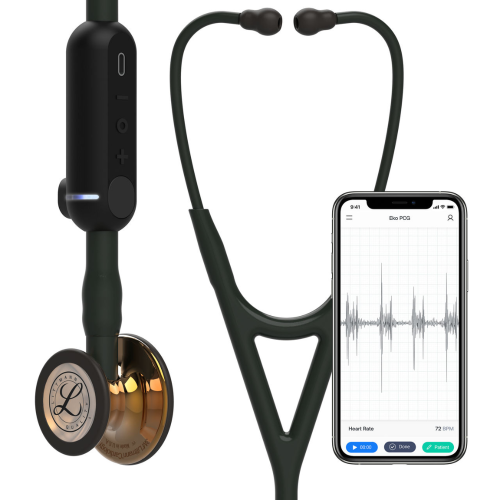
The CORE uses a high-performance digital audio system that captures sound at the chestpiece and processes it through a digital amplifier before delivering it to your ears. This type of processing is what distinguishes a true electronic stethoscope from an acoustic model, allowing the Littmann CORE to enhance and refine diagnostic sounds with digital precision.
This process does more than simply “make sounds louder.” It improves the signal-to-noise ratio, meaning the frequencies you need to hear , heart tones, faint crackles, subtle wheezes, are emphasized while other background distractions are minimized.
What makes the Littmann CORE’s amplification unique:
- Tuned to preserve the natural quality of heart and lung sounds
- Boosts soft or distant sounds without distortion
- Works together with active noise cancellation
- Maintains clarity at all amplification levels
- Supports clinicians with mild hearing limitations
These capabilities set the CORE apart from older electronic stethoscope designs, which often struggled with distortion at higher volumes. The Littmann CORE Stethoscope avoids this by layering Littmann acoustic engineering with Eko’s digital algorithms, resulting in a cleaner, more natural sound profile. 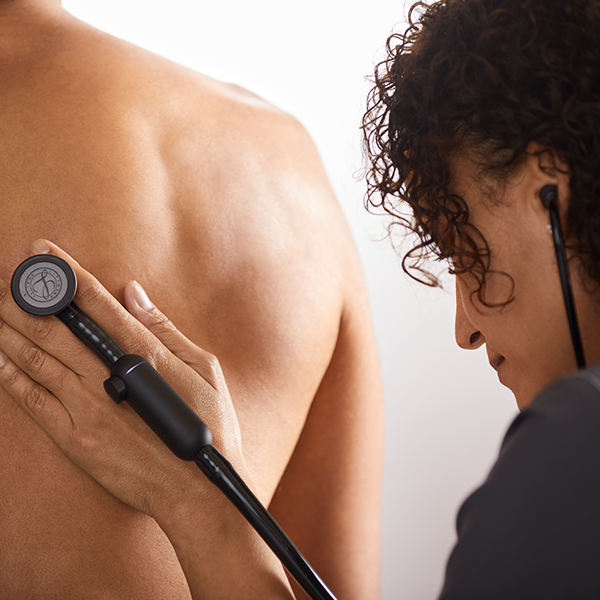
What 40x Amplification Actually Sounds Like
Clinicians switching to the CORE often describe amplified sounds as:
- Richer
- More pronounced
- More precise in timing and cadence
- Less muffled
- Easier to differentiate
Instead of struggling to distinguish between a Grade I murmur or soft basal crackles, these sounds become more obvious and easier to assess, even in busy environments.
You’re not just hearing “more volume”; you’re hearing more detail. This is one of the clearest advantages a digital stethoscope has over traditional acoustic models—greater detail, not just louder sound.
Why Amplification Matters for Heart Sounds
Cardiac auscultation often requires precise listening to subtle changes. Amplification helps clinicians identify abnormalities that can easily be overlooked with a traditional stethoscope.
Amplification supports detection of:
- Faint Grade I-II murmurs
- Early systolic murmurs
- Quiet diastolic murmurs
- S3 and S4 gallops
- Opening snaps and clicks
- Pericardial rubs
- Abnormal splitting of S2
- Timing variations in valve sounds
These enhancements are especially valuable when using a digital stethoscope, which can bring out faint cardiac sounds that are often missed in busy or noisy clinical settings.
Why Amplification Matters for Lung Sounds
Lung sounds are often subtle and broadband in nature, making them difficult to hear through clothing, thick chest walls, or background noise. The CORE’s amplification elevates these frequencies for clearer differentiation.
Amplification helps highlight:
- Soft crackles in early pneumonia or CHF
- Faint wheezes in reactive airway disease
- Inspiratory stridor
- Diminished breath sounds
- Fine vs. coarse crackles
- Subtle rhonchi
- Small changes during deep breathing
Respiratory therapists and acute care clinicians often report that amplification makes early detection faster and more reliable. For this reason, many respiratory clinicians prefer the clarity of a digital stethoscope when evaluating early or subtle pulmonary changes.
Amplification for Patients With Larger Body Habitus
Auscultation can be challenging in patients with:
- Higher adipose tissue
- Thick chest walls
- Heavy musculature
- Edema
- Obesity
- Barrel chests
The Littmann CORE’s digital amplification helps compensate for sound dampening by:
- Boosting quiet or distant sounds
- Enhancing deeper frequencies
- Reducing impact of tissue interference
- Improving clarity through layers of adipose tissue
This is an area where an advanced electronic stethoscope like the Littmann CORE provides a strong clinical advantage compared to standard acoustic models.
Amplification as Support for Clinicians With Mild Hearing Limitations
Mild hearing challenges are common among healthcare professionals due to years of exposure to alarms, shift work, and noisy environments. The Littmann CORE’s amplification can act as a useful assistive tool without requiring separate hearing equipment.
Benefits for clinicians with hearing needs:
- Clearer auscultation at comfortable volume levels
- Enhanced low-frequency sounds
- Better differentiation of subtle abnormalities
- Less listening fatigue
- Ability to customize amplification instantly
This makes the CORE a highly supportive electronic stethoscope option for clinicians who need clearer, more accessible auscultation without external hearing devices.
Amplification + Noise Cancellation: Why the CORE Is So Effective
One of the CORE’s strongest advantages is the way amplification and active noise cancellation (ANC) work together. Amplification makes important sounds louder, while ANC makes background noise quieter. This balanced sound environment is one of the key advantages of modern digital stethoscope technology.
ANC reduces:
- Conversations
- Monitor alarms
- Hallway noise
- Equipment hum
- Footsteps and movement
- HVAC systems
This combination is especially beneficial in:
- Emergency departments
- ICUs and critical care
- Paramedic/EMS environments
- Pediatric wards
- Long-term care homes
- Busy inpatient floors
Clinical Situations Where Amplification Makes a Big Difference
Emergency Medicine
Hear critical sounds quickly despite noise and movement.
Cardiology
Identify faint murmurs, gallops, and timing variations more easily.
Respiratory Therapy
Better detect crackles, diminished air entry, early fluid accumulation, and subtle wheezing.
Pediatrics
Children often have quieter, softer auscultation findings.
Geriatrics
Older adults commonly present with quieter heart and lung sounds.
Primary Care
Amplification supports early detection and faster intervention.
Medical Education
Students hear clearer differences between sound types and learn faster with amplified examples.
In each of these settings, a digital stethoscope gives clinicians a measurable diagnostic edge, especially when early sound changes are subtle.
When You Should Use Higher Amplification
Higher amplification is ideal when:
- Sounds are faint or difficult to hear
- You are assessing a patient with obesity or thick chest walls
- You suspect early or subtle pathology
- Working in a loud environment
- Teaching students
- Listening through clothing in emergencies
- You have mild hearing limitations
These scenarios highlight why an adaptivw electronic stethoscope can be such an asset across diverse patient types and clinical demands.
When Lower Amplification Is More Appropriate
Lower amplification may be best when:
- Listening to loud, pronounced heart sounds
- Assessing pediatric patients with strong transmission
- Evaluating high-flow murmurs
- Performing basic vitals
- You prefer a more natural sound profile
The ability to fine-tune levels instantly is a major advantage of using a modern digital stethoscope like the CORE.
Why Amplification Improves Diagnostic Confidence
Clinicians consistently report that the Littmann CORE’s amplification helps them feel:
- More confident in their findings
- Less fatigued during shifts
- Better able to detect early abnormalities
- More efficient during rapid assessments
- More accurate in distinguishing subtle differences
Clearer sound leads to clearer clinical decisions. This improvement in clarity is one of the primary reasons clinicians switch from traditional devices to digital stethoscope models.
Why Buy the Littmann CORE from SurgoMed?
SurgoMed is an authorized Littmann dealer trusted by clinicians. When you purchase from SurgoMed, you receive:
- 100% authentic Littmann CORE stethoscopes
- Full manufacturer warranty
- Competitive pricing
- Fast and fee FedEx shipping with the US mainland
- Expert and friendly customer support
- Secure and reliable purchasing
SurgoMed specializes in medical equipment and helps clinicians choose the right tools with confidence.
Frequently Asked Questions
Is the amplified sound too loud?
No. Amplification levels are adjustable and designed to remain safe for your ears.
Does amplification distort what I hear?
Not on the CORE. Amplification increases volume while maintaining natural sound quality.
Will amplification help if I have mild hearing loss?
Yes. Many clinicians find the CORE extremely supportive for hearing clarity.
Does amplification drain the battery faster?
Higher amplification uses slightly more power, but the device still provides up to 8 hours of use.
Can I use amplification on the pediatric side?
Yes. Amplification works on both sides of the chestpiece.
Do I need to use amplification all the time?
No. You can switch to analog mode instantly whenever you prefer a traditional sound.

Amplification is one of the most transformative features of the Littmann CORE Digital Stethoscope, offering up 40x louder sound compared to traditional acoustic listening. For clinicians working in noisy environments, or for those assessing complex or subtle cases, this level of enhancement can dramatically improve what you’re able to hear at the bedside. As a modern digital stethoscope (and one of the most advanced electronic stethoscope models available), the CORE delivers amplification that far surpasses earlier generations of electronic auscultation devices.
While digital amplification is not new, the Littmann CORE takes it to a higher level of clarity, stability, and diagnostic usefulness, thanks to the combination of Littmann’s proven acoustics and Eko’s advanced digital processing. This guide breaks down exactly how amplification works, why it matters, and how it can elevate clinical assessments for nurses, physicians, paramedics, respiratory therapists, and students.
Understanding Amplification in the Littmann CORE
The CORE uses a high-performance digital audio system that captures sound at the chestpiece and processes it through a digital amplifier before delivering it to your ears. This type of processing is what distinguishes a true electronic stethoscope from an acoustic model, allowing the Littmann CORE to enhance and refine diagnostic sounds with digital precision.
This process does more than simply “make sounds louder.” It improves the signal-to-noise ratio, meaning the frequencies you need to hear , heart tones, faint crackles, subtle wheezes, are emphasized while other background distractions are minimized.
What makes the Littmann CORE’s amplification unique:
- Tuned to preserve the natural quality of heart and lung sounds
- Boosts soft or distant sounds without distortion
- Works together with active noise cancellation
- Maintains clarity at all amplification levels
- Supports clinicians with mild hearing limitations
These capabilities set the CORE apart from older electronic stethoscope designs, which often struggled with distortion at higher volumes. The Littmann CORE Stethoscope avoids this by layering Littmann acoustic engineering with Eko’s digital algorithms, resulting in a cleaner, more natural sound profile.
What 40x Amplification Actually Sounds Like
Clinicians switching to the CORE often describe amplified sounds as:
- Richer
- More pronounced
- More precise in timing and cadence
- Less muffled
- Easier to differentiate
Instead of struggling to distinguish between a Grade I murmur or soft basal crackles, these sounds become more obvious and easier to assess, even in busy environments.
You’re not just hearing “more volume”; you’re hearing more detail. This is one of the clearest advantages a digital stethoscope has over traditional acoustic models—greater detail, not just louder sound.
Why Amplification Matters for Heart Sounds
Cardiac auscultation often requires precise listening to subtle changes. Amplification helps clinicians identify abnormalities that can easily be overlooked with a traditional stethoscope.
Amplification supports detection of:
- Faint Grade I-II murmurs
- Early systolic murmurs
- Quiet diastolic murmurs
- S3 and S4 gallops
- Opening snaps and clicks
- Pericardial rubs
- Abnormal splitting of S2
- Timing variations in valve sounds
These enhancements are especially valuable when using a digital stethoscope, which can bring out faint cardiac sounds that are often missed in busy or noisy clinical settings.
Why Amplification Matters for Lung Sounds
Lung sounds are often subtle and broadband in nature, making them difficult to hear through clothing, thick chest walls, or background noise. The CORE’s amplification elevates these frequencies for clearer differentiation.
Amplification helps highlight:
- Soft crackles in early pneumonia or CHF
- Faint wheezes in reactive airway disease
- Inspiratory stridor
- Diminished breath sounds
- Fine vs. coarse crackles
- Subtle rhonchi
- Small changes during deep breathing
Respiratory therapists and acute care clinicians often report that amplification makes early detection faster and more reliable. For this reason, many respiratory clinicians prefer the clarity of a digital stethoscope when evaluating early or subtle pulmonary changes.
Amplification for Patients With Larger Body Habitus
Auscultation can be challenging in patients with:
- Higher adipose tissue
- Thick chest walls
- Heavy musculature
- Edema
- Obesity
- Barrel chests
The Littmann CORE’s digital amplification helps compensate for sound dampening by:
- Boosting quiet or distant sounds
- Enhancing deeper frequencies
- Reducing impact of tissue interference
- Improving clarity through layers of adipose tissue
This is an area where an advanced electronic stethoscope like the Littmann CORE provides a strong clinical advantage compared to standard acoustic models.
Amplification as Support for Clinicians With Mild Hearing Limitations
Mild hearing challenges are common among healthcare professionals due to years of exposure to alarms, shift work, and noisy environments. The Littmann CORE’s amplification can act as a useful assistive tool without requiring separate hearing equipment.
Benefits for clinicians with hearing needs:
- Clearer auscultation at comfortable volume levels
- Enhanced low-frequency sounds
- Better differentiation of subtle abnormalities
- Less listening fatigue
- Ability to customize amplification instantly
This makes the CORE a highly supportive electronic stethoscope option for clinicians who need clearer, more accessible auscultation without external hearing devices.
Amplification + Noise Cancellation: Why the CORE Is So Effective
One of the CORE’s strongest advantages is the way amplification and active noise cancellation (ANC) work together. Amplification makes important sounds louder, while ANC makes background noise quieter. This balanced sound environment is one of the key advantages of modern digital stethoscope technology.
ANC reduces:
- Conversations
- Monitor alarms
- Hallway noise
- Equipment hum
- Footsteps and movement
- HVAC systems
This combination is especially beneficial in:
- Emergency departments
- ICUs and critical care
- Paramedic/EMS environments
- Pediatric wards
- Long-term care homes
- Busy inpatient floors
Clinical Situations Where Amplification Makes a Big Difference
Emergency Medicine
Hear critical sounds quickly despite noise and movement.
Cardiology
Identify faint murmurs, gallops, and timing variations more easily.
Respiratory Therapy
Better detect crackles, diminished air entry, early fluid accumulation, and subtle wheezing.
Pediatrics
Children often have quieter, softer auscultation findings.
Geriatrics
Older adults commonly present with quieter heart and lung sounds.
Primary Care
Amplification supports early detection and faster intervention.
Medical Education
Students hear clearer differences between sound types and learn faster with amplified examples.
In each of these settings, a digital stethoscope gives clinicians a measurable diagnostic edge, especially when early sound changes are subtle.
When You Should Use Higher Amplification
Higher amplification is ideal when:
- Sounds are faint or difficult to hear
- You are assessing a patient with obesity or thick chest walls
- You suspect early or subtle pathology
- Working in a loud environment
- Teaching students
- Listening through clothing in emergencies
- You have mild hearing limitations
These scenarios highlight why an adaptivw electronic stethoscope can be such an asset across diverse patient types and clinical demands.
When Lower Amplification Is More Appropriate
Lower amplification may be best when:
- Listening to loud, pronounced heart sounds
- Assessing pediatric patients with strong transmission
- Evaluating high-flow murmurs
- Performing basic vitals
- You prefer a more natural sound profile
The ability to fine-tune levels instantly is a major advantage of using a modern digital stethoscope like the CORE.
Why Amplification Improves Diagnostic Confidence
Clinicians consistently report that the Littmann CORE’s amplification helps them feel:
- More confident in their findings
- Less fatigued during shifts
- Better able to detect early abnormalities
- More efficient during rapid assessments
- More accurate in distinguishing subtle differences
Clearer sound leads to clearer clinical decisions. This improvement in clarity is one of the primary reasons clinicians switch from traditional devices to digital stethoscope models.
Why Buy the Littmann CORE from SurgoMed?
SurgoMed is an authorized Littmann dealer trusted by clinicians. When you purchase from SurgoMed, you receive:
- 100% authentic Littmann CORE stethoscopes
- Full manufacturer warranty
- Competitive pricing
- Fast and fee FedEx shipping with the US mainland
- Expert and friendly customer support
- Secure and reliable purchasing
SurgoMed specializes in medical equipment and helps clinicians choose the right tools with confidence.
Frequently Asked Questions
Is the amplified sound too loud?
No. Amplification levels are adjustable and designed to remain safe for your ears.
Does amplification distort what I hear?
Not on the CORE. Amplification increases volume while maintaining natural sound quality.
Will amplification help if I have mild hearing loss?
Yes. Many clinicians find the CORE extremely supportive for hearing clarity.
Does amplification drain the battery faster?
Higher amplification uses slightly more power, but the device still provides up to 8 hours of use.
Can I use amplification on the pediatric side?
Yes. Amplification works on both sides of the chestpiece.
Do I need to use amplification all the time?
No. You can switch to analog mode instantly whenever you prefer a traditional sound.
