

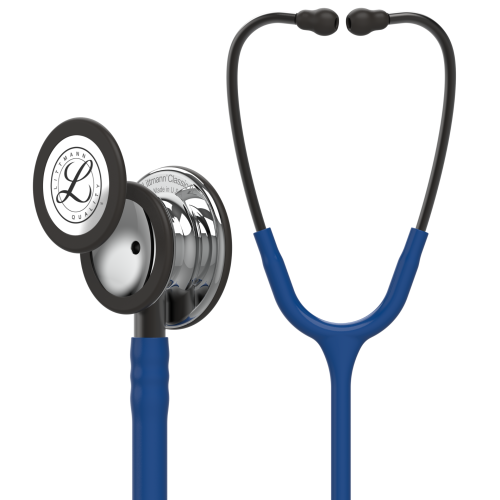
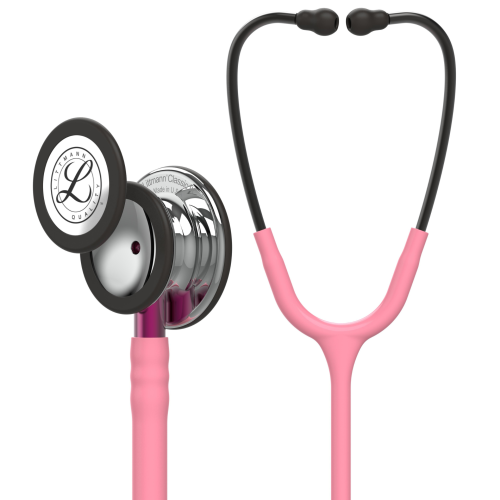
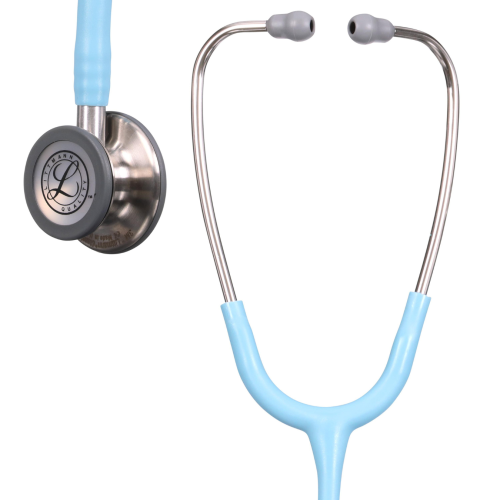
The Littmann Classic III is engineered to be more than twice as acoustically sensitive as the next leading stethoscope in its class. This means clinicians can detect faint heart and lung sounds, including low-frequency S3 and S4 gallops and Korotkoff sounds, more reliably, without digital amplification or batteries.
That 'twice as loud' claim isn't about volume, it's about acoustic sensitivity: how efficiently a stethoscope captures and transmits sound vibrations from patient to clinician. The sections below explain what drives that performance and why it matters in everyday clinical settings.
Loudness Isn’t About Volume, It’s About Clarity
When Clinicians hear that a stethoscope is “more than twice as loud,” it doesn’t mean amplified or distorted sound. It means greater acoustic sensitivity, which allows body sounds to be transmitted more efficiently from the patient to the clinician’s ears with minimal loss or interference.
The Littmann Classic III Stethoscope is engineered to be more than twice as loud as the next leading stethoscope in its class, allowing clinicians to hear subtle sounds more reliably during routine patient assessments.
This guide explains what that claim means in practice and why it matters in everyday healthcare settings.
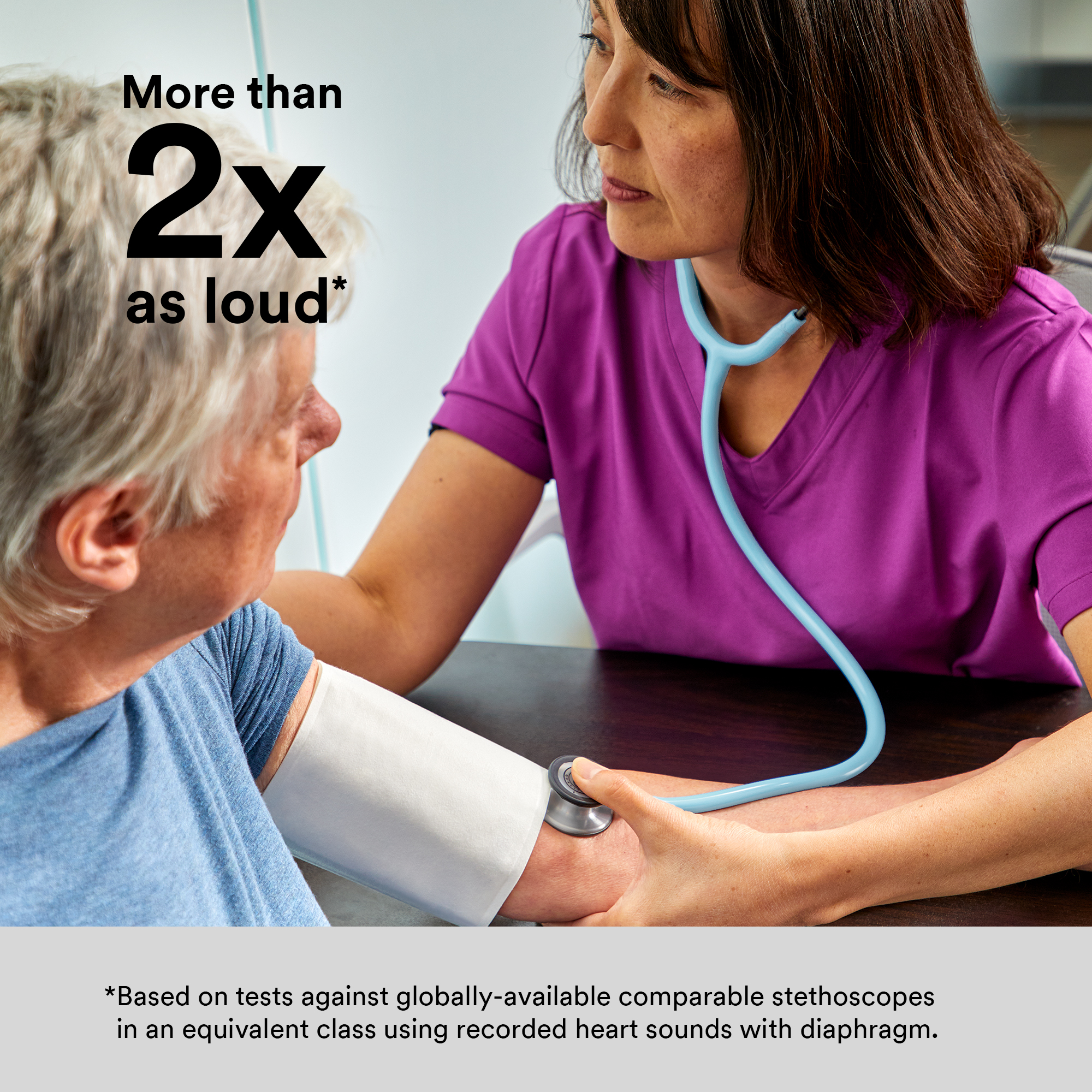
What does 'more than twice as loud' actually mean for a stethoscope?
Acoustic sensitivity refers to how well a stethoscope captures and transmits sound vibrations. Higher sensitivity allows clinicians to:
- Hear faint sounds more clearly
- Distinguish subtle differences in tone and timing
- Reduce the effort required to interpret findings
In non-critical care environments, this translates to clearer, more confident listening, not louder noise.
Can the Classic III detect low-frequency heart sounds below 120 Hz?
Yes, and this is where many basic stethoscopes fall short. Many important cardiovascular sounds occur at low frequencies that standard diaphragms struggle to transmit clearly. The Classic III is specifically designed to capture these, including:
- Korotkoff sounds during manual blood pressure measurement
- Low-pitched heart sounds
- Certain murmurs that can be missed with lower-quality acoustics
Improved low-frequency transmission directly supports more accurate routine assessments.
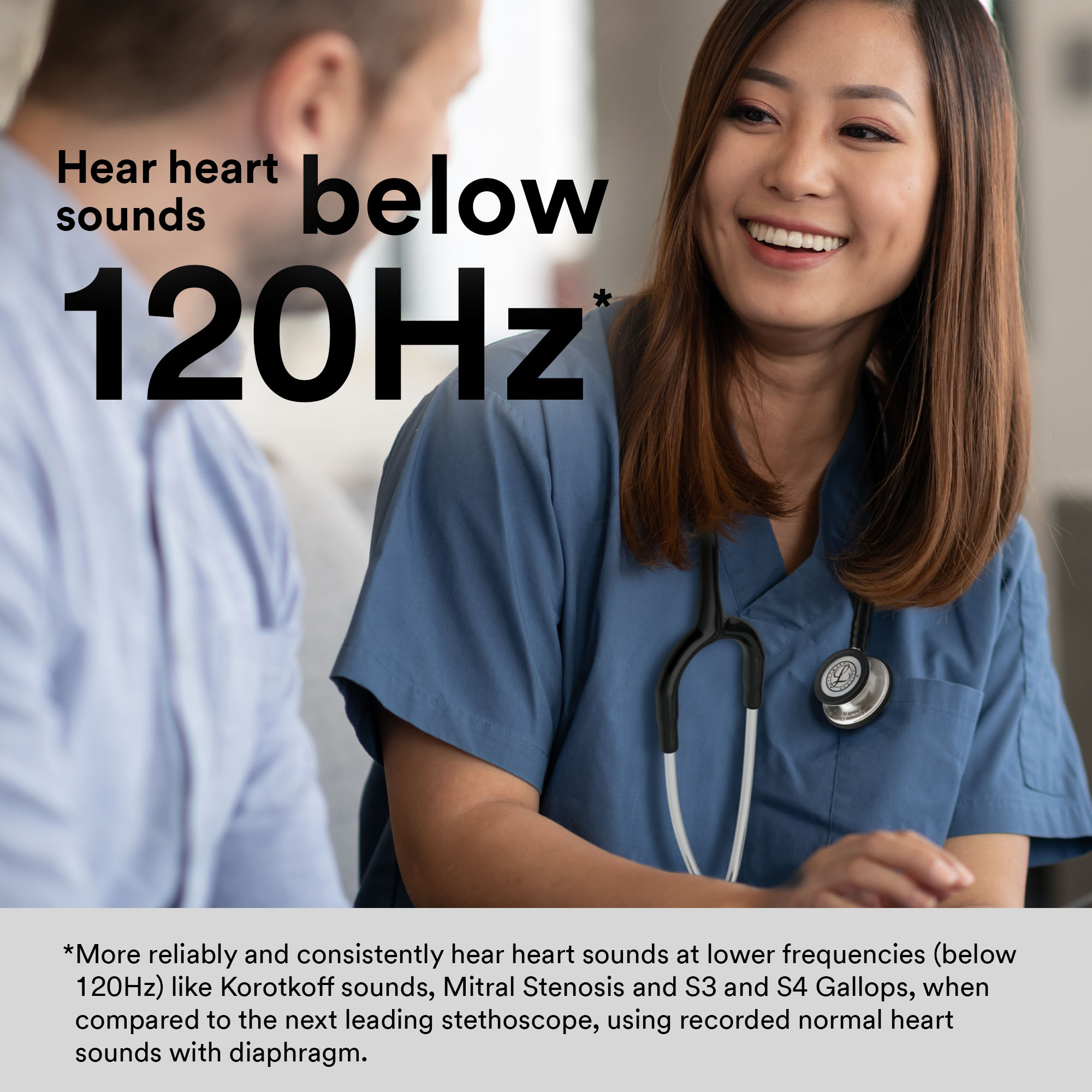
How reliably can the Classic III detect S3, S4, and Korotkoff sounds?
For clinicians performing frequent assessments, consistent detection of subtle cardiac sounds makes a meaningful difference. The Classic III allows clinicians to hear:
- S3 and S4 gallops more consistently
- Korotkoff sounds clearly during manual BP checks
- Changes in rhythm or intensity across repeated assessments
This reliability is especially valuable in ward and clinic settings where assessments happen repeatedly throughout a shift.
Does a higher-sensitivity stethoscope improve diagnostic confidence?
When a stethoscope struggles to transmit sound clearly, clinicians may second-guess what they hear. Higher acoustic sensitivity reduces that uncertainty by:
- Minimising missed or unclear sounds
- Reducing listening fatigue over long shifts
- Improving consistency between assessments on the same patient
The result is greater confidence in routine clinical decision-making — not just for complex cases, but for the everyday assessments that make up most of a clinician's day.
Does the Classic III need batteries or digital amplification to achieve this?
No. Unlike electronic stethoscopes, the Classic III achieves its acoustic performance entirely through mechanical design — no batteries, charging, or digital processing required. Its clarity comes from:
- A precision-machined stainless steel chestpiece
- Tunable diaphragm technology that adjusts pressure to access different frequency ranges
- Efficient sound transmission through the tubing with minimal signal loss
This makes it a dependable option for clinicians who need consistent performance without the maintenance overhead of electronic devices.
How does the Classic III compare to other stethoscopes in its class?
Compared to entry-level and basic stethoscopes, the Classic III offers:
- Greater sensitivity to low-frequency sounds
- Cleaner transmission with less signal loss across the tubing
- Better consistency across different patient types and body habitus
It represents a meaningful step up in acoustic performance without moving into cardiology-grade complexity or the cost of an electronic device — making it the most practical upgrade for most clinical settings.
Why does acoustic sensitivity matter in everyday clinical practice?
In clinics, wards, and outpatient settings, clinicians rely on fast, accurate listening across many patients per shift. Enhanced acoustic sensitivity supports:
- Faster assessments with fewer repeated listens
- Earlier recognition of changes in a patient's condition
- Less physical and cognitive fatigue at the end of a long day
For many clinicians, this makes the Classic III feel noticeably easier and more reliable to use than lower-grade alternatives — not just on paper, but in practice.

Who benefits most from the Classic III's acoustic sensitivity?
The Classic III's performance is especially well-suited to:
- Nurses performing frequent patient assessments throughout a shift
- Medical and nursing students learning auscultation for the first time
- Primary care and clinic-based providers
- Clinicians who regularly measure blood pressure manually
If you work in high-acuity environments or need to auscultate through challenging cardiac conditions, the Littmann Cardiology IV may be a more appropriate choice, it's built for that level of complexity.
Why Littmann's Acoustic Design Stands Out
Littmann's reputation is built on precision engineering and rigorous testing. The Classic III reflects decades of refinement in chestpiece design, diaphragm materials, and sound transmission efficiency — which is what allows it to consistently outperform many stethoscopes in its category.
Clearer Sound Means More Confident Care
Being 'more than twice as loud' isn't about volume — it's about hearing what matters most. The Littmann Classic III's high acoustic sensitivity helps clinicians detect subtle sounds, reduce uncertainty, and perform routine assessments with confidence.
Explore Littmann Classic III stethoscopes at SurgoMed and experience the difference that clearer acoustics can make in everyday patient care.
Frequently Asked Questions
Is the Littmann Classic III good for nurses?
Yes, the Classic III is one of the most recommended stethoscopes for nurses. Its high acoustic sensitivity makes it easier to detect faint heart and lung sounds during busy shifts, and the tunable diaphragm allows quick switching between high and low-frequency sounds without repositioning the chestpiece.
What is the difference between the Littmann Classic III and the Cardiology IV?
The Classic III is designed for general clinical use, wards, clinics, and primary care, and offers excellent acoustic performance for routine assessments. The Cardiology IV is engineered for high-acuity settings where clinicians need to detect extremely subtle cardiac findings, such as faint murmurs in complex patients. It is also higher in price. For most nurses and general practitioners, the Classic III provides everything they need.
Can you hear S3 and S4 heart sounds with the Classic III?
Yes. The Classic III is designed to transmit low-frequency sounds, including S3 and S4 gallops, more reliably than basic stethoscopes. Apply lighter pressure to the diaphragm to access the bell mode, which is optimised for low-frequency cardiac sounds.
Does the Littmann Classic III work for manual blood pressure checks?
Yes. The Classic III transmits Korotkoff sounds, the sounds used to determine systolic and diastolic pressure during manual BP measurement, clearly and consistently. This is one of the key clinical applications where its superior acoustic sensitivity makes a practical difference over lower-grade stethoscopes.
How long does a Littmann Classic III last?
With proper care, a Littmann Classic III typically lasts 5–10 years or more. It comes with a 5-year manufacturer warranty from 3M. Common maintenance includes replacing the eartips and diaphragm periodically, both of which are available from SurgoMed.
Is the Littmann Classic III worth the price?
For clinicians who perform daily auscultation, yes. The acoustic improvement over entry-level stethoscopes is significant enough to reduce listening fatigue, improve detection of subtle sounds, and increase confidence in assessments. Over the life of the product, the cost per use is low compared to the clinical benefit.
Is the Classic III suitable for medical students?
Yes, it is one of the most commonly recommended stethoscopes for medical and nursing students. It is sensitive enough to reliably hear the sounds taught during clinical training, durable enough to last through a degree programme, and offers good value relative to its performance.
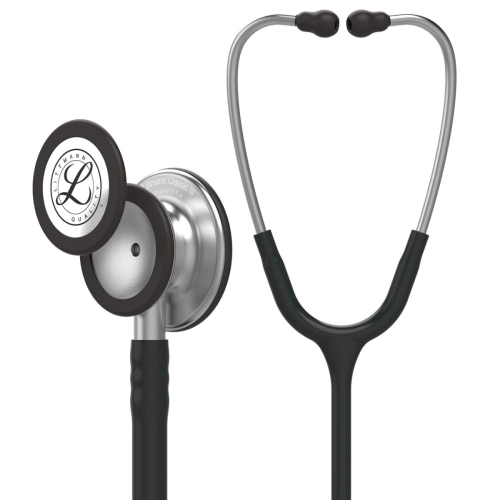

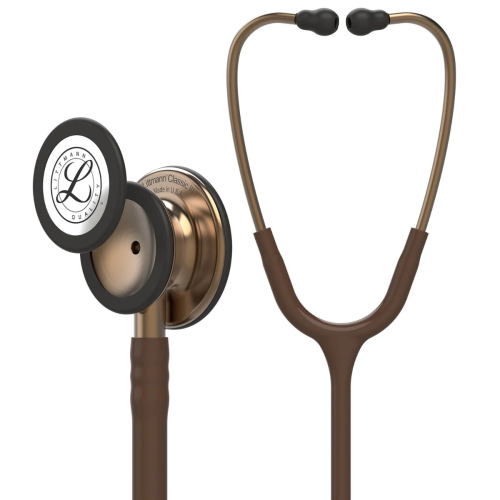
The Littmann Classic III is engineered to be more than twice as acoustically sensitive as the next leading stethoscope in its class. This means clinicians can detect faint heart and lung sounds, including low-frequency S3 and S4 gallops and Korotkoff sounds, more reliably, without digital amplification or batteries.
That 'twice as loud' claim isn't about volume, it's about acoustic sensitivity: how efficiently a stethoscope captures and transmits sound vibrations from patient to clinician. The sections below explain what drives that performance and why it matters in everyday clinical settings.
Loudness Isn’t About Volume, It’s About Clarity
When Clinicians hear that a stethoscope is “more than twice as loud,” it doesn’t mean amplified or distorted sound. It means greater acoustic sensitivity, which allows body sounds to be transmitted more efficiently from the patient to the clinician’s ears with minimal loss or interference.
The Littmann Classic III Stethoscope is engineered to be more than twice as loud as the next leading stethoscope in its class, allowing clinicians to hear subtle sounds more reliably during routine patient assessments.
This guide explains what that claim means in practice and why it matters in everyday healthcare settings.
What does 'more than twice as loud' actually mean for a stethoscope?
Acoustic sensitivity refers to how well a stethoscope captures and transmits sound vibrations. Higher sensitivity allows clinicians to:
- Hear faint sounds more clearly
- Distinguish subtle differences in tone and timing
- Reduce the effort required to interpret findings
In non-critical care environments, this translates to clearer, more confident listening, not louder noise.
Can the Classic III detect low-frequency heart sounds below 120 Hz?
Yes, and this is where many basic stethoscopes fall short. Many important cardiovascular sounds occur at low frequencies that standard diaphragms struggle to transmit clearly. The Classic III is specifically designed to capture these, including:
- Korotkoff sounds during manual blood pressure measurement
- Low-pitched heart sounds
- Certain murmurs that can be missed with lower-quality acoustics
Improved low-frequency transmission directly supports more accurate routine assessments.
How reliably can the Classic III detect S3, S4, and Korotkoff sounds?
For clinicians performing frequent assessments, consistent detection of subtle cardiac sounds makes a meaningful difference. The Classic III allows clinicians to hear:
- S3 and S4 gallops more consistently
- Korotkoff sounds clearly during manual BP checks
- Changes in rhythm or intensity across repeated assessments
This reliability is especially valuable in ward and clinic settings where assessments happen repeatedly throughout a shift.
Does a higher-sensitivity stethoscope improve diagnostic confidence?
When a stethoscope struggles to transmit sound clearly, clinicians may second-guess what they hear. Higher acoustic sensitivity reduces that uncertainty by:
- Minimising missed or unclear sounds
- Reducing listening fatigue over long shifts
- Improving consistency between assessments on the same patient
The result is greater confidence in routine clinical decision-making — not just for complex cases, but for the everyday assessments that make up most of a clinician's day.
Does the Classic III need batteries or digital amplification to achieve this?
No. Unlike electronic stethoscopes, the Classic III achieves its acoustic performance entirely through mechanical design — no batteries, charging, or digital processing required. Its clarity comes from:
- A precision-machined stainless steel chestpiece
- Tunable diaphragm technology that adjusts pressure to access different frequency ranges
- Efficient sound transmission through the tubing with minimal signal loss
This makes it a dependable option for clinicians who need consistent performance without the maintenance overhead of electronic devices.
How does the Classic III compare to other stethoscopes in its class?
Compared to entry-level and basic stethoscopes, the Classic III offers:
- Greater sensitivity to low-frequency sounds
- Cleaner transmission with less signal loss across the tubing
- Better consistency across different patient types and body habitus
It represents a meaningful step up in acoustic performance without moving into cardiology-grade complexity or the cost of an electronic device — making it the most practical upgrade for most clinical settings.
Why does acoustic sensitivity matter in everyday clinical practice?
In clinics, wards, and outpatient settings, clinicians rely on fast, accurate listening across many patients per shift. Enhanced acoustic sensitivity supports:
- Faster assessments with fewer repeated listens
- Earlier recognition of changes in a patient's condition
- Less physical and cognitive fatigue at the end of a long day
For many clinicians, this makes the Classic III feel noticeably easier and more reliable to use than lower-grade alternatives — not just on paper, but in practice.
Who benefits most from the Classic III's acoustic sensitivity?
The Classic III's performance is especially well-suited to:
- Nurses performing frequent patient assessments throughout a shift
- Medical and nursing students learning auscultation for the first time
- Primary care and clinic-based providers
- Clinicians who regularly measure blood pressure manually
If you work in high-acuity environments or need to auscultate through challenging cardiac conditions, the Littmann Cardiology IV may be a more appropriate choice, it's built for that level of complexity.
Why Littmann's Acoustic Design Stands Out
Littmann's reputation is built on precision engineering and rigorous testing. The Classic III reflects decades of refinement in chestpiece design, diaphragm materials, and sound transmission efficiency — which is what allows it to consistently outperform many stethoscopes in its category.
Clearer Sound Means More Confident Care
Being 'more than twice as loud' isn't about volume — it's about hearing what matters most. The Littmann Classic III's high acoustic sensitivity helps clinicians detect subtle sounds, reduce uncertainty, and perform routine assessments with confidence.
Explore Littmann Classic III stethoscopes at SurgoMed and experience the difference that clearer acoustics can make in everyday patient care.
Frequently Asked Questions
Is the Littmann Classic III good for nurses?
Yes, the Classic III is one of the most recommended stethoscopes for nurses. Its high acoustic sensitivity makes it easier to detect faint heart and lung sounds during busy shifts, and the tunable diaphragm allows quick switching between high and low-frequency sounds without repositioning the chestpiece.
What is the difference between the Littmann Classic III and the Cardiology IV?
The Classic III is designed for general clinical use, wards, clinics, and primary care, and offers excellent acoustic performance for routine assessments. The Cardiology IV is engineered for high-acuity settings where clinicians need to detect extremely subtle cardiac findings, such as faint murmurs in complex patients. It is also higher in price. For most nurses and general practitioners, the Classic III provides everything they need.
Can you hear S3 and S4 heart sounds with the Classic III?
Yes. The Classic III is designed to transmit low-frequency sounds, including S3 and S4 gallops, more reliably than basic stethoscopes. Apply lighter pressure to the diaphragm to access the bell mode, which is optimised for low-frequency cardiac sounds.
Does the Littmann Classic III work for manual blood pressure checks?
Yes. The Classic III transmits Korotkoff sounds, the sounds used to determine systolic and diastolic pressure during manual BP measurement, clearly and consistently. This is one of the key clinical applications where its superior acoustic sensitivity makes a practical difference over lower-grade stethoscopes.
How long does a Littmann Classic III last?
With proper care, a Littmann Classic III typically lasts 5–10 years or more. It comes with a 5-year manufacturer warranty from 3M. Common maintenance includes replacing the eartips and diaphragm periodically, both of which are available from SurgoMed.
Is the Littmann Classic III worth the price?
For clinicians who perform daily auscultation, yes. The acoustic improvement over entry-level stethoscopes is significant enough to reduce listening fatigue, improve detection of subtle sounds, and increase confidence in assessments. Over the life of the product, the cost per use is low compared to the clinical benefit.
Is the Classic III suitable for medical students?
Yes, it is one of the most commonly recommended stethoscopes for medical and nursing students. It is sensitive enough to reliably hear the sounds taught during clinical training, durable enough to last through a degree programme, and offers good value relative to its performance.
