
How to Use the Littman Cardiology IV Stethoscope: Complete Technique Guide

Master auscultation with step-by-step instructions for proper use, better sound quality, and more accurate clinical assessments.

Cardiology IV Technique at a Glance (Quick-Start Summary)
- Position eartips forward, aligned with ear canals
- Ensure a firm but comfortable headset seal
- Index the chestpiece to activate the correct side
- Use light pressure for low-frequency sounds
- Use firm pressure for high-frequency sounds
- Place the chestpiece directly on skin
- Move systematically across assessment areas
Why Proper Technique Matters With the Cardiology IV
The Littmann® Cardiology IV™ Stethoscope is engineered to deliver exceptional acoustic performance, but getting the best sound quality depends heavily on how it is used. Even experienced clinicians can miss subtle abnormalities if the headset is incorrectly positioned, the wrong side of the chestpiece is indexed, or pressure isn’t applied properly. This complete technique guide will help you get the most out of your Cardiology IV by covering:
- Headset fit
- Eartip positioning
- Chestpiece indexing
- How to use tunable diaphragms
- Pediatric vs adult side usage
- Open bell conversion
- Troubleshooting poor sound quality
Whether you’re a medical student or a seasoned clinician, these steps ensure maximum clarity and confidence during every examination.
Position the Headset Correctly
The Cardiology IV’s headset is designed to align with the natural anatomy of your ear canals.
How to Insert Eartips Properly
- Ensure the eartips point forward, toward your nose
- Insert gently while maintaining a forward angle
- This creates a proper acoustic seal
Why It Matters
Incorrect eartip direction is one of the most common causes of muffled or nonexistent sound.
Adjust Headset Tension for Comfort & Seal
Your Cardiology IV allows you to customize headset tightness:
To loosen tension: Pull the eartubes apart gently.
To tighten tension: Squeeze the eartubes together.
Best Practices
- You should feel a firm but comfortable seal
- If the fit is too loose, you’ll lose sound clarity
- If the fit is too tight, it can cause discomfort during long shifts
A proper seal is essential for hearing subtle cardiac and pulmonary sounds.
Select the Active Side of the Chestpiece (Indexing)
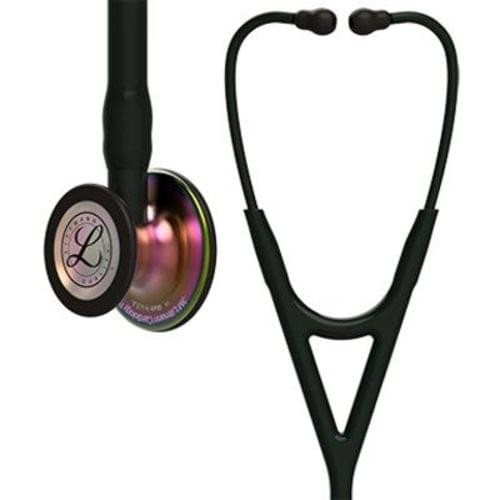
The Cardiology IV has a dual-sided chestpiece, each with a tunable diaphragm:
- Adult side
- Pediatric side (convertible to open bell)
To select the active listening side:
- Rotate the chestpiece stem.
- Stop when the small indicator mark aligns with the side you want to use.
Signs the Wrong Side Is Active
- You hear nothing
- The sound is faint or intermittent
- You hear airflow or tapping from the opposite side
Indexing is essential for accurate auscultation.
Use Tunable Diaphragms to Hear Different Frequencies
The Cardiology IV features tunable diaphragm technology, letting you hear low and high-frequency sounds without flipping the chestpiece.
To hear low-frequency sounds (S3, S4, murmurs):
- Apply light pressure
- Allow the diaphragm to rest gently on the skin
To hear high-frequency sounds (S1, S2, lung sounds):
- Apply firm pressure
- Increase contact to tighten to diaphragm’s surface
Why This Matters
This technique lets clinicians move quickly through assessments and improves accuracy, especially in:
- Cardiac evaluations
- Breath sound interpretation
- Blood pressure measurement
Switching Between Adult & Pediatric Sides
Adult Side
Use for:
- General adult cardiac exams
- Thoracic evaluations
- Pulmonary auscultation
Pediatric Side
Use for:
- Small children
- Frail or thin adults
- Assessments around bandages or focused areas
The smaller diaphragm helps maintain precise contact with challenging anatomy. 
Converting the Pediatric Side to an Open Bell
One key feature of the Cardiology IV is the convertible open bell.
How to Convert to Open Bell Mode
- Hold the chestpiece with the adult diaphragm facing you.
- With a gloved thumb, gently peel the pediatric diaphragm off the chestpiece.
- Replace it with the non-chill bell sleeve included with your stethoscope.
When to Use the Open Bell
- Low-frequency cardiac sounds
- Certain diastolic murmurs
- Quiet heart tones requiring minimal interference
Open bell mode allows a more traditional approach for low-frequency auscultation.
Best Positioning Practices for Accurate Sound
Perform auscultation a quiet environment when possible
- Helps isolate faint murmurs or crackles
Place the chestpiece directly on the skin
- Avoid auscultating through thick clothing
Minimize movement
- Repositioning or sliding can create friction noise
Pay attention to patient positioning
- Sit or stand patients upright for optimal lung sounds
- Supine, left lateral, or leaning forward positions can improve cardiac evaluations
Troubleshooting Poor Sound Quality
If sound is muffled, intermittent, or absent, check the following:
- Eartip direction – must point forward
- Chestpiece indexing – confirm correct side is active
- Loose eartips – ensure snap-tight attachment
- Debris buildup – clean diaphragm and bell regularly
- Tubing damage – inspect for cracks or stiffness
- Pressure technique – match pressure to frequency
Routine checks resolve most sound issues quickly.
Cleaning and Maintenance Best Practices
- Clean regularly with 70% isopropyl alcohol wipes
- Avoid harsh solvents or heat exposure
- Store at room temperature
- Inspect tubing periodically
Proper maintenance supports infection control and prolongs device lifespan.
Clinical Tips for Better Auscultation
Move systematically across assessment sites
- Avoid skipping areas to ensure complete evaluation
Use both sides of the chestpiece strategically
- Adult side for general assessments
- Pediatric/open bell for detailed precision
Warm the chestpiece
- Especially important with anxious or pediatric patients
Practice tuning your pressure
- Developing muscle memory improves speed and accuracy
Combine auscultation with other assessment methods
- Inspection, percussion, and palpation reinforce findings
Why Using the Cardiology IV Correctly Makes a Clinical Difference
When technique is optimized, the Caprdiology IV provides enhanced murmur detection, increased accuracy in identifying faint adventitious lung sounds, faster assessments in critical care, better monitoring of changes in patient condition, and improved confidence during physical exams. Proper technique transforms the Cardiology IV from a high-quality tool into a precision diagnostic instrument.
Master Auscultation With the Littmann Cardiology IV
The Littmann Cardiology IV provides world-class acoustic performance, but its full potential shines when used with proper technique. By following the steps in this guide, from headset positioning to diaphragm pressure control, you’ll get the clarity, accuracy, and diagnostic confidence the Cardiology IV is designed to deliver.
Shop Littmann Cardiology IV Stethoscopes at SurgoMed today and elevate your auscultation skills with one of the best acoustic stethoscopes available.
Frequently Asked Questions
How do I switch between the adult and pediatric sides of the chestpiece?
Rotate the chestpiece stem until the small indicator mark aligns with the desired side. This process is known as indexing. Only the indexed side will be active. If you hear faint sound, intermittent sound, or no sound at all, the wrong side may be selected.
What is tunable diaphragm technology and how do I use it?
The tunable diaphragms on both sides of the Cardiology IV allows clinicians to hear different frequency ranges simply by adjusting pressure:
- Light pressure: low-frequency sounds (S3, S4, low-pitched murmurs)
- Firm pressure: high-frequency sounds (S1, S2, lung sounds)
This eliminates the need to flip the chestpiece during assessments and supports faster more efficient auscultation.
When should I use the pediatric side of the chestpiece?
Use the pediatric side for: infants and small children, frail adults, thin-chested patients, and hard-to-reach spots. The smaller diaphragm improves contact on small or curved surfaces, providing clearer sound in areas where the adult diaphragm may not seal properly.
Why does my Cardiology IV sound muffled or quiet?
Common causes include: eartips pointing backward, wrong chestpiece side indexed, loose or improperly attached eartips, debris under the diaphragm or inside the bell, tubing cracks or stiffening, or incorrect pressure applied during auscultation. Rechecking these steps usually resolves sound quality issues quickly.
How do I know if my eartips are fully secure?
Littmann snap-tight eartips require firm, deliberate pressure to attach. If they are not securely snapped in place, you may lose acoustic seal or experience intermittent sound. Always ensure eartips sit snugly on the metal posts.
Why is proper technique so important with the Cardiology IV?
The Cardiology IV is engineered to reveal subtle heart and lung sounds that lower-grade stethoscopes may miss. Proper technique ensures clinicians fully benefit from: improved murmur detection, better adventitious lung sound identification, clearer low-frequency performance, and more efficient assessments in critical settings. A high-performance stethoscope reaches its full potential only when used correctly.
Is the Cardiology IV suitable for students learning auscultation?
Yes. In fact, the Cardiology IV’s enhanced sound clarity and tunable diaphragms make it an excellent choice for medical and nursing students. It helps new clinicians learn frequency differentiation, proper pressure control, and systematic assessment techniques more effectively.
Where can I buy authentic Littmann Cardiology IV stethoscopes and replacement parts?
For authentic products, shop at SurgoMed, which offers:
- Genuine Cardiology IV stethoscopes
- A full range of colors and finishes
- Free and Fast U.S shipping
- Full Littmann warranty protection
- Expert, friendly customer support
Buying from an authorized distributor ensures quality, reliability, and long-term performance.


Master auscultation with step-by-step instructions for proper use, better sound quality, and more accurate clinical assessments.
Cardiology IV Technique at a Glance (Quick-Start Summary)
- Position eartips forward, aligned with ear canals
- Ensure a firm but comfortable headset seal
- Index the chestpiece to activate the correct side
- Use light pressure for low-frequency sounds
- Use firm pressure for high-frequency sounds
- Place the chestpiece directly on skin
- Move systematically across assessment areas
Why Proper Technique Matters With the Cardiology IV
The Littmann® Cardiology IV™ Stethoscope is engineered to deliver exceptional acoustic performance, but getting the best sound quality depends heavily on how it is used. Even experienced clinicians can miss subtle abnormalities if the headset is incorrectly positioned, the wrong side of the chestpiece is indexed, or pressure isn’t applied properly. This complete technique guide will help you get the most out of your Cardiology IV by covering:
- Headset fit
- Eartip positioning
- Chestpiece indexing
- How to use tunable diaphragms
- Pediatric vs adult side usage
- Open bell conversion
- Troubleshooting poor sound quality
Whether you’re a medical student or a seasoned clinician, these steps ensure maximum clarity and confidence during every examination.
Position the Headset Correctly
The Cardiology IV’s headset is designed to align with the natural anatomy of your ear canals.
How to Insert Eartips Properly
- Ensure the eartips point forward, toward your nose
- Insert gently while maintaining a forward angle
- This creates a proper acoustic seal
Why It Matters
Incorrect eartip direction is one of the most common causes of muffled or nonexistent sound.
Adjust Headset Tension for Comfort & Seal
Your Cardiology IV allows you to customize headset tightness:
To loosen tension: Pull the eartubes apart gently.
To tighten tension: Squeeze the eartubes together.
Best Practices
- You should feel a firm but comfortable seal
- If the fit is too loose, you’ll lose sound clarity
- If the fit is too tight, it can cause discomfort during long shifts
A proper seal is essential for hearing subtle cardiac and pulmonary sounds.
Select the Active Side of the Chestpiece (Indexing)
The Cardiology IV has a dual-sided chestpiece, each with a tunable diaphragm:
- Adult side
- Pediatric side (convertible to open bell)
To select the active listening side:
- Rotate the chestpiece stem.
- Stop when the small indicator mark aligns with the side you want to use.
Signs the Wrong Side Is Active
- You hear nothing
- The sound is faint or intermittent
- You hear airflow or tapping from the opposite side
Indexing is essential for accurate auscultation.
Use Tunable Diaphragms to Hear Different Frequencies
The Cardiology IV features tunable diaphragm technology, letting you hear low and high-frequency sounds without flipping the chestpiece.
To hear low-frequency sounds (S3, S4, murmurs):
- Apply light pressure
- Allow the diaphragm to rest gently on the skin
To hear high-frequency sounds (S1, S2, lung sounds):
- Apply firm pressure
- Increase contact to tighten to diaphragm’s surface
Why This Matters
This technique lets clinicians move quickly through assessments and improves accuracy, especially in:
- Cardiac evaluations
- Breath sound interpretation
- Blood pressure measurement
Switching Between Adult & Pediatric Sides
Adult Side
Use for:
- General adult cardiac exams
- Thoracic evaluations
- Pulmonary auscultation
Pediatric Side
Use for:
- Small children
- Frail or thin adults
- Assessments around bandages or focused areas
The smaller diaphragm helps maintain precise contact with challenging anatomy.
Converting the Pediatric Side to an Open Bell
One key feature of the Cardiology IV is the convertible open bell.
How to Convert to Open Bell Mode
- Hold the chestpiece with the adult diaphragm facing you.
- With a gloved thumb, gently peel the pediatric diaphragm off the chestpiece.
- Replace it with the non-chill bell sleeve included with your stethoscope.
When to Use the Open Bell
- Low-frequency cardiac sounds
- Certain diastolic murmurs
- Quiet heart tones requiring minimal interference
Open bell mode allows a more traditional approach for low-frequency auscultation.
Best Positioning Practices for Accurate Sound
Perform auscultation a quiet environment when possible
- Helps isolate faint murmurs or crackles
Place the chestpiece directly on the skin
- Avoid auscultating through thick clothing
Minimize movement
- Repositioning or sliding can create friction noise
Pay attention to patient positioning
- Sit or stand patients upright for optimal lung sounds
- Supine, left lateral, or leaning forward positions can improve cardiac evaluations
Troubleshooting Poor Sound Quality
If sound is muffled, intermittent, or absent, check the following:
- Eartip direction – must point forward
- Chestpiece indexing – confirm correct side is active
- Loose eartips – ensure snap-tight attachment
- Debris buildup – clean diaphragm and bell regularly
- Tubing damage – inspect for cracks or stiffness
- Pressure technique – match pressure to frequency
Routine checks resolve most sound issues quickly.
Cleaning and Maintenance Best Practices
- Clean regularly with 70% isopropyl alcohol wipes
- Avoid harsh solvents or heat exposure
- Store at room temperature
- Inspect tubing periodically
Proper maintenance supports infection control and prolongs device lifespan.
Clinical Tips for Better Auscultation
Move systematically across assessment sites
- Avoid skipping areas to ensure complete evaluation
Use both sides of the chestpiece strategically
- Adult side for general assessments
- Pediatric/open bell for detailed precision
Warm the chestpiece
- Especially important with anxious or pediatric patients
Practice tuning your pressure
- Developing muscle memory improves speed and accuracy
Combine auscultation with other assessment methods
- Inspection, percussion, and palpation reinforce findings
Why Using the Cardiology IV Correctly Makes a Clinical Difference
When technique is optimized, the Caprdiology IV provides enhanced murmur detection, increased accuracy in identifying faint adventitious lung sounds, faster assessments in critical care, better monitoring of changes in patient condition, and improved confidence during physical exams. Proper technique transforms the Cardiology IV from a high-quality tool into a precision diagnostic instrument.
Master Auscultation With the Littmann Cardiology IV
The Littmann Cardiology IV provides world-class acoustic performance, but its full potential shines when used with proper technique. By following the steps in this guide, from headset positioning to diaphragm pressure control, you’ll get the clarity, accuracy, and diagnostic confidence the Cardiology IV is designed to deliver.
Shop Littmann Cardiology IV Stethoscopes at SurgoMed today and elevate your auscultation skills with one of the best acoustic stethoscopes available.
Frequently Asked Questions
How do I switch between the adult and pediatric sides of the chestpiece?
Rotate the chestpiece stem until the small indicator mark aligns with the desired side. This process is known as indexing. Only the indexed side will be active. If you hear faint sound, intermittent sound, or no sound at all, the wrong side may be selected.
What is tunable diaphragm technology and how do I use it?
The tunable diaphragms on both sides of the Cardiology IV allows clinicians to hear different frequency ranges simply by adjusting pressure:
- Light pressure: low-frequency sounds (S3, S4, low-pitched murmurs)
- Firm pressure: high-frequency sounds (S1, S2, lung sounds)
This eliminates the need to flip the chestpiece during assessments and supports faster more efficient auscultation.
When should I use the pediatric side of the chestpiece?
Use the pediatric side for: infants and small children, frail adults, thin-chested patients, and hard-to-reach spots. The smaller diaphragm improves contact on small or curved surfaces, providing clearer sound in areas where the adult diaphragm may not seal properly.
Why does my Cardiology IV sound muffled or quiet?
Common causes include: eartips pointing backward, wrong chestpiece side indexed, loose or improperly attached eartips, debris under the diaphragm or inside the bell, tubing cracks or stiffening, or incorrect pressure applied during auscultation. Rechecking these steps usually resolves sound quality issues quickly.
How do I know if my eartips are fully secure?
Littmann snap-tight eartips require firm, deliberate pressure to attach. If they are not securely snapped in place, you may lose acoustic seal or experience intermittent sound. Always ensure eartips sit snugly on the metal posts.
Why is proper technique so important with the Cardiology IV?
The Cardiology IV is engineered to reveal subtle heart and lung sounds that lower-grade stethoscopes may miss. Proper technique ensures clinicians fully benefit from: improved murmur detection, better adventitious lung sound identification, clearer low-frequency performance, and more efficient assessments in critical settings. A high-performance stethoscope reaches its full potential only when used correctly.
Is the Cardiology IV suitable for students learning auscultation?
Yes. In fact, the Cardiology IV’s enhanced sound clarity and tunable diaphragms make it an excellent choice for medical and nursing students. It helps new clinicians learn frequency differentiation, proper pressure control, and systematic assessment techniques more effectively.
Where can I buy authentic Littmann Cardiology IV stethoscopes and replacement parts?
For authentic products, shop at SurgoMed, which offers:
- Genuine Cardiology IV stethoscopes
- A full range of colors and finishes
- Free and Fast U.S shipping
- Full Littmann warranty protection
- Expert, friendly customer support
Buying from an authorized distributor ensures quality, reliability, and long-term performance.
