
What Is Littmann Tunable Diaphragm Technology?
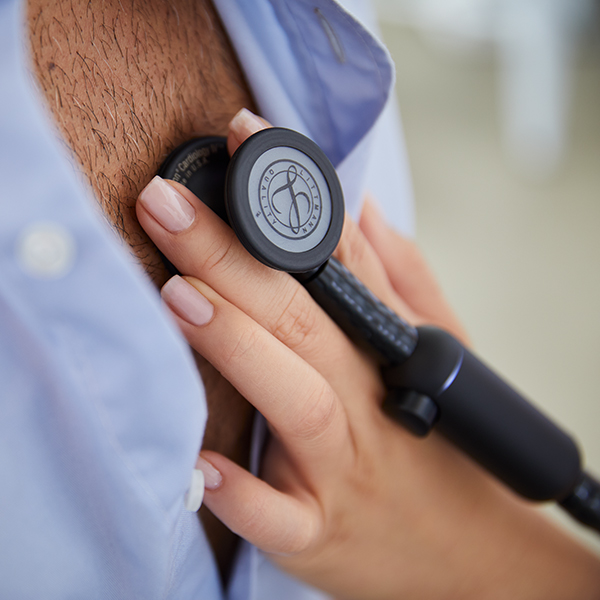
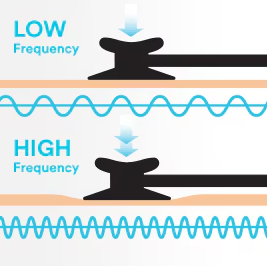
Littmann Tunable Diaphragm Technology is a pressure-sensitive stethoscope chestpiece design that allows clinicians to assess both low- and high-frequency body sounds using a single diaphragm surface. Applying light pressure emphasizes lower-frequency sounds in approximately the 20–500 Hz range — including certain heart sounds, low-pitched murmurs, and Korotkoff sounds used in blood pressure measurement. Applying firm pressure shifts emphasis toward higher-frequency sounds in approximately the 100–500 Hz range and above, including breath sounds, bowel sounds, and higher-pitched heart tones.
Unlike traditional stethoscopes, which require clinicians to physically flip between a bell and a diaphragm during an exam, a tunable diaphragm achieves both functions through pressure variation alone. This removes a mechanical step from the auscultation process, allowing for uninterrupted assessment across sound ranges.
Tunable diaphragm technology is a standard feature across many Littmann stethoscope models and is used by medical students, nurses, and clinicians across a wide range of clinical settings.
Why Diaphragm Technology Matters in Auscultation
A stethoscope is only as effective as its ability to transmit sound clearly and accurately. In clinical practice, auscultation requires clinicians to listen to a wide range of body sounds that vary in frequency, intensity, and timing. Traditional stethoscope designs often require clinicians to flip the chestpiece or reposition repeatedly to access different sound ranges, interrupting the exam, and increasing the chance of missed findings.
Littmann Tunable Diaphragm Technology was developed to simplify this process. By allowing clinicians to change frequency emphasis through pressure alone, Littmann transformed how clinicians listen, making auscultation more efficient, intuitive, and accurate across everyday clinical settings.
This guide explains how tunable diaphragms work and why they have become a defining feature across many Littmann stethoscope models. .jpg)
What Sounds Can You Hear with a Tunable Diaphragm?
The human body produces sounds across a wide frequency spectrum, and different clinical findings fall into distinct ranges. Effective auscultation depends on being able to access those ranges quickly and accurately during an exam.
With light pressure, the tunable diaphragm emphasizes lower-frequency sounds in approximately the 20–500 Hz range. This includes:
- Certain heart sounds, including S3 and S4 gallops
- Low-pitched murmurs, such as mitral stenosis
- Korotkoff sounds during blood pressure measurement
With firm pressure, the diaphragm shifts emphasis toward higher-frequency sounds above approximately 100 Hz. This includes:
- Breath sounds, including crackles and wheezes
- Higher-pitched heart sounds, including S1 and S2
- Subtle airflow changes indicative of early pulmonary findings
Being able to move between these ranges through pressure alone, without repositioning the chestpiece, means clinicians can assess multiple sound types in a single uninterrupted pass across the chest or back.
How Pressure Adjustment Saves Time During Exams
In busy clinical environments, even small inefficiencies add up. Tunable diaphragm technology reduces exam time by minimizing mechanical steps during auscultation.
Clinicians benefit from:
- No need to flip or rotate the chestpiece
- Less repositioning on the patient
- Continuous listening without interruption
This streamlined approach is especially valuable in clinics, urgent care, inpatient wards, and any setting where clinicians perform frequent assessments throughout the day.
Clinical Example: Heart, Lung & Blood Pressure Sounds
Tunable diaphragm technology supports clearer assessment across common clinical tasks.
During cardiac assessment, clinicians can move smoothly between low- and high-frequency heart sounds to better evaluate murmurs and rhythm changes.
In pulmonary assessment, pressure adjustment helps emphasize breath sounds and subtle airflow abnormalities.
For blood pressure measurement, tunable diaphragms improve the ability to hear Korotkoff sounds reliably and consistently.
By reducing mechanical adjustment, clinicians can focus more on interpretation and patient interaction.
Why Tunable Diaphragms Improve Listening Accuracy
Traditional stethoscope designs introduce more opportunities for error, including missed sounds, inconsistent pressure, and unnecessary repositioning. Tunable diaphragms improve accuracy by promoting a more consistent listening technique.
Key advantages include:
- Fewer distractions during exams
- Smoother transitions between sound ranges
- Better focus on subtle changes over time
This is particularly beneficial for students developing auscultation skills and clinicians performing repeated routine assessments.
Why Littmann Leads in Acoustic Innovation
Littmann has been developing stethoscope technology since 1963, when Dr. David Littmann, a Harvard Medical School professor and cardiologist, introduced a design that significantly improved acoustic performance over the instruments available at the time. That foundation of clinically driven engineering has shaped the brand's approach to product development ever since.
Tunable diaphragm technology reflects this approach. Rather than adding mechanical complexity, it solves a practical clinical problem, the need to switch between sound ranges mid-exam, through a refinement of the diaphragm itself. The result is a component that performs two acoustic functions without additional moving parts.
Across Littmann stethoscope models, tunable diaphragms are precision-engineered for consistent acoustic performance, constructed as single-piece components that simplify cleaning and infection control, and available across a range of models suited to different clinical roles and settings.
Who Benefits Most from Tunable Diaphragm Technology?
Tunable diaphragms provide meaningful advantages for a wide range of healthcare professionals, including:
- Medical and nursing students learning auscultation
- Nurses performing frequent bedside assessments
- Clinic and urgent care clinicians
- Primary care providers seeing mixed patient populations
By simplifying technique without sacrificing sound quality, tunable diaphragms support confident listening across experience levels.
Why Tunable Diaphragms Are a Core Littmann Advantage
Rather than being limited to a single model, tunable diaphragm technology is a defining feature across much of the Littmann lineup. It brings advanced acoustic control into everyday clinical practice, allowing clinicians to work more efficiently while maintaining professional diagnostic standards.
For clinicians who rely on accurate auscultation every day, tunable diaphragms are not just a convenience; they are a meaningful upgrade in how listening is performed.
Frequently Asked Questions About Littmann Tunable Diaphragm Technology
What is Littmann Tunable Diaphragm Technology?
Littmann Tunable Diaphragm Technology is a pressure-sensitive chestpiece design that allows clinicians to detect both low- and high-frequency body sounds using a single diaphragm surface. By varying the pressure applied to the chestpiece — light for low-frequency sounds, firm for high-frequency sounds — clinicians can transition between sound ranges without flipping or rotating the stethoscope.
How is a tunable diaphragm different from a traditional bell and diaphragm?
Traditional stethoscopes use two separate components: a bell (for low-frequency sounds) and a diaphragm (for high-frequency sounds), requiring the clinician to physically flip the chestpiece during an exam. A tunable diaphragm replaces both with a single surface that responds to pressure, eliminating the need to reposition or interrupt the assessment.
What sounds can you hear with light pressure versus firm pressure?
With light pressure, the tunable diaphragm emphasizes lower-frequency sounds, including certain heart sounds, low-pitched murmurs, and Korotkoff sounds used during blood pressure measurement. With firm pressure, it emphasizes higher-frequency sounds such as breath sounds, bowel sounds, and higher-pitched heart tones.
Which Littmann stethoscope models include tunable diaphragm technology?
Tunable diaphragm technology is featured across a wide range of Littmann models, including the Littmann Classic III, Cardiology IV, and Master Cardiology, among others. The specific implementation varies by model — some feature a tunable diaphragm on one side of the chestpiece, while dual-sided models may include it on both sides. Checking the individual product specifications is recommended to confirm availability on a specific model.
Is a tunable diaphragm suitable for pediatric auscultation?
Some Littmann stethoscopes with tunable diaphragms include a pediatric or small diaphragm on the reverse side of the chestpiece, designed specifically for assessing infants and smaller patients. The tunable function works the same way — light pressure for low-frequency sounds, firm pressure for high-frequency sounds — regardless of chestpiece size.
How do you clean a tunable diaphragm?
Littmann tunable diaphragms are designed as single-piece components, which reduces crevices where pathogens can accumulate and makes surface cleaning more straightforward. The chestpiece can be wiped with a 70% isopropyl alcohol solution or a mild detergent. Immersion in liquid or use of harsh chemical cleaners is not recommended, as this can degrade the diaphragm material over time.
Does applying more pressure damage the tunable diaphragm?
No. The tunable diaphragm is engineered to respond to the range of pressure applied during normal clinical use. Firm pressure in auscultation refers to the level of pressure a clinician would comfortably apply with one hand — it does not require excessive force and does not cause wear under normal conditions.
What Is Littmann Tunable Diaphragm Technology?
Littmann Tunable Diaphragm Technology is a pressure-sensitive stethoscope chestpiece design that allows clinicians to assess both low- and high-frequency body sounds using a single diaphragm surface. Applying light pressure emphasizes lower-frequency sounds in approximately the 20–500 Hz range — including certain heart sounds, low-pitched murmurs, and Korotkoff sounds used in blood pressure measurement. Applying firm pressure shifts emphasis toward higher-frequency sounds in approximately the 100–500 Hz range and above, including breath sounds, bowel sounds, and higher-pitched heart tones.
Unlike traditional stethoscopes, which require clinicians to physically flip between a bell and a diaphragm during an exam, a tunable diaphragm achieves both functions through pressure variation alone. This removes a mechanical step from the auscultation process, allowing for uninterrupted assessment across sound ranges.
Tunable diaphragm technology is a standard feature across many Littmann stethoscope models and is used by medical students, nurses, and clinicians across a wide range of clinical settings.
Why Diaphragm Technology Matters in Auscultation
A stethoscope is only as effective as its ability to transmit sound clearly and accurately. In clinical practice, auscultation requires clinicians to listen to a wide range of body sounds that vary in frequency, intensity, and timing. Traditional stethoscope designs often require clinicians to flip the chestpiece or reposition repeatedly to access different sound ranges, interrupting the exam, and increasing the chance of missed findings.
Littmann Tunable Diaphragm Technology was developed to simplify this process. By allowing clinicians to change frequency emphasis through pressure alone, Littmann transformed how clinicians listen, making auscultation more efficient, intuitive, and accurate across everyday clinical settings.
This guide explains how tunable diaphragms work and why they have become a defining feature across many Littmann stethoscope models.
What Sounds Can You Hear with a Tunable Diaphragm?
The human body produces sounds across a wide frequency spectrum, and different clinical findings fall into distinct ranges. Effective auscultation depends on being able to access those ranges quickly and accurately during an exam.
With light pressure, the tunable diaphragm emphasizes lower-frequency sounds in approximately the 20–500 Hz range. This includes:
- Certain heart sounds, including S3 and S4 gallops
- Low-pitched murmurs, such as mitral stenosis
- Korotkoff sounds during blood pressure measurement
With firm pressure, the diaphragm shifts emphasis toward higher-frequency sounds above approximately 100 Hz. This includes:
- Breath sounds, including crackles and wheezes
- Higher-pitched heart sounds, including S1 and S2
- Subtle airflow changes indicative of early pulmonary findings
Being able to move between these ranges through pressure alone, without repositioning the chestpiece, means clinicians can assess multiple sound types in a single uninterrupted pass across the chest or back.
How Pressure Adjustment Saves Time During Exams
In busy clinical environments, even small inefficiencies add up. Tunable diaphragm technology reduces exam time by minimizing mechanical steps during auscultation.
Clinicians benefit from:
- No need to flip or rotate the chestpiece
- Less repositioning on the patient
- Continuous listening without interruption
This streamlined approach is especially valuable in clinics, urgent care, inpatient wards, and any setting where clinicians perform frequent assessments throughout the day.
Clinical Example: Heart, Lung & Blood Pressure Sounds
Tunable diaphragm technology supports clearer assessment across common clinical tasks.
During cardiac assessment, clinicians can move smoothly between low- and high-frequency heart sounds to better evaluate murmurs and rhythm changes.
In pulmonary assessment, pressure adjustment helps emphasize breath sounds and subtle airflow abnormalities.
For blood pressure measurement, tunable diaphragms improve the ability to hear Korotkoff sounds reliably and consistently.
By reducing mechanical adjustment, clinicians can focus more on interpretation and patient interaction.
Why Tunable Diaphragms Improve Listening Accuracy
Traditional stethoscope designs introduce more opportunities for error, including missed sounds, inconsistent pressure, and unnecessary repositioning. Tunable diaphragms improve accuracy by promoting a more consistent listening technique.
Key advantages include:
- Fewer distractions during exams
- Smoother transitions between sound ranges
- Better focus on subtle changes over time
This is particularly beneficial for students developing auscultation skills and clinicians performing repeated routine assessments.
Why Littmann Leads in Acoustic Innovation
Littmann has been developing stethoscope technology since 1963, when Dr. David Littmann, a Harvard Medical School professor and cardiologist, introduced a design that significantly improved acoustic performance over the instruments available at the time. That foundation of clinically driven engineering has shaped the brand's approach to product development ever since.
Tunable diaphragm technology reflects this approach. Rather than adding mechanical complexity, it solves a practical clinical problem, the need to switch between sound ranges mid-exam, through a refinement of the diaphragm itself. The result is a component that performs two acoustic functions without additional moving parts.
Across Littmann stethoscope models, tunable diaphragms are precision-engineered for consistent acoustic performance, constructed as single-piece components that simplify cleaning and infection control, and available across a range of models suited to different clinical roles and settings.
Who Benefits Most from Tunable Diaphragm Technology?
Tunable diaphragms provide meaningful advantages for a wide range of healthcare professionals, including:
- Medical and nursing students learning auscultation
- Nurses performing frequent bedside assessments
- Clinic and urgent care clinicians
- Primary care providers seeing mixed patient populations
By simplifying technique without sacrificing sound quality, tunable diaphragms support confident listening across experience levels.
Why Tunable Diaphragms Are a Core Littmann Advantage
Rather than being limited to a single model, tunable diaphragm technology is a defining feature across much of the Littmann lineup. It brings advanced acoustic control into everyday clinical practice, allowing clinicians to work more efficiently while maintaining professional diagnostic standards.
For clinicians who rely on accurate auscultation every day, tunable diaphragms are not just a convenience; they are a meaningful upgrade in how listening is performed.
Frequently Asked Questions About Littmann Tunable Diaphragm Technology
What is Littmann Tunable Diaphragm Technology?
Littmann Tunable Diaphragm Technology is a pressure-sensitive chestpiece design that allows clinicians to detect both low- and high-frequency body sounds using a single diaphragm surface. By varying the pressure applied to the chestpiece — light for low-frequency sounds, firm for high-frequency sounds — clinicians can transition between sound ranges without flipping or rotating the stethoscope.
How is a tunable diaphragm different from a traditional bell and diaphragm?
Traditional stethoscopes use two separate components: a bell (for low-frequency sounds) and a diaphragm (for high-frequency sounds), requiring the clinician to physically flip the chestpiece during an exam. A tunable diaphragm replaces both with a single surface that responds to pressure, eliminating the need to reposition or interrupt the assessment.
What sounds can you hear with light pressure versus firm pressure?
With light pressure, the tunable diaphragm emphasizes lower-frequency sounds, including certain heart sounds, low-pitched murmurs, and Korotkoff sounds used during blood pressure measurement. With firm pressure, it emphasizes higher-frequency sounds such as breath sounds, bowel sounds, and higher-pitched heart tones.
Which Littmann stethoscope models include tunable diaphragm technology?
Tunable diaphragm technology is featured across a wide range of Littmann models, including the Littmann Classic III, Cardiology IV, and Master Cardiology, among others. The specific implementation varies by model — some feature a tunable diaphragm on one side of the chestpiece, while dual-sided models may include it on both sides. Checking the individual product specifications is recommended to confirm availability on a specific model.
Is a tunable diaphragm suitable for pediatric auscultation?
Some Littmann stethoscopes with tunable diaphragms include a pediatric or small diaphragm on the reverse side of the chestpiece, designed specifically for assessing infants and smaller patients. The tunable function works the same way — light pressure for low-frequency sounds, firm pressure for high-frequency sounds — regardless of chestpiece size.
How do you clean a tunable diaphragm?
Littmann tunable diaphragms are designed as single-piece components, which reduces crevices where pathogens can accumulate and makes surface cleaning more straightforward. The chestpiece can be wiped with a 70% isopropyl alcohol solution or a mild detergent. Immersion in liquid or use of harsh chemical cleaners is not recommended, as this can degrade the diaphragm material over time.
Does applying more pressure damage the tunable diaphragm?
No. The tunable diaphragm is engineered to respond to the range of pressure applied during normal clinical use. Firm pressure in auscultation refers to the level of pressure a clinician would comfortably apply with one hand — it does not require excessive force and does not cause wear under normal conditions.
