

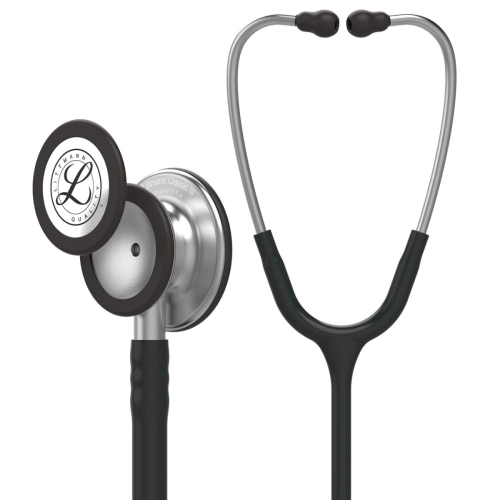
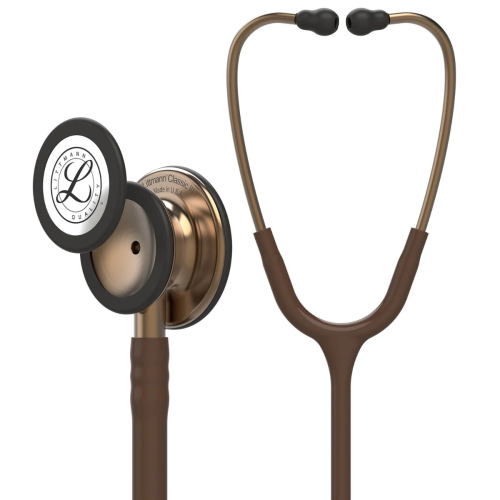
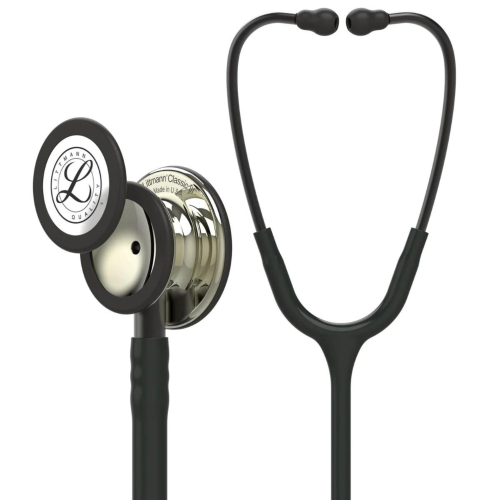
A versatile, efficient stethoscope designed for fast-paced outpatient care.
Everyday Clinics Need Reliable, Efficient Auscultation
In clinics, urgent care centers, and general practice settings, clinicians see a wide range of patients every day, often with limited time per visit. Accurate auscultation must be fast, reliable, and repeatable, whether assessing a child with respiratory symptoms or an adult with cardiovascular concerns.
The Littmann Classic III Stethoscope is widely used in outpatient environments because it delivers consistent acoustic performance, adult and pediatric versatility, and all-day comfort. It supports efficient patient flow without sacrificing sound quality or diagnostic confidence.
This guide explains why the Classic III is a trusted choice for clinics, urgent care, and general practice.
The Demands of Fast-Paced Outpatient Settings
Outpatient environments require clinicians to:
- Perform quick yet thorough assessments
- Move efficiently between patients
- Evaluate a wide range of ages and conditions
- Work in shared or moderately noisy spaces
The Classic III is designed to meet these demands with dependable acoustics and a streamlined exam process.
The Reality of Outpatient Visit Times and Assessment Priorities
Typical Time Constraints:
Primary care clinic:
- 15-20 minute appointments (total time including documentation)
- Actual face-to-face time with patient: 8-12 minutes
- Auscultation time available: 1-2 minutes maximum
Urgent care:
- 10-15 minute visits for straightforward complaints
- Higher volume, faster turnover expectations
- Focused assessments based on chief complaint
Walk-in clinic:
- High-volume, brief encounters
- Screening-level assessments
- Emphasis on efficiency and throughput
What This Means for Auscultation:
You're typically performing:
- Quick focused lung assessment (respiratory complaints)
- Brief cardiac assessment (chest pain, palpitations, hypertension)
- Rapid blood pressure measurement
- Targeted examination based on presenting symptoms
You're NOT typically performing:
- Lengthy detailed cardiac examination
- Extended lung field assessment in asymptomatic patients
- Comprehensive head-to-toe physical in routine visits
Assessment Priorities in Outpatient Care:
Primary goals:
- Rule out serious acute conditions requiring immediate intervention
- Identify findings requiring further workup
- Monitor chronic conditions (COPD, CHF, hypertension)
- Document baseline findings for comparison
The Classic III supports these focused, efficient assessments by providing clear sound quality for brief encounters, exactly what outpatient practice requires.
Reliable Auscultation Without Repositioning
The Classic III’s tunable diaphragm technology allows clinicians to hear low- and high-frequency sounds by simply adjusting pressure on the chestpiece. There’s no need to flip or reposition the diaphragm during exams.
This pressure-based tuning:
- Saves time during routine assessments
- Improves exam flow in high-volume settings
- Reduces unnecessary patient movement
Pediatric & Adult Versatility in One Tool
Clinics and urgent care centers often serve both adults and children. The Classic III’s dual-sided chestpiece supports:
- Adult assessments on the larger diaphragm
- Pediatric assessments on the smaller side
- Optional open-bell conversion using the included non-chill sleeve
This versatility eliminates the need for multiple stethoscopes in mixed patient environments.

Hearing Korotkoff Sounds Clearly
Accurate blood pressure measurement remains a cornerstone of outpatient care. The Classic III’s acoustic sensitivity allows clinicians to hear Korotkoff sounds more clearly during manual BP checks, supporting reliable readings across different patient populations.
This is especially important in:
- Urgent care triage
- Hypertension screening
- Routine primary care visits
Acoustic Performance in Everyday Clinical Use
The Classic III is optimized for routine cardiac and pulmonary assessment. Clinicians can reliably hear:
- Heart sounds and rhythms
- Breath sounds and airflow changes
- Subtle abnormalities during physical exams
This consistent performance supports confident clinical decision-making in outpatient settings.
Durability for High-Turnover Clinical Use
Stethoscopes in clinics are used frequently and must withstand daily wear. The
Classic III features next-generation tubing that:
- Resists damage from skin oils and alcohol
- Retains flexibility after repeated folding
- Is less prone to cracking or staining
This durability makes it well suited for high-turnover outpatient care.
Comfort for Long Clinic Days
Clinicians in outpatient settings often wear their stethoscope throughout the day. The Classic III’s lightweight construction, adjustable headset, and soft-sealing eartips help reduce neck strain and listening fatigue during long clinic hours.

Why Clinics Standardize on the Classic III
Many clinics and urgent care centers standardize on the Classic III because it offers:
- Consistent sound quality across providers
- Adult and pediatric versatility
- Comfort for daily, repeated use
- Long-term durability and value
It delivers professional performance without unnecessary complexity.
Who the Classic III Is Best Suited For in Outpatient Care
The Classic III is an excellent choice for:
- Family physicians and general practitioners
- Urgent care clinicians
- Nurse practitioners (NPs) and physician assistants (PAs)
- Walk-in clinic providers
- Ambulatory care teams
When an Alternative Littmann Model May Be Needed
Some outpatient providers may prefer a different model:
- Clinicians managing complex cardiac cases may benefit from the Cardiology IV
- Providers seeking digital amplification or recording may prefer the Littmann CORE
- Neonatal-focused practices should consider neonatal-specific Littmann stethoscopes
SurgoMed can help determine the best Littmann model for your practice needs.
Classic III vs. Cardiology IV: Which Do Outpatient Providers Actually Need?
For Most Outpatient Providers: Classic III Is Ideal
Why Classic III makes sense for primary care and urgent care:
✓ Acoustic performance matches typical needs - Routine cardiac/pulmonary assessment, BP measurement, pediatric evaluation
✓ Better value - Lower cost for capabilities you'll use regularly
✓ Adult/pediatric versatility - Essential for family practice and urgent care
✓ Lighter, more compact - Easier to carry between exam rooms
✓ More color options - Better availability
Clinical reality: The vast majority of outpatient assessments don't require the Cardiology IV's enhanced low-frequency sensitivity. You're screening for obvious abnormalities and deciding when to refer for advanced evaluation—not performing detailed cardiology assessments.
Consider Cardiology IV If You:
✓ Practice cardiology in outpatient setting (subspecialty focus)
✓ Manage complex heart failure patients extensively in clinic
✓ Frequently perform detailed murmur characterization
✓ See high proportion of cardiac patients requiring nuanced assessment
✓ Work in cardiology group practice where detailed auscultation is standard
The Honest Assessment by Provider Type:
Family medicine physicians: Classic III ideal for 95%+ of practice needs
Internal medicine (general): Classic III sufficient unless cardiac-focused subspecialty
Pediatricians: Classic III perfect—pediatric side essential, rarely need enhanced cardiac acoustics
Urgent care providers: Classic III ideal—focused assessments, high volume, diverse patients
NPs and PAs in primary care: Classic III appropriate for scope of practice
Cardiologists in clinic: Cardiology IV justified for subspecialty practice
OB/GYN: Classic III adequate for routine cardiac/pulmonary screening
Decision Framework:
Ask yourself: "What percentage of my patients require detailed cardiac assessment beyond screening?"
- Less than 10%: Classic III is right choice
- 10-30%: Either works; choose based on budget and preference
- More than 30%: Consider Cardiology IV
For most outpatient providers, the answer is "less than 10%", making the Classic III the smarter investment.
Final Assessment: Is the Classic III Right for Your Outpatient Practice?
The Classic III Excels in These Outpatient Settings:
✓ Family medicine and primary care clinics - Mixed adult/pediatric populations, routine screening
✓ Urgent care centers - High volume, diverse complaints, efficiency-focused
✓ Walk-in clinics - Quick assessments, rapid turnover
✓ Pediatric practices - Well-child visits, acute illness evaluation
✓ Internal medicine clinics - Adult chronic disease management, screening
✓ OB/GYN practices - Routine cardiac/pulmonary screening, prenatal assessment
✓ Occupational health - Pre-employment physicals, screening examinations
Consider Alternatives If:
✓ Cardiology subspecialty clinic (Cardiology IV appropriate)
✓ Extremely high-noise environment (digital with noise cancellation)
✓ Providers have hearing difficulties (Littmann CORE with amplification)
✓ Exclusively neonatal practice (dedicated neonatal stethoscopes)
What Actually Matters in Outpatient Practice:
The Classic III provides:
- Clear acoustics for focused, time-limited assessments
- Efficient workflow for high-volume settings
- Versatility for diverse patient populations
- Reliable performance for routine screening
Clinical success depends more on:
- Systematic examination technique - Same sequence every patient, every time
- Pattern recognition - Knowing what normal sounds like across patient types
- Clinical judgment - Integrating auscultation with history, symptoms, risk factors
- Knowing when to refer - Recognizing limits of outpatient assessment
- Time management - Balancing thoroughness with efficiency demands
The Classic III is an excellent tool that supports efficient, confident outpatient assessment. What makes the difference in patient care is your clinical skill, judgment, and systematic approach, not whether you use Classic III vs. premium cardiology models.
Explore Littmann Classic III stethoscopes at SurgoMed and choose the configuration that fits your outpatient practice needs. Focus your energy on developing efficient assessment workflows and strong clinical reasoning, those skills matter far more than equipment choices.
Common Questions from Outpatient Providers
Is the Classic III good enough for primary care, or should I upgrade to Cardiology IV?
For 95%+ of primary care and urgent care providers, the Classic III is ideal. You're performing focused screening assessments and deciding when to refer for advanced evaluation—not conducting detailed cardiology examinations.
Upgrade to Cardiology IV only if:
- You practice cardiology subspecialty in outpatient setting
- You manage primarily cardiac patients requiring detailed assessment
- You frequently characterize complex murmurs
Otherwise, save the cost difference and invest in other clinical equipment or education.
How do I know if my Classic III is working properly?
Quick function check:
- Tap diaphragm lightly while wearing stethoscope—you should hear clear tapping
- Scratch tubing lightly—sound should transmit clearly
- Check eartip seal—press gently against palm, should create suction/seal
- Verify binaural alignment—eartips should angle slightly forward
If sounds are muffled:
- Check that you're using correct diaphragm side (tap to verify)
- Try different eartip sizes for better seal
- Replace old/hardened eartips
- Clean any debris from diaphragm
Can I use the Classic III for both adults and small children effectively?
Yes, with these considerations:
Adults: Use larger diaphragm side—ideal for routine cardiac and lung assessment
School-age children and adolescents: Smaller pediatric side works excellently
Toddlers and preschoolers: Pediatric side appropriate
Infants: Pediatric side works but may still be large for tiny infants
Neonates: Dedicated neonatal stethoscope better suited (very specialized need)
For typical family practice or pediatric clinic serving children 2+ years: Classic III handles full age range effectively.
How often do clinic stethoscopes need replacement?
With proper care and normal use: 5-7+ years
Common reasons for premature replacement:
- Tubing cracks from improper storage (hot car, excessive coiling)
- Dropped repeatedly, damaging chestpiece
- Lost or stolen
- Degraded from harsh cleaning chemicals (bleach, hand sanitizer)
To maximize lifespan:
- Clean with alcohol wipes (not hand sanitizer)
- Store at room temperature
- Replace eartips regularly (improves seal and comfort)
- Handle carefully to avoid drops
Should our clinic buy one color for all rooms or let providers choose?
Considerations:
Uniform color:
- Professional consistency
- Clearly identifiable as clinic property
- Reduces personal attachment (less likely to "walk away")
Provider choice:
- Higher satisfaction
- Easier to identify personal stethoscope if mixed with clinic equipment
- May encourage better care/maintenance
Practical recommendation: Clinic purchases uniform model (Classic III) in high-visibility color (Caribbean blue, raspberry) for exam rooms. Providers who prefer personal stethoscope may use their own but clinic equipment always available as backup.
What's the best way to handle lost or stolen clinic stethoscopes?
Prevention strategies:
- Keep in exam rooms, not shared areas
- High-visibility colors harder to "accidentally take"
- Label with clinic name/room number
- Periodic inventory checks
When loss occurs:
- Check lost and found
- Ask staff if seen/relocated
- Replace promptly (patient care continuity matters)
- Track patterns (specific rooms/areas higher loss?)
Budget for attrition: Many clinics plan for 10-15% annual replacement due to loss, damage, or wear—build into equipment budget.

A versatile, efficient stethoscope designed for fast-paced outpatient care.
Everyday Clinics Need Reliable, Efficient Auscultation
In clinics, urgent care centers, and general practice settings, clinicians see a wide range of patients every day, often with limited time per visit. Accurate auscultation must be fast, reliable, and repeatable, whether assessing a child with respiratory symptoms or an adult with cardiovascular concerns.
The Littmann Classic III Stethoscope is widely used in outpatient environments because it delivers consistent acoustic performance, adult and pediatric versatility, and all-day comfort. It supports efficient patient flow without sacrificing sound quality or diagnostic confidence.
This guide explains why the Classic III is a trusted choice for clinics, urgent care, and general practice.
The Demands of Fast-Paced Outpatient Settings
Outpatient environments require clinicians to:
- Perform quick yet thorough assessments
- Move efficiently between patients
- Evaluate a wide range of ages and conditions
- Work in shared or moderately noisy spaces
The Classic III is designed to meet these demands with dependable acoustics and a streamlined exam process.
The Reality of Outpatient Visit Times and Assessment Priorities
Typical Time Constraints:
Primary care clinic:
- 15-20 minute appointments (total time including documentation)
- Actual face-to-face time with patient: 8-12 minutes
- Auscultation time available: 1-2 minutes maximum
Urgent care:
- 10-15 minute visits for straightforward complaints
- Higher volume, faster turnover expectations
- Focused assessments based on chief complaint
Walk-in clinic:
- High-volume, brief encounters
- Screening-level assessments
- Emphasis on efficiency and throughput
What This Means for Auscultation:
You're typically performing:
- Quick focused lung assessment (respiratory complaints)
- Brief cardiac assessment (chest pain, palpitations, hypertension)
- Rapid blood pressure measurement
- Targeted examination based on presenting symptoms
You're NOT typically performing:
- Lengthy detailed cardiac examination
- Extended lung field assessment in asymptomatic patients
- Comprehensive head-to-toe physical in routine visits
Assessment Priorities in Outpatient Care:
Primary goals:
- Rule out serious acute conditions requiring immediate intervention
- Identify findings requiring further workup
- Monitor chronic conditions (COPD, CHF, hypertension)
- Document baseline findings for comparison
The Classic III supports these focused, efficient assessments by providing clear sound quality for brief encounters, exactly what outpatient practice requires.
Reliable Auscultation Without Repositioning
The Classic III’s tunable diaphragm technology allows clinicians to hear low- and high-frequency sounds by simply adjusting pressure on the chestpiece. There’s no need to flip or reposition the diaphragm during exams.
This pressure-based tuning:
- Saves time during routine assessments
- Improves exam flow in high-volume settings
- Reduces unnecessary patient movement
Pediatric & Adult Versatility in One Tool
Clinics and urgent care centers often serve both adults and children. The Classic III’s dual-sided chestpiece supports:
- Adult assessments on the larger diaphragm
- Pediatric assessments on the smaller side
- Optional open-bell conversion using the included non-chill sleeve
This versatility eliminates the need for multiple stethoscopes in mixed patient environments.
Hearing Korotkoff Sounds Clearly
Accurate blood pressure measurement remains a cornerstone of outpatient care. The Classic III’s acoustic sensitivity allows clinicians to hear Korotkoff sounds more clearly during manual BP checks, supporting reliable readings across different patient populations.
This is especially important in:
- Urgent care triage
- Hypertension screening
- Routine primary care visits
Acoustic Performance in Everyday Clinical Use
The Classic III is optimized for routine cardiac and pulmonary assessment. Clinicians can reliably hear:
- Heart sounds and rhythms
- Breath sounds and airflow changes
- Subtle abnormalities during physical exams
This consistent performance supports confident clinical decision-making in outpatient settings.
Durability for High-Turnover Clinical Use
Stethoscopes in clinics are used frequently and must withstand daily wear. The
Classic III features next-generation tubing that:
- Resists damage from skin oils and alcohol
- Retains flexibility after repeated folding
- Is less prone to cracking or staining
This durability makes it well suited for high-turnover outpatient care.
Comfort for Long Clinic Days
Clinicians in outpatient settings often wear their stethoscope throughout the day. The Classic III’s lightweight construction, adjustable headset, and soft-sealing eartips help reduce neck strain and listening fatigue during long clinic hours.
Why Clinics Standardize on the Classic III
Many clinics and urgent care centers standardize on the Classic III because it offers:
- Consistent sound quality across providers
- Adult and pediatric versatility
- Comfort for daily, repeated use
- Long-term durability and value
It delivers professional performance without unnecessary complexity.
Who the Classic III Is Best Suited For in Outpatient Care
The Classic III is an excellent choice for:
- Family physicians and general practitioners
- Urgent care clinicians
- Nurse practitioners (NPs) and physician assistants (PAs)
- Walk-in clinic providers
- Ambulatory care teams
When an Alternative Littmann Model May Be Needed
Some outpatient providers may prefer a different model:
- Clinicians managing complex cardiac cases may benefit from the Cardiology IV
- Providers seeking digital amplification or recording may prefer the Littmann CORE
- Neonatal-focused practices should consider neonatal-specific Littmann stethoscopes
SurgoMed can help determine the best Littmann model for your practice needs.
Classic III vs. Cardiology IV: Which Do Outpatient Providers Actually Need?
For Most Outpatient Providers: Classic III Is Ideal
Why Classic III makes sense for primary care and urgent care:
✓ Acoustic performance matches typical needs - Routine cardiac/pulmonary assessment, BP measurement, pediatric evaluation
✓ Better value - Lower cost for capabilities you'll use regularly
✓ Adult/pediatric versatility - Essential for family practice and urgent care
✓ Lighter, more compact - Easier to carry between exam rooms
✓ More color options - Better availability
Clinical reality: The vast majority of outpatient assessments don't require the Cardiology IV's enhanced low-frequency sensitivity. You're screening for obvious abnormalities and deciding when to refer for advanced evaluation—not performing detailed cardiology assessments.
Consider Cardiology IV If You:
✓ Practice cardiology in outpatient setting (subspecialty focus)
✓ Manage complex heart failure patients extensively in clinic
✓ Frequently perform detailed murmur characterization
✓ See high proportion of cardiac patients requiring nuanced assessment
✓ Work in cardiology group practice where detailed auscultation is standard
The Honest Assessment by Provider Type:
Family medicine physicians: Classic III ideal for 95%+ of practice needs
Internal medicine (general): Classic III sufficient unless cardiac-focused subspecialty
Pediatricians: Classic III perfect—pediatric side essential, rarely need enhanced cardiac acoustics
Urgent care providers: Classic III ideal—focused assessments, high volume, diverse patients
NPs and PAs in primary care: Classic III appropriate for scope of practice
Cardiologists in clinic: Cardiology IV justified for subspecialty practice
OB/GYN: Classic III adequate for routine cardiac/pulmonary screening
Decision Framework:
Ask yourself: "What percentage of my patients require detailed cardiac assessment beyond screening?"
- Less than 10%: Classic III is right choice
- 10-30%: Either works; choose based on budget and preference
- More than 30%: Consider Cardiology IV
For most outpatient providers, the answer is "less than 10%", making the Classic III the smarter investment.
Final Assessment: Is the Classic III Right for Your Outpatient Practice?
The Classic III Excels in These Outpatient Settings:
✓ Family medicine and primary care clinics - Mixed adult/pediatric populations, routine screening
✓ Urgent care centers - High volume, diverse complaints, efficiency-focused
✓ Walk-in clinics - Quick assessments, rapid turnover
✓ Pediatric practices - Well-child visits, acute illness evaluation
✓ Internal medicine clinics - Adult chronic disease management, screening
✓ OB/GYN practices - Routine cardiac/pulmonary screening, prenatal assessment
✓ Occupational health - Pre-employment physicals, screening examinations
Consider Alternatives If:
✓ Cardiology subspecialty clinic (Cardiology IV appropriate)
✓ Extremely high-noise environment (digital with noise cancellation)
✓ Providers have hearing difficulties (Littmann CORE with amplification)
✓ Exclusively neonatal practice (dedicated neonatal stethoscopes)
What Actually Matters in Outpatient Practice:
The Classic III provides:
- Clear acoustics for focused, time-limited assessments
- Efficient workflow for high-volume settings
- Versatility for diverse patient populations
- Reliable performance for routine screening
Clinical success depends more on:
- Systematic examination technique - Same sequence every patient, every time
- Pattern recognition - Knowing what normal sounds like across patient types
- Clinical judgment - Integrating auscultation with history, symptoms, risk factors
- Knowing when to refer - Recognizing limits of outpatient assessment
- Time management - Balancing thoroughness with efficiency demands
The Classic III is an excellent tool that supports efficient, confident outpatient assessment. What makes the difference in patient care is your clinical skill, judgment, and systematic approach, not whether you use Classic III vs. premium cardiology models.
Explore Littmann Classic III stethoscopes at SurgoMed and choose the configuration that fits your outpatient practice needs. Focus your energy on developing efficient assessment workflows and strong clinical reasoning, those skills matter far more than equipment choices.
Common Questions from Outpatient Providers
Is the Classic III good enough for primary care, or should I upgrade to Cardiology IV?
For 95%+ of primary care and urgent care providers, the Classic III is ideal. You're performing focused screening assessments and deciding when to refer for advanced evaluation—not conducting detailed cardiology examinations.
Upgrade to Cardiology IV only if:
- You practice cardiology subspecialty in outpatient setting
- You manage primarily cardiac patients requiring detailed assessment
- You frequently characterize complex murmurs
Otherwise, save the cost difference and invest in other clinical equipment or education.
How do I know if my Classic III is working properly?
Quick function check:
- Tap diaphragm lightly while wearing stethoscope—you should hear clear tapping
- Scratch tubing lightly—sound should transmit clearly
- Check eartip seal—press gently against palm, should create suction/seal
- Verify binaural alignment—eartips should angle slightly forward
If sounds are muffled:
- Check that you're using correct diaphragm side (tap to verify)
- Try different eartip sizes for better seal
- Replace old/hardened eartips
- Clean any debris from diaphragm
Can I use the Classic III for both adults and small children effectively?
Yes, with these considerations:
Adults: Use larger diaphragm side—ideal for routine cardiac and lung assessment
School-age children and adolescents: Smaller pediatric side works excellently
Toddlers and preschoolers: Pediatric side appropriate
Infants: Pediatric side works but may still be large for tiny infants
Neonates: Dedicated neonatal stethoscope better suited (very specialized need)
For typical family practice or pediatric clinic serving children 2+ years: Classic III handles full age range effectively.
How often do clinic stethoscopes need replacement?
With proper care and normal use: 5-7+ years
Common reasons for premature replacement:
- Tubing cracks from improper storage (hot car, excessive coiling)
- Dropped repeatedly, damaging chestpiece
- Lost or stolen
- Degraded from harsh cleaning chemicals (bleach, hand sanitizer)
To maximize lifespan:
- Clean with alcohol wipes (not hand sanitizer)
- Store at room temperature
- Replace eartips regularly (improves seal and comfort)
- Handle carefully to avoid drops
Should our clinic buy one color for all rooms or let providers choose?
Considerations:
Uniform color:
- Professional consistency
- Clearly identifiable as clinic property
- Reduces personal attachment (less likely to "walk away")
Provider choice:
- Higher satisfaction
- Easier to identify personal stethoscope if mixed with clinic equipment
- May encourage better care/maintenance
Practical recommendation: Clinic purchases uniform model (Classic III) in high-visibility color (Caribbean blue, raspberry) for exam rooms. Providers who prefer personal stethoscope may use their own but clinic equipment always available as backup.
What's the best way to handle lost or stolen clinic stethoscopes?
Prevention strategies:
- Keep in exam rooms, not shared areas
- High-visibility colors harder to "accidentally take"
- Label with clinic name/room number
- Periodic inventory checks
When loss occurs:
- Check lost and found
- Ask staff if seen/relocated
- Replace promptly (patient care continuity matters)
- Track patterns (specific rooms/areas higher loss?)
Budget for attrition: Many clinics plan for 10-15% annual replacement due to loss, damage, or wear—build into equipment budget.
