

Assessing older adults requires patience, precision, and clear auscultation. In geriatric care and long-term care (LTC) facilities, clinicians frequently struggle with soft breath sounds, quiet heart tones, and subtle abnormalities that are easy to miss with a traditional acoustic stethoscope. Shared rooms, hallway noise, televisions, and background activity make listening even harder.
The Littmann CORE Digital Stethoscope offers the greatest value in challenging clinical scenarios: patients with very faint breath sounds, noisy LTC environments, or when clinicians need to detect subtle early changes. However, many routine assessments in older adults can still be performed effectively with quality acoustic stethoscopes, particularly in quiet environments with cooperative patients.
This guide focuses on situations where digital auscultation provides meaningful clinical advantages. For geriatric clinicians, these advantages are especially important because a high-quality digital stethoscope can reveal subtle age-related changes that even experienced providers may miss with acoustic models. 
Why Auscultation Is More Difficult in Older Adults
Older adults often have physiological changes that make sounds quieter and harder to interpret, including:
- Diminished breath sounds
- Reduced lung elasticity
- Calcified rib cages limiting expansion
- Kyphosis affecting sound transmission
- Lower respiratory effort
- Coexisting heart or lung conditions
- Thicker chest walls
- Soft or irregular heart tones
- Clinician hearing loss that affects detection
These challenges are a major reason many LTC and geriatric teams are transitioning to electronic stethoscope technology, which enhances faint or low-amplitude physiological sounds. Because geriatric assessments often depend on identifying very faint abnormalities, a digital stethoscope with amplification offers a major advantage.
How the Littmann CORE Supports Geriatric Assessment
Amplification Makes Soft Breath & Heart Sounds Easier to Detect
Many elderly patients produce breath sounds that are extremely quiet. The Littmann CORE’s up to 40x amplification helps clinicians hear:
- Fine crackles (early CHF or pneumonia)
- Soft wheezes in COPD or asthma
- Diminished breath sounds
- Basilar crackling in heart failure
- Irregular heart rhythms
- Low-grade murmurs
- Quiet bowel sounds
Amplification is also useful for clinicians with mild hearing differences, making it one of the top digital stethoscopes for older adults.
Please Note: While amplification helps detect faint sounds, it can initially feel overwhelming. Most clinicians benefit from starting at lower amplification levels and adjusting as needed.
Active Noise Cancellation Helps in LTC & Shared Spaces
Long-term care facilities are rarely quiet. Common noise sources include:
- Shared rooms
- Televisions
- Dining hall activity
- Equipment noise
- Staff conversations
- Hallway traffic
The CORE’s active noise cancellation (ANC) filter out environmental noise so clinician can hear soft respiratory or cardiac abnormalities even in busy surroundings. This is especially helpful for assessing cognitively impaired patients who cannot tolerate lengthy exams. Research demonstrates that digital stethoscopes with active noise cancellation maintain acoustic fidelity even in environments with significant background noise, a validated benefit for busy LTC settings where traditional auscultation often fails. This kind of clarity is possible only with an advanced electronic stethoscope, which processes environmental noise differently than acoustic tools.
Better Detection of Early Respiratory Conditions
Older adults face high risk of respiratory complications. Amplification improves detection of:
- Congestive heart failure (fine crackles)
- Pneumonia (localized or asymmetric sounds)
- COPD exacerbations
- Atelectasis
- Aspiration
- Bronchitis
Early recognition prevents avoidable hospital transfers, deterioration, and complications. Studies show that electronic amplification improves clinician ability to detect abnormal lung sounds, including crackles and wheezes that may be missed with standard acoustic stethoscopes. This is particularly important for early pneumonia and CHF detection in older adults. These improvements make a high-quality digital stethoscope especially valuable for clinicians responsible for early infection or CHF identification in LTC settings.
Enhanced Cardiac Assessment in Older Adults
Geriatric patients commonly present with:
- Atrial fibrillation
- Soft murmurs
- S3 or S4 gallops
- Aortic stenosis or regurgitation
- Low-amplitude heart sounds
The CORE’s digital clarity helps distinguish:
- Normal aging changes
- New murmurs or progression
- Subtle extra heart sounds
- Irregular rhythms
Because cardiac findings in older adults are often low-amplitude, a precision-engineered electronic stethoscope can make subtle abnormalities easier to detect and track over time.

Helpful for Patients with Kyphosis, Mobility Limits, or Pain
Many older adults cannot sit upright or maintain the ideal position for auscultation. The Littmann CORE improves accuracy when assessing:
- Wheelchair users
- Bedbound seniors
- Frail or palliative patients
- Individuals with severe kyphosis
Amplification compensates for limited positioning or difficulty accessing posterior lung fields. In these scenarios, a digital stethoscope provides clearer sound despite compromised positioning, making assessments more reliable.
Ideal for Home-Care & Mobile Clinicians
Home environments include unpredictable noise such as TVs, kitchen sounds, pets, or family conversations. The CORE maintains consistent clarity, and clinicians can use secure digital recordings to:
- Consult with physicians or NPs
- Document changes over time
- Escalate concerns earlier
- Improve care planning
This makes it a top choice for home-care nursing and mobile LTC assessments. The ability to record and transmit heart and lung sounds has been validated in research as improving remote consultation quality and diagnostic accuracy—especially valuable when specialists cannot physically examine patients in home or LTC settings. This remote-sharing capabbility is a major advantage of using a modern electronic stethoscope in geriatric care.
Improves Communication Between LTC Teams & Physicians
Using the Eko App, clinicians can securely share:
- Recorded breath sounds
- Recorded heart sounds
- Waveforms
- Comparisons over time
This supports:
- Earlier escalation of concerns
- Collaborative decision-making
- Reduced ER transfers
- Stronger continuity of care
These collaboration efficiencies illustrate why many facilities now integrate at least one digital stethoscope into their clinical workflow.

Excellent Teaching Tool for Residents, Students & New Nurses
The CORE enhances clinical teaching through:
- Saved sound recordings
- Waveform visualization
- Replayable case examples
- Comparison of old vs new findings
Learners benefit from digital clarity when interpreting complex geriatric physiology.
Clinical Evidence Supporting Digital Stethoscopes in Older Adults
Recent research validates the benefits of digital stethoscopes for geriatric populations. A 2023 systematic review published in Diagnostics examined digital stethoscope performance across multiple studies and found:
Key Findings:
- Digital stethoscopes with noise reduction showed improved sound quality in noisy clinical environments—a common challenge in LTC facilities
- Electronic amplification enhanced detection of faint respiratory and cardiac sounds, particularly relevant for older adults with diminished breath sounds
- Digital recordings enabled more accurate documentation and remote consultation with specialists
- Studies demonstrated that digital stethoscopes performed comparably or superior to acoustic models for detecting abnormal lung and heart sounds
Specific Relevance to Geriatric Care: The review noted that digital stethoscopes were particularly beneficial in settings where:
- Ambient noise interferes with auscultation (typical in LTC)
- Patients produce soft or difficult-to-hear sounds (common in elderly populations)
- Clinical teams need to share findings for collaborative decision-making
- Documentation and longitudinal comparison are important
While more geriatric-specific validation studies are needed, existing evidence supports digital stethoscopes as effective tools for assessing older adults, especially in challenging acoustic environments.
Source: Diagnostics 2023, 13(9), 1545
Infection Prevention & Control with Digital Stethoscopes
In geriatric and LTC settings, infection control is critical—particularly for shared equipment used across multiple residents.
Cleaning the Littmann CORE:
- The diaphragm and tubing can be cleaned with 70% isopropyl alcohol, mild soap and water, or approved disinfectant wipes
- The electronic components are NOT waterproof—avoid submerging or using excessive liquid
- Clean between each patient use, following your facility's infection control protocols
- Pay special attention to the diaphragm surface, which contacts skin
Key Differences from Acoustic Stethoscopes:
- Cannot be autoclaved or steam sterilized
- Requires more careful cleaning around electronic components
- Charging port must be kept dry
- Screen and buttons need gentle cleaning methods
These additional precautions are typical for any electronic stethoscope, which contains sensitive components not found in acoustic models.
Best Practices for LTC Settings:
- Assign stethoscopes to individual clinicians when possible (reduces cross-contamination risk)
- If sharing devices, establish clear cleaning protocols and compliance monitoring
- Consider disposable stethoscope covers for high-risk patients (C. diff, MRSA, VRE)
- Store in clean, dry location between uses
- Include in regular equipment audits
Battery Compartment Concerns:
- Keep charging port clean and dry
- Avoid cleaning solution seeping into electronic components
- Replace damaged or cracked housing immediately
For facilities with strict infection control requirements, discuss digital device protocols with your Infection Prevention & Control team before implementation.
Is the Littmann CORE Worth It for Geriatric & LTC Clinicians?
For most clinicians working with older adults, it depends on your practice context.
The CORE provides the greatest return on investment if you regularly encounter challenging auscultation scenarios. It's particularly valuable if you:
- Work in LTC, geriatric units, or home care
- Frequently struggle to hear soft or diminished breath sounds
- Need to detect early CHF or pneumonia in high-risk patients
- Work in consistently noisy environments
- Assess patients with severe mobility limitations
- Have mild hearing difficulties
- Teach learners or staff regularly
You may not need the CORE if:
- You work primarily in quiet clinical settings
- Most patients have normal-intensity breath sounds
- Budget constraints make the $500+ investment prohibitive
- You're satisfied with your current acoustic stethoscope's performance
- Your facility lacks infrastructure for digital health tools
Evidence-Based Value
Clinical research supports the use of digital stethoscopes for improving auscultation quality, especially in noisy environments and with patients who have faint sounds—both common scenarios in geriatric care. While most validation studies have been conducted in general populations, the acoustic challenges documented in research (ambient noise, soft sounds, need for remote consultation) align closely with geriatric practice realities.
Frequently Asked Questions
Is the Littmann CORE helpful for older adults with very quiet breath sounds?
Yes. Amplification makes subtle and diminished breath sounds much easier to detect.
Does active noise cancellation work well in LTC facilities?
Yes, ANC performs extremely well in shared rooms, hallways, dining rooms, and activity areas.
Is the pediatric side useful in geriatric care?
Yes. It is ideal for frail or thin older adults with narrow intercostal spaces.
Will the CORE help clinicinas with mild hearing difficulties?
Absolutely. It’s one of the best digital stethoscopes for clinicians with hearing differences.
Can recordings be shared with physicians?
Yes. The Eko App enables encrypted, secure sharing of lung and heart sounds.
Is the Littmann CORE worth the price for LTC clinicians?
Yes. It helps prevent missed early changes in respiratory or cardiac status, supporting patient outcomes.
How do I clean the Littmann CORE between patients?
Wipe the diaphragm and tubing with 70% isopropyl alcohol or approved disinfectant wipes after each patient contact. Avoid getting moisture in the charging port or electronic components. The CORE cannot be autoclaved. Follow your facility's infection control protocols and consider disposable covers for high-risk patients.
Is there research supporting digital stethoscopes for older adults?
Yes. A 2023 systematic review in Diagnostics found that digital stethoscopes with amplification and noise reduction improved sound detection in challenging clinical environments and enhanced documentation capabilities. While more geriatric-specific studies are needed, existing evidence supports their effectiveness for detecting respiratory and cardiac abnormalities, particularly in noisy settings common in LTC facilities.
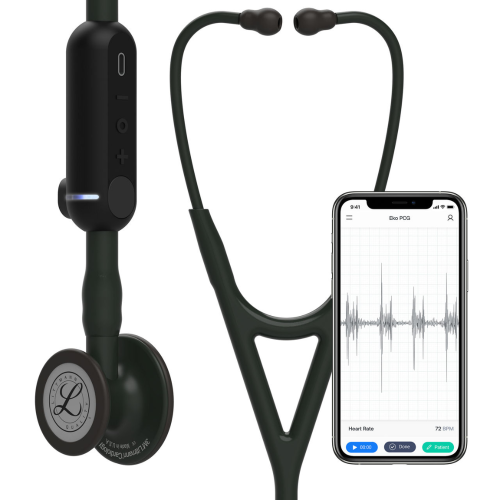

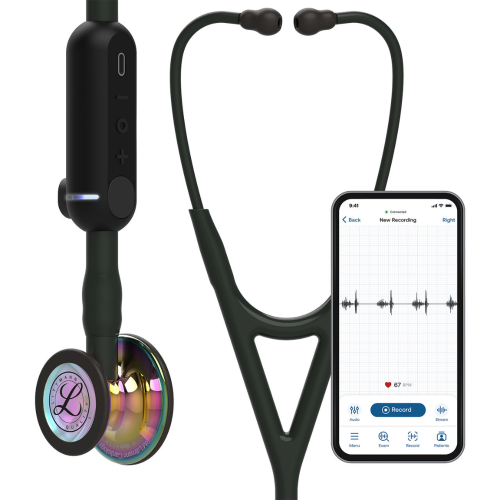
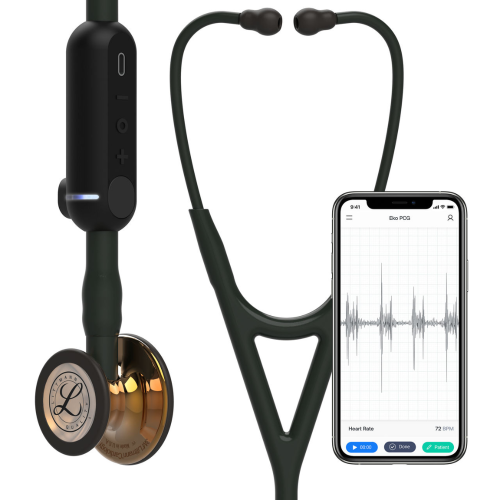
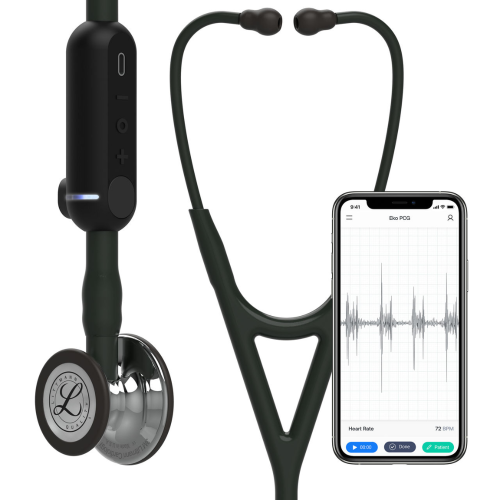
Assessing older adults requires patience, precision, and clear auscultation. In geriatric care and long-term care (LTC) facilities, clinicians frequently struggle with soft breath sounds, quiet heart tones, and subtle abnormalities that are easy to miss with a traditional acoustic stethoscope. Shared rooms, hallway noise, televisions, and background activity make listening even harder.
The Littmann CORE Digital Stethoscope offers the greatest value in challenging clinical scenarios: patients with very faint breath sounds, noisy LTC environments, or when clinicians need to detect subtle early changes. However, many routine assessments in older adults can still be performed effectively with quality acoustic stethoscopes, particularly in quiet environments with cooperative patients.
This guide focuses on situations where digital auscultation provides meaningful clinical advantages. For geriatric clinicians, these advantages are especially important because a high-quality digital stethoscope can reveal subtle age-related changes that even experienced providers may miss with acoustic models.
Why Auscultation Is More Difficult in Older Adults
Older adults often have physiological changes that make sounds quieter and harder to interpret, including:
- Diminished breath sounds
- Reduced lung elasticity
- Calcified rib cages limiting expansion
- Kyphosis affecting sound transmission
- Lower respiratory effort
- Coexisting heart or lung conditions
- Thicker chest walls
- Soft or irregular heart tones
- Clinician hearing loss that affects detection
These challenges are a major reason many LTC and geriatric teams are transitioning to electronic stethoscope technology, which enhances faint or low-amplitude physiological sounds. Because geriatric assessments often depend on identifying very faint abnormalities, a digital stethoscope with amplification offers a major advantage.
How the Littmann CORE Supports Geriatric Assessment
Amplification Makes Soft Breath & Heart Sounds Easier to Detect
Many elderly patients produce breath sounds that are extremely quiet. The Littmann CORE’s up to 40x amplification helps clinicians hear:
- Fine crackles (early CHF or pneumonia)
- Soft wheezes in COPD or asthma
- Diminished breath sounds
- Basilar crackling in heart failure
- Irregular heart rhythms
- Low-grade murmurs
- Quiet bowel sounds
Amplification is also useful for clinicians with mild hearing differences, making it one of the top digital stethoscopes for older adults.
Please Note: While amplification helps detect faint sounds, it can initially feel overwhelming. Most clinicians benefit from starting at lower amplification levels and adjusting as needed.
Active Noise Cancellation Helps in LTC & Shared Spaces
Long-term care facilities are rarely quiet. Common noise sources include:
- Shared rooms
- Televisions
- Dining hall activity
- Equipment noise
- Staff conversations
- Hallway traffic
The CORE’s active noise cancellation (ANC) filter out environmental noise so clinician can hear soft respiratory or cardiac abnormalities even in busy surroundings. This is especially helpful for assessing cognitively impaired patients who cannot tolerate lengthy exams. Research demonstrates that digital stethoscopes with active noise cancellation maintain acoustic fidelity even in environments with significant background noise, a validated benefit for busy LTC settings where traditional auscultation often fails. This kind of clarity is possible only with an advanced electronic stethoscope, which processes environmental noise differently than acoustic tools.
Better Detection of Early Respiratory Conditions
Older adults face high risk of respiratory complications. Amplification improves detection of:
- Congestive heart failure (fine crackles)
- Pneumonia (localized or asymmetric sounds)
- COPD exacerbations
- Atelectasis
- Aspiration
- Bronchitis
Early recognition prevents avoidable hospital transfers, deterioration, and complications. Studies show that electronic amplification improves clinician ability to detect abnormal lung sounds, including crackles and wheezes that may be missed with standard acoustic stethoscopes. This is particularly important for early pneumonia and CHF detection in older adults. These improvements make a high-quality digital stethoscope especially valuable for clinicians responsible for early infection or CHF identification in LTC settings.
Enhanced Cardiac Assessment in Older Adults
Geriatric patients commonly present with:
- Atrial fibrillation
- Soft murmurs
- S3 or S4 gallops
- Aortic stenosis or regurgitation
- Low-amplitude heart sounds
The CORE’s digital clarity helps distinguish:
- Normal aging changes
- New murmurs or progression
- Subtle extra heart sounds
- Irregular rhythms
Because cardiac findings in older adults are often low-amplitude, a precision-engineered electronic stethoscope can make subtle abnormalities easier to detect and track over time.
Helpful for Patients with Kyphosis, Mobility Limits, or Pain
Many older adults cannot sit upright or maintain the ideal position for auscultation. The Littmann CORE improves accuracy when assessing:
- Wheelchair users
- Bedbound seniors
- Frail or palliative patients
- Individuals with severe kyphosis
Amplification compensates for limited positioning or difficulty accessing posterior lung fields. In these scenarios, a digital stethoscope provides clearer sound despite compromised positioning, making assessments more reliable.
Ideal for Home-Care & Mobile Clinicians
Home environments include unpredictable noise such as TVs, kitchen sounds, pets, or family conversations. The CORE maintains consistent clarity, and clinicians can use secure digital recordings to:
- Consult with physicians or NPs
- Document changes over time
- Escalate concerns earlier
- Improve care planning
This makes it a top choice for home-care nursing and mobile LTC assessments. The ability to record and transmit heart and lung sounds has been validated in research as improving remote consultation quality and diagnostic accuracy—especially valuable when specialists cannot physically examine patients in home or LTC settings. This remote-sharing capabbility is a major advantage of using a modern electronic stethoscope in geriatric care.
Improves Communication Between LTC Teams & Physicians
Using the Eko App, clinicians can securely share:
- Recorded breath sounds
- Recorded heart sounds
- Waveforms
- Comparisons over time
This supports:
- Earlier escalation of concerns
- Collaborative decision-making
- Reduced ER transfers
- Stronger continuity of care
These collaboration efficiencies illustrate why many facilities now integrate at least one digital stethoscope into their clinical workflow.
Excellent Teaching Tool for Residents, Students & New Nurses
The CORE enhances clinical teaching through:
- Saved sound recordings
- Waveform visualization
- Replayable case examples
- Comparison of old vs new findings
Learners benefit from digital clarity when interpreting complex geriatric physiology.
Clinical Evidence Supporting Digital Stethoscopes in Older Adults
Recent research validates the benefits of digital stethoscopes for geriatric populations. A 2023 systematic review published in Diagnostics examined digital stethoscope performance across multiple studies and found:
Key Findings:
- Digital stethoscopes with noise reduction showed improved sound quality in noisy clinical environments—a common challenge in LTC facilities
- Electronic amplification enhanced detection of faint respiratory and cardiac sounds, particularly relevant for older adults with diminished breath sounds
- Digital recordings enabled more accurate documentation and remote consultation with specialists
- Studies demonstrated that digital stethoscopes performed comparably or superior to acoustic models for detecting abnormal lung and heart sounds
Specific Relevance to Geriatric Care: The review noted that digital stethoscopes were particularly beneficial in settings where:
- Ambient noise interferes with auscultation (typical in LTC)
- Patients produce soft or difficult-to-hear sounds (common in elderly populations)
- Clinical teams need to share findings for collaborative decision-making
- Documentation and longitudinal comparison are important
While more geriatric-specific validation studies are needed, existing evidence supports digital stethoscopes as effective tools for assessing older adults, especially in challenging acoustic environments.
Source: Diagnostics 2023, 13(9), 1545
Infection Prevention & Control with Digital Stethoscopes
In geriatric and LTC settings, infection control is critical—particularly for shared equipment used across multiple residents.
Cleaning the Littmann CORE:
- The diaphragm and tubing can be cleaned with 70% isopropyl alcohol, mild soap and water, or approved disinfectant wipes
- The electronic components are NOT waterproof—avoid submerging or using excessive liquid
- Clean between each patient use, following your facility's infection control protocols
- Pay special attention to the diaphragm surface, which contacts skin
Key Differences from Acoustic Stethoscopes:
- Cannot be autoclaved or steam sterilized
- Requires more careful cleaning around electronic components
- Charging port must be kept dry
- Screen and buttons need gentle cleaning methods
These additional precautions are typical for any electronic stethoscope, which contains sensitive components not found in acoustic models.
Best Practices for LTC Settings:
- Assign stethoscopes to individual clinicians when possible (reduces cross-contamination risk)
- If sharing devices, establish clear cleaning protocols and compliance monitoring
- Consider disposable stethoscope covers for high-risk patients (C. diff, MRSA, VRE)
- Store in clean, dry location between uses
- Include in regular equipment audits
Battery Compartment Concerns:
- Keep charging port clean and dry
- Avoid cleaning solution seeping into electronic components
- Replace damaged or cracked housing immediately
For facilities with strict infection control requirements, discuss digital device protocols with your Infection Prevention & Control team before implementation.
Is the Littmann CORE Worth It for Geriatric & LTC Clinicians?
For most clinicians working with older adults, it depends on your practice context.
The CORE provides the greatest return on investment if you regularly encounter challenging auscultation scenarios. It's particularly valuable if you:
- Work in LTC, geriatric units, or home care
- Frequently struggle to hear soft or diminished breath sounds
- Need to detect early CHF or pneumonia in high-risk patients
- Work in consistently noisy environments
- Assess patients with severe mobility limitations
- Have mild hearing difficulties
- Teach learners or staff regularly
You may not need the CORE if:
- You work primarily in quiet clinical settings
- Most patients have normal-intensity breath sounds
- Budget constraints make the $500+ investment prohibitive
- You're satisfied with your current acoustic stethoscope's performance
- Your facility lacks infrastructure for digital health tools
Evidence-Based Value
Clinical research supports the use of digital stethoscopes for improving auscultation quality, especially in noisy environments and with patients who have faint sounds—both common scenarios in geriatric care. While most validation studies have been conducted in general populations, the acoustic challenges documented in research (ambient noise, soft sounds, need for remote consultation) align closely with geriatric practice realities.
Frequently Asked Questions
Is the Littmann CORE helpful for older adults with very quiet breath sounds?
Yes. Amplification makes subtle and diminished breath sounds much easier to detect.
Does active noise cancellation work well in LTC facilities?
Yes, ANC performs extremely well in shared rooms, hallways, dining rooms, and activity areas.
Is the pediatric side useful in geriatric care?
Yes. It is ideal for frail or thin older adults with narrow intercostal spaces.
Will the CORE help clinicinas with mild hearing difficulties?
Absolutely. It’s one of the best digital stethoscopes for clinicians with hearing differences.
Can recordings be shared with physicians?
Yes. The Eko App enables encrypted, secure sharing of lung and heart sounds.
Is the Littmann CORE worth the price for LTC clinicians?
Yes. It helps prevent missed early changes in respiratory or cardiac status, supporting patient outcomes.
How do I clean the Littmann CORE between patients?
Wipe the diaphragm and tubing with 70% isopropyl alcohol or approved disinfectant wipes after each patient contact. Avoid getting moisture in the charging port or electronic components. The CORE cannot be autoclaved. Follow your facility's infection control protocols and consider disposable covers for high-risk patients.
Is there research supporting digital stethoscopes for older adults?
Yes. A 2023 systematic review in Diagnostics found that digital stethoscopes with amplification and noise reduction improved sound detection in challenging clinical environments and enhanced documentation capabilities. While more geriatric-specific studies are needed, existing evidence supports their effectiveness for detecting respiratory and cardiac abnormalities, particularly in noisy settings common in LTC facilities.
