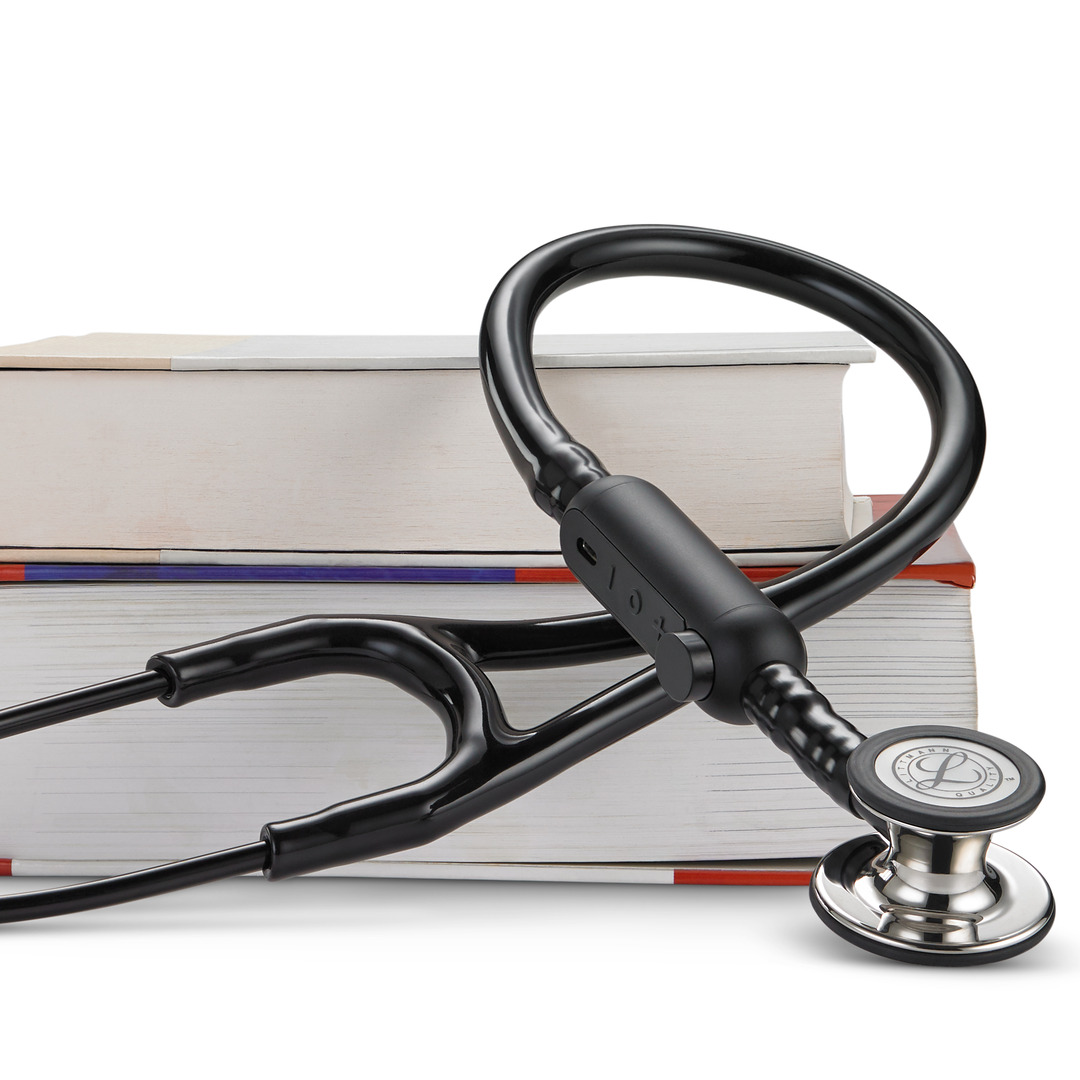
For medical and nursing students, one of the most exciting (and nerve-wracking) purchases early in your education is your stethoscope. It becomes the tool you practice with, carry every day, and rely on as you build your auscultation skills from the ground up. With the rise of digital stethoscopes, many students wonder whether investing in the Littmann CORE Digital Stethoscope is worth the cost while still in school.
The Littmann CORE offers advanced digital amplification, active noise cancellation, waveform visualization, and optional recording tools. These features can genuinely help learners develop stronger auscultation skills faster, but the device also comes at a higher price than traditional acoustic models. These features set the Littmamn CORE apart from traaditional acoustic models and earlier generations of electronic stethoscope designs.
This comprehensive guide explores whether the Littmann CORE is the right choice for medical, nursing, and allied health students, helping you decide if it’s a smart investment for your education and future career. 
Why Students Struggle With Auscultation at First
Learning to interpret heart, lung, and bowel sounds takes practice, and lots of it. In your first months of clinical training, almost everyone struggles with the same challenges:
- Difficulty distinguishing normal from abnormal sounds
- Trouble hearing faint noises
- PPE making listening more difficult
- Background noise in clinical environments
- Uncertainty about what certain murmurs or wheezes “should” sound like
- Confusion between timing of S1/S2 and murmurs
- Inconsistent sound quality from different stethoscopes
- Anxiety during clinical exams or patient assessments
A high-quality stethoscope can ease that learning curve significantly by providing clearer, more consistent, more recognizable sound patterns. This is where a digital stethoscope can make a noticeable difference, offering clearer, more consistent sound during early practice.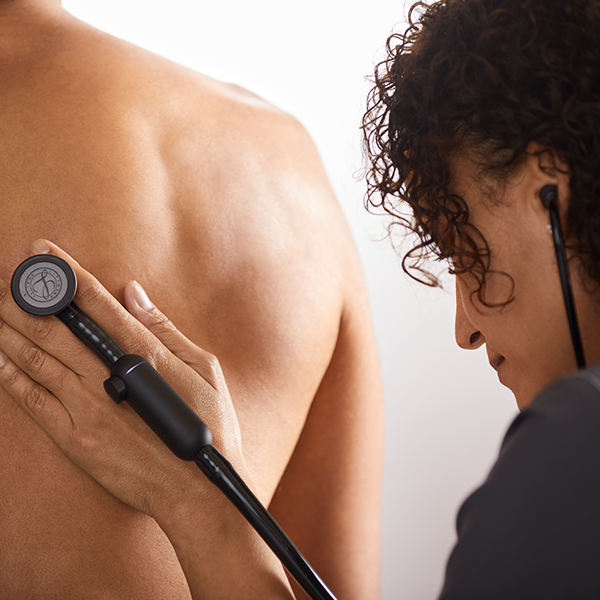
Why Many Students Choose the Littmann CORE
The Littmann CORE offers several strong advantages for medical and nursing students who are actively learning auscultation.
1. Amplification Helps Students Learn What Abnormal Sounds Actually Sound Like
The CORE’s up to 40x amplification is one of the biggest benefits for learners. New students often say:
“I don’t know what I’m listening for.”
Hearing abnormalities clearly, without strain, helps students learn the difference between:
- Crackles vs rhonchi
- Coarse vs fine crackles
- Innocent murmurs vs pathological murmurs
- Wheezing vs diminished air entry
- Normal bowel sounds vs hypoactive sounds
Amplification makes subtle findings more obvious, helping students build a mental “library” of sounds more quickly. This level of clarity is one of the main reasons students consider upgrading to a digital stethoscope rather than relying solely on acoustic models.
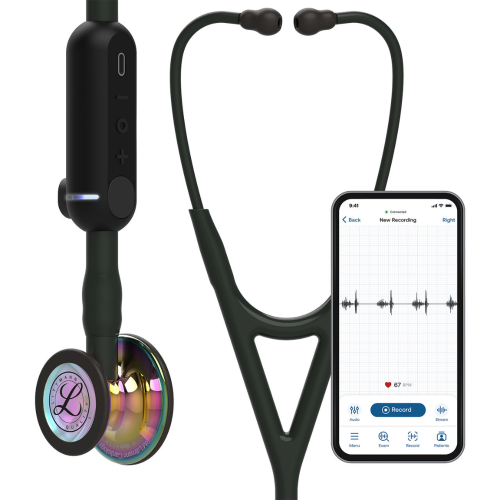
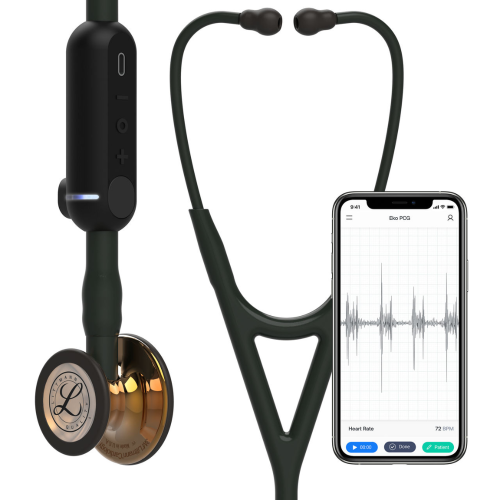
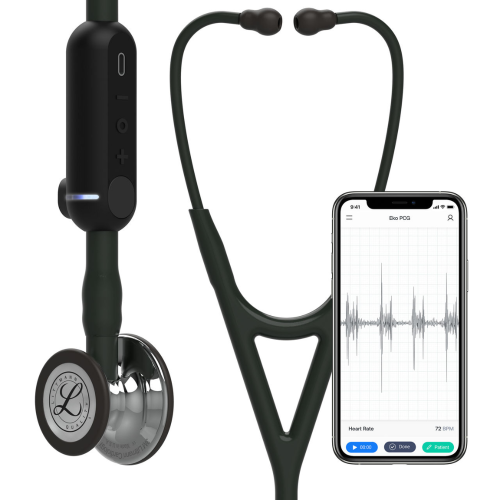
2. Visualization Through the Eko App Reinforces Learning
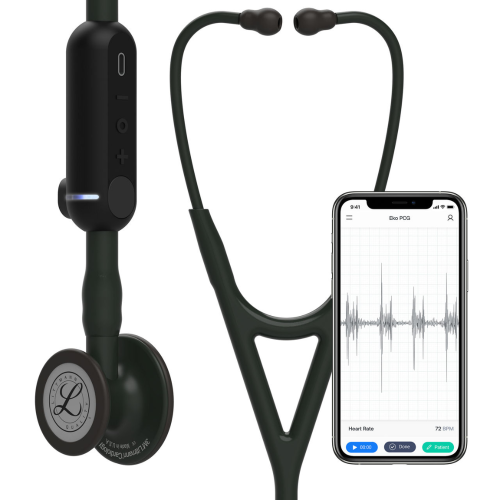
The ability to see heart and lung waveforms while listening is a huge advantage for those learn visually. With the Eko App, students can watch:
- S1 and S2 timing
- Murmur shapes and durations
- Respiratory wave patterns
- Amplitude changes
- Abnormal rhythms
This visual aid strengthens the connection between what you hear and what you understand, making auscultation less mysterious. Visualization is a benefit uniqie to electronic stethoscope technology and is especially helpful for visual learners.

3. The CORE Helps Students That Struggle With Hearing in Noisy Environments
Students rarely get to practice auscultation in silent exam rooms. Instead, they learn in:
- Busy med-surg units
- Crowded clinical labs
- Multi-bed wards
- Long-term care facilities
- Fast-paced emergency departments
Active noise cancellation (ANC) helps filter out distractions so students can focus on the patient’s sounds—an essential learning advantage.
4. Helps Students With Mild Hearing Challenges
Many students don’t realize they have mild high- or low-frequency hearing differences until they start using a stethoscope. The CORE’s amplification and noise filtering ensures hearing challenges don’t limit learning ability. This make the CORE a supportive electronic stethoscope option for learners who need clearer sound without external amplification devices.
5. It Works as Both a Traditional and Digital Stethoscope
One of the CORE’s biggest advantages is that it functions in analog mode just like a traditional Littmann, and in digital mode when extra clarity is needed.
Students often use:
- Analog mode for basic vitals
- Digital mode for learning or complex assessments
This hybrid design is rare among electronic stethoscope models and makes the CORE especially student-friendly.
6. Ideal for Students Who Want a Stethoscope That Will Last Their Whole Career
Some students buy an inexpensive entry-level stethoscope, only to replace it a year later with a higher quality one. The CORE eliminates that need. It is durable, professional grade, and provides a level of clarity that remains valuable throughout your career—from student to clinician.
It’s very common for students to purchase the CORE and use it for:
- Nursing school or medical school
- Clinical rotations
- Residency
- First years of practice
- Long-term professional work
This makes the CORE a long-term investment rather than a temporary tool. Many students may choose a digital stethoscope early so they can use the same device through school, residency, and clinical practice.
7. Great for Students Interested in Cardiology, ICU, ER, Pediatrics, or Respiratory Care
If you’re leaning toward a specialty when auscultation is essential, the CORE provides a head start. Fields where the CORE is especially valuable include:
- Cardiology
- Emergency medicine
- Intensive care
- Pediatric nursing
- Respiratory therapy
- Internal medicine
- Anesthesiology
- Primary care
Digital clarity gives students a stronger foundation for advanced clinical roles.
When Students Should Not Buy the CORE
While the CORE has many benefits, it’s not necessary for every student.
You may not need the CORE if:
- You are on a tight budget
- Your program requires a specific stethoscope model
- You prefer purely acoustic sounds
- You do not plan to use the digital features
- You want the lightest possible stethoscope (the CORE is slightly heavier)
In these cases, starting with an acoustic model (like the Littmann Classic III or Cardiology IV) and upgrading to a digital stehoschope later is a practical approach.
A Balanced Verdict: Is the Littmann CORE Worth It for Students?
The CORE is worth considering if you want to accelerate your learning. It helps you hear more clearly, learn faster, and identify abnormalities with greater confidence and advantages that can make a real difference during your clinical training.
It's also an excellent choice if you value digital tools. Waveform visualization and recording are powerful learning aids that complement traditional auscultation skills. And if you want one stethoscope that will last your whole career, the Littmann CORE is a long-term investment that grows with you from student to practicing clinician.
However, if you're on a strict student budget, the CORE scope may not be necessary. Starting with a Classic III and upgrading later is a perfectly reasonable approach. Similarly, if you prefer a purely acoustic experience, you might find the digital sound takes some getting used to, though most students adapt quickly.
Ultimately, most students who chose the CORE digital scope say it was one of the best purchases they made in school, but the decision depends on your learning style, specialty interests, and financial comfort.
Frequently Asked Questions for Students
Is the Littmann CORE too advanced for a beginner?
No. It can actually help beginners learn faster.
Do I need the Eko App as a student?
It’s optional but extremely helpful for learning.
Will instructors allow digital stethoscopes?
Most programs do—check with your school for any restrictions.
Does the CORE help during OSCEs or skills tests?
Yes. Clearer sound boosts confidence and accuracy.
Is it good for students in PPE?
Absolutely. Amplification overcomes PPE muffling.
Is it worth the cost on a student budget?
If you want a long-term, career-length stethoscope with learning advantages, yes.

For medical and nursing students, one of the most exciting (and nerve-wracking) purchases early in your education is your stethoscope. It becomes the tool you practice with, carry every day, and rely on as you build your auscultation skills from the ground up. With the rise of digital stethoscopes, many students wonder whether investing in the Littmann CORE Digital Stethoscope is worth the cost while still in school.
The Littmann CORE offers advanced digital amplification, active noise cancellation, waveform visualization, and optional recording tools. These features can genuinely help learners develop stronger auscultation skills faster, but the device also comes at a higher price than traditional acoustic models. These features set the Littmamn CORE apart from traaditional acoustic models and earlier generations of electronic stethoscope designs.
This comprehensive guide explores whether the Littmann CORE is the right choice for medical, nursing, and allied health students, helping you decide if it’s a smart investment for your education and future career.
Why Students Struggle With Auscultation at First
Learning to interpret heart, lung, and bowel sounds takes practice, and lots of it. In your first months of clinical training, almost everyone struggles with the same challenges:
- Difficulty distinguishing normal from abnormal sounds
- Trouble hearing faint noises
- PPE making listening more difficult
- Background noise in clinical environments
- Uncertainty about what certain murmurs or wheezes “should” sound like
- Confusion between timing of S1/S2 and murmurs
- Inconsistent sound quality from different stethoscopes
- Anxiety during clinical exams or patient assessments
A high-quality stethoscope can ease that learning curve significantly by providing clearer, more consistent, more recognizable sound patterns. This is where a digital stethoscope can make a noticeable difference, offering clearer, more consistent sound during early practice.
Why Many Students Choose the Littmann CORE
The Littmann CORE offers several strong advantages for medical and nursing students who are actively learning auscultation.
1. Amplification Helps Students Learn What Abnormal Sounds Actually Sound Like
The CORE’s up to 40x amplification is one of the biggest benefits for learners. New students often say:
“I don’t know what I’m listening for.”
Hearing abnormalities clearly, without strain, helps students learn the difference between:
- Crackles vs rhonchi
- Coarse vs fine crackles
- Innocent murmurs vs pathological murmurs
- Wheezing vs diminished air entry
- Normal bowel sounds vs hypoactive sounds
Amplification makes subtle findings more obvious, helping students build a mental “library” of sounds more quickly. This level of clarity is one of the main reasons students consider upgrading to a digital stethoscope rather than relying solely on acoustic models.
2. Visualization Through the Eko App Reinforces Learning
The ability to see heart and lung waveforms while listening is a huge advantage for those learn visually. With the Eko App, students can watch:
- S1 and S2 timing
- Murmur shapes and durations
- Respiratory wave patterns
- Amplitude changes
- Abnormal rhythms
This visual aid strengthens the connection between what you hear and what you understand, making auscultation less mysterious. Visualization is a benefit uniqie to electronic stethoscope technology and is especially helpful for visual learners.
3. The CORE Helps Students That Struggle With Hearing in Noisy Environments
Students rarely get to practice auscultation in silent exam rooms. Instead, they learn in:
- Busy med-surg units
- Crowded clinical labs
- Multi-bed wards
- Long-term care facilities
- Fast-paced emergency departments
Active noise cancellation (ANC) helps filter out distractions so students can focus on the patient’s sounds—an essential learning advantage.
4. Helps Students With Mild Hearing Challenges
Many students don’t realize they have mild high- or low-frequency hearing differences until they start using a stethoscope. The CORE’s amplification and noise filtering ensures hearing challenges don’t limit learning ability. This make the CORE a supportive electronic stethoscope option for learners who need clearer sound without external amplification devices.
5. It Works as Both a Traditional and Digital Stethoscope
One of the CORE’s biggest advantages is that it functions in analog mode just like a traditional Littmann, and in digital mode when extra clarity is needed.
Students often use:
- Analog mode for basic vitals
- Digital mode for learning or complex assessments
This hybrid design is rare among electronic stethoscope models and makes the CORE especially student-friendly.
6. Ideal for Students Who Want a Stethoscope That Will Last Their Whole Career
Some students buy an inexpensive entry-level stethoscope, only to replace it a year later with a higher quality one. The CORE eliminates that need. It is durable, professional grade, and provides a level of clarity that remains valuable throughout your career—from student to clinician.
It’s very common for students to purchase the CORE and use it for:
- Nursing school or medical school
- Clinical rotations
- Residency
- First years of practice
- Long-term professional work
This makes the CORE a long-term investment rather than a temporary tool. Many students may choose a digital stethoscope early so they can use the same device through school, residency, and clinical practice.
7. Great for Students Interested in Cardiology, ICU, ER, Pediatrics, or Respiratory Care
If you’re leaning toward a specialty when auscultation is essential, the CORE provides a head start. Fields where the CORE is especially valuable include:
- Cardiology
- Emergency medicine
- Intensive care
- Pediatric nursing
- Respiratory therapy
- Internal medicine
- Anesthesiology
- Primary care
Digital clarity gives students a stronger foundation for advanced clinical roles.
When Students Should Not Buy the CORE
While the CORE has many benefits, it’s not necessary for every student.
You may not need the CORE if:
- You are on a tight budget
- Your program requires a specific stethoscope model
- You prefer purely acoustic sounds
- You do not plan to use the digital features
- You want the lightest possible stethoscope (the CORE is slightly heavier)
In these cases, starting with an acoustic model (like the Littmann Classic III or Cardiology IV) and upgrading to a digital stehoschope later is a practical approach.
A Balanced Verdict: Is the Littmann CORE Worth It for Students?
The CORE is worth considering if you want to accelerate your learning. It helps you hear more clearly, learn faster, and identify abnormalities with greater confidence and advantages that can make a real difference during your clinical training.
It's also an excellent choice if you value digital tools. Waveform visualization and recording are powerful learning aids that complement traditional auscultation skills. And if you want one stethoscope that will last your whole career, the Littmann CORE is a long-term investment that grows with you from student to practicing clinician.
However, if you're on a strict student budget, the CORE scope may not be necessary. Starting with a Classic III and upgrading later is a perfectly reasonable approach. Similarly, if you prefer a purely acoustic experience, you might find the digital sound takes some getting used to, though most students adapt quickly.
Ultimately, most students who chose the CORE digital scope say it was one of the best purchases they made in school, but the decision depends on your learning style, specialty interests, and financial comfort.
Frequently Asked Questions for Students
Is the Littmann CORE too advanced for a beginner?
No. It can actually help beginners learn faster.
Do I need the Eko App as a student?
It’s optional but extremely helpful for learning.
Will instructors allow digital stethoscopes?
Most programs do—check with your school for any restrictions.
Does the CORE help during OSCEs or skills tests?
Yes. Clearer sound boosts confidence and accuracy.
Is it good for students in PPE?
Absolutely. Amplification overcomes PPE muffling.
Is it worth the cost on a student budget?
If you want a long-term, career-length stethoscope with learning advantages, yes.
