

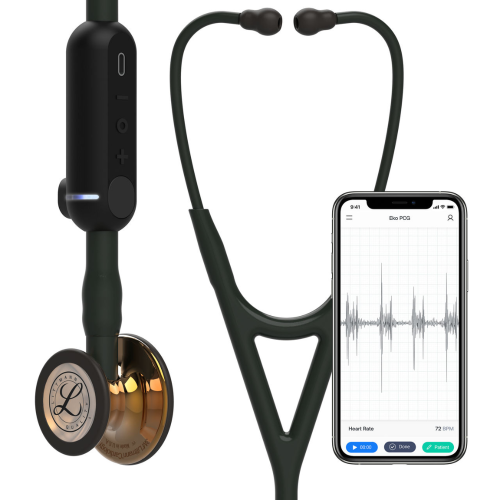
Emergency clinicians work in some of the most unpredictable and acoustically challenging environments in healthcare. Whether a paramedic is assessing a trauma patient in the back of a moving ambulance, a flight medic is performing auscultation over aircraft rotor noise, or an emergency physician is triaging chest pain in a crowded ED hallway, fast and accurate sound interpretation is essential. The Littmann CORE Digital Stethoscope is uniquely engineered to support these high-stakes moments by delivering reliable clarity where traditional acoustic stethoscope struggle.
As a modern digital stethoscope, and one of the most advanced electronic stethoscope options for emergency clinicians, the Littmann CORE is designed to overcome the environmental noise that makes traditional acoustic tools vulnerable to interference.
With up to 40x amplification, active noise cancellation (ANC), dual listening modes, and seamless integration with the Eko App for recording and documentation, the Littmann CORE has quickly become a preferred tool among paramedics, EMTs, emergency nurses, and critical care transport teams. It allows clinicians to hear critical heart and lung sounds despite movement, noise, PPE, or environmental interference, making it a powerful advantage in emergency and prehospital care. These capabilities set it apart from other electronic stethoscope models traditionally used in EMS.
This blog post explores why the Littmann CORE Digital Stethoscope is so impactful in emergency medicine, and how it performs in the real-world conditions paramedics face every day.
Why Auscultation Is Difficult in Emergency Medicine
Unlike clinic-based assessments, paramedics and ED clinicians rarely have quiet rooms, stable patients, or controlled environments. Instead, auscultation often happens:
- In moving ambulances at highway speeds
- In helicopters with constant vibration
- Beside sirens, traffic, machinery, or generators
- In chaotic emergency departments
- Outdoors in wind, rain, or extreme temperatures
- With distressed patients whose breathing is irregular or obstructed
Traditional acoustic stethoscopes cannot overcome this level of environmental noise. This is exactly why many EMS teams now rely on a digital stethoscope, which provide amplified, electronically processed sound designed to cut through noise. Low-level physiologic sounds are easily drowned out, forcing clinicians to rely on experience, guesswork, or repeat assessments.
The Littmann CORE scope directly addresses these challenges with digital amplification and noise-cancelling technology designed for unpredictable environments.
Why the Littmann CORE Excels in EMS & Emergency Medicine
The Littmann CORE offers several advantages that directly improve assessment accuracy in emergency settings. As a fully electronic stethoscope, the CORE provides digital enhancements that directly address the limitations of acoustic models in prehospital environments.
40x Amplification Helps You Hear What Matters
Amplification is one of the CORE stethoscopes biggest advantages, especially in prehospital care. Paramedics frequently assess patients in motion, through thick clothing, or in conditions where traditional auscultation is unreliable. With up to 40x amplification, the CORE elevated important physiological sounds, making it easier to detect wheezing, diminished breath sounds, faint crackles, low-grade murmurs, or early signs of fluid overload.
This heightened clarity is particularly valuable during respiratory calls, trauma assessments, pediatric emergencies, and cardiac complaints. The ability to hear soft or distant sounds despite chaos allows clinicians to intervene sooner and with greater accuracy. This level of clarity is one of the strongest advantages of using a digital stethoscope in emergency medicine, where faint or distant sounds often guide lifesaving decisions.
Active Noise Cancellation Cuts Through Ambulance, Aircraft, and ED Noise
The CORE’s active noise cancellation (ANC) is engineered for precisely the environments EMS clinicians work in. Rather than amplifying everything, including unwanted noise, ANC reduces distracting background sound so the clinician hears more of the patient and less of the environment.
ANC provides major advantages during:
- Ground ambulance transports
- Air medical missions
- Busy emergency departments
- Severe weather responses
- Mass-casualty or multi-patient incidents
- Loud trauma bays
Even in environments where traditional stethoscopes fail entirely, the CORE delivers usable and clinically meaningful audio. This advanced noise processing is a hallmark of modern electronic stethoscope technology, enabling reliable auscultation where acoustic stethoscopes simply cannot function.
Faster, More Confident Assessments When Seconds Matter
Emergency medicine is defined by rapid decision-making. The CORE supports faster assessments by delivering immediate clarity without requiring clinicians to reposition patients or wait for quieter conditions.
Paramedics often report that the CORE improves their ability to identify respiratory patterns, detect crackles from pulmonary edema, confirm wheezing severity, notice breath sound asymmetry (critical in trauma) and evaluate acute cardiac changes during chest pain calls. Clearer sound means fewer repeated assessments and more confident interventions. This is a key advantage of choosing a digital stethoscope for EMS, rapid clarity without repositioning, repeating, or guessing.
Reliable Tube Placement Verification During Airway Management
Endotracheal tube placement is one of the most critical skills in paramedicine. The CORE’s amplification and noise cancellation make it significantly easier to hear:
- Bilateral breath sounds
- Absent or diminished sounds on the left or right
- Gastric insufflation noises
- Complications such as right mainstem intubation
When verifying tube placement in noisy conditions, the precision of an electronic stethoscope provides an important safety benefit. In chaotic or loud environments, this additional clarity increases procedural confidence and reduces the risk of missed airway complications.
Works Through Clothing When Full Exposure Isn’t Immediately Possible
Because emergency clinicians often assess patients before clothing can be removed, amplification helps the CORE reproduce meaningful sounds through jackets, uniforms, or layers. While removing clothing remains best practice, when possible, amplification provides a crucial advantage in early triage or rapid assessments when seconds matter. This is another area where a digital stethoscope outperforms traditional models, especially during rapid trauma assessments.
A Major Advantage in Pediatric Emergencies
Pediatric assessments are notoriously challenging in EMS due to smaller chest walls, faster respiratory rates, and softer breath sounds. Amplification from the Littmann CORE helps clinicians hear subtle wheezing, early crackles, breath sound differences, or faint stridor, supporting quicker recognition of respiratory compromise in infants and children.
In high-stress pediatric calls, amplification offers reassurance and clarity when clinicians need it most. For EMS clinicians, theses benefits alone often justify upgrading to a digital stethoscope for pediatric calls.
Digital Recording Enhances Documentation, Handover, and Training
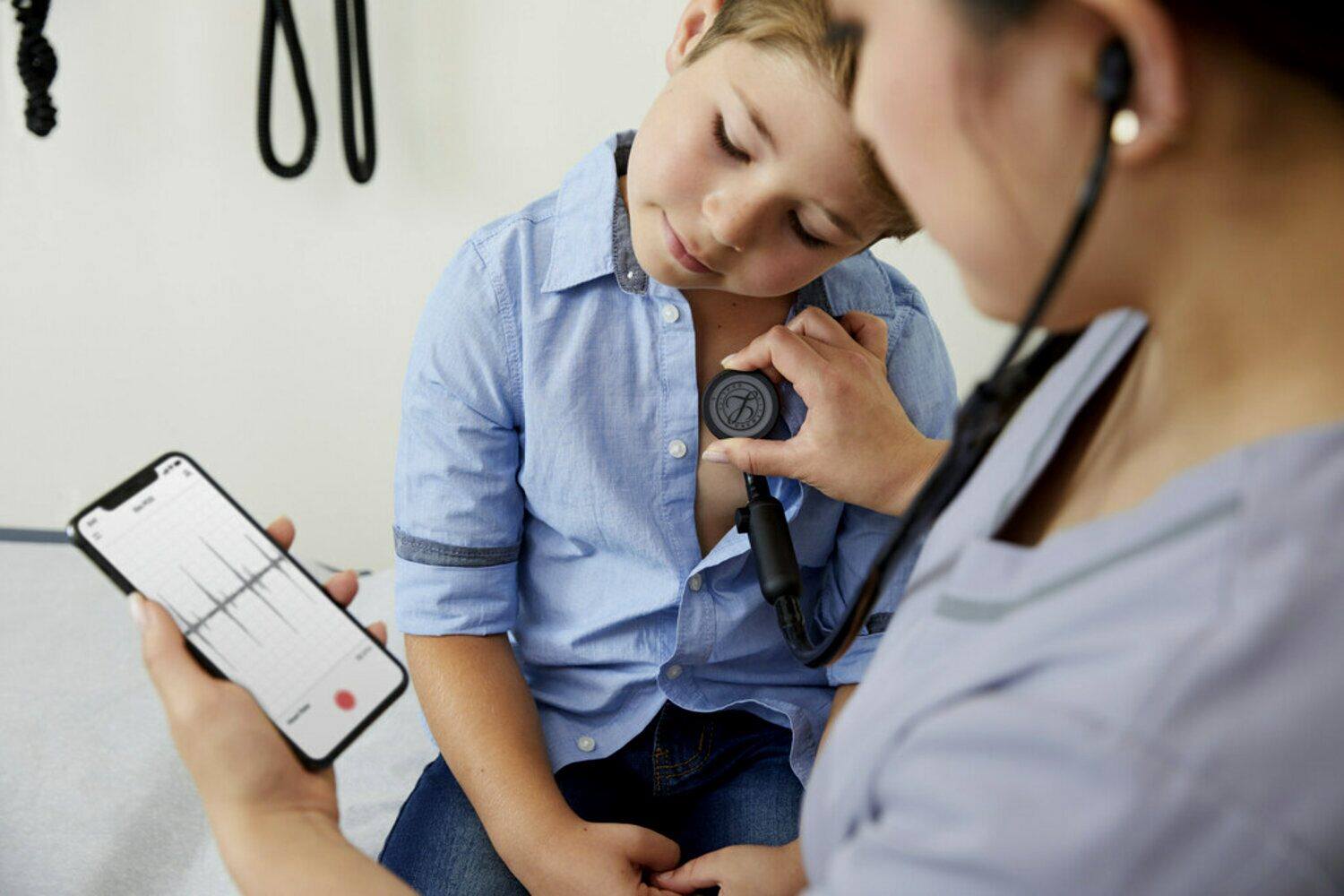
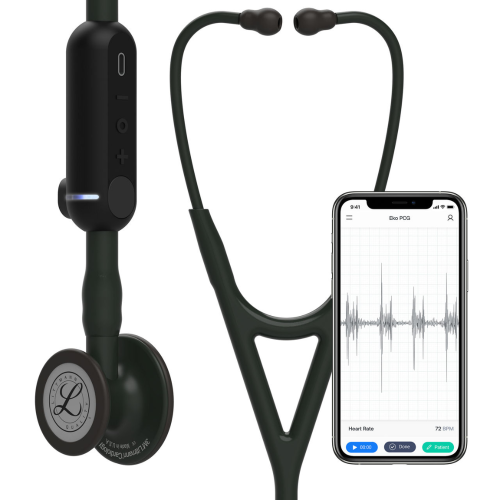
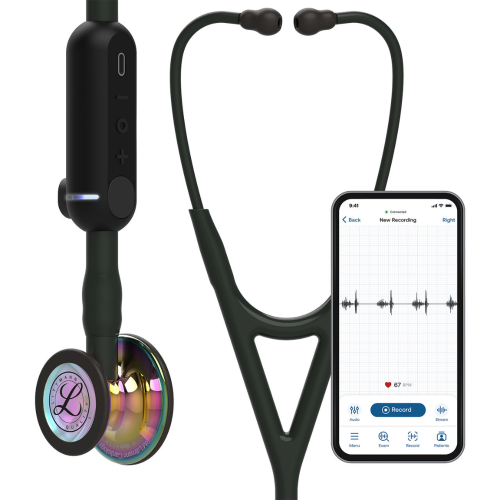
One of the Littmann CORE’s most valuable capabilities is digital recording through the Eko App. Paramedics can record heart and lung sounds during transport and upload or share them with receiving ED teams, allowing physicians to hear what the clinician heard in the field.
Recordings can support:
- Clearer, more complete handovers
- Improved continuity of care during long transports
- Training, QA, and case review
- Documentation for complex or unusual cases
For flight medicine and critical care transport, this feature is particularly useful. This recording capability is unique to electronic stethoscope models and is especially valuable for high-acuity EMS teams. 
Designed for Flight Medicine, Tactical EMS, and Other Extreme Environments
Air medical clinicians frequently work in extreme noise conditions, while tactical paramedics may operate outdoors in unpredictable settings. The CORE’s combination of amplification + ANC makes it one of the few stethoscopes capable of providing meaningful auscultation in these environments.
It remains reliable during helicopter vibration, aircraft engine noise, wind exposure, and adverse weather, making it a trusted tool for high-acuity teams.Few digital stethoscope models offer this level of stability in extreme conditions, which is why the CORE is so widely trusted in flight and tactical EMS.
Built Tough for Prehospital Work
Despite its digital components, the CORE maintains the durability that clinicians expect from Littmann. The tubing resists oils and frequent cleaning, the chestpiece is robust and the digital module is made to withstand daily EMS use. With proper care, the CORE holds up extremely well in prehospital environments. Despite being an electronic stethoscope, the CORE is engineered to withstand the physical demands of EMS environments.
Analog Mode Provides a Backup in Any Situation
If the battery runs low or a clinician prefers a traditional acoustic experience, the CORE remains fully functional in analog mode. This redundancy ensures that paramedics always have a reliable tool, even in unexpected circumstances. This hybrid functionality—digital when needed, acoustic when preferred—makes it one of the most flexible electronic stethoscope options available. 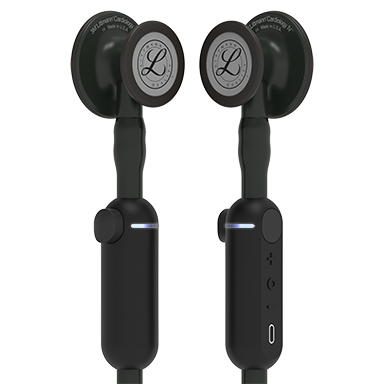
Is the Littmann CORE Worth It for Paramedics and Emergency Clinicians?
For most EMS and emergency professionals, the answer is yes. The Littmann CORE is uniquely suited to the challenges of emergency medicine, offering:
- Enhanced clarity in noisy environments
- Amplified detection of subtle abnormalities
- Faster assessments
- Improved tube placement verification
- Better outcomes in pediatric calls
- Digital recording for stronger documentation
When clinical decisions must be made rapidly, and in less-than-ideal conditions, the Littmann CORE Stethoscope provides a level of reliability that traditional stethoscopes cannot. For clinicians who regularly work in loud, unpredictable environments, upgrading to a digital stethoscope often results in a dramatic improvement in diagnostic reliability.
Frequently Asked Questions
Does the CORE work well in ambulances?
Yes. Amplification and ANC dramatically improve clarity during transport.
Is it durable enough for prehospital work?
The CORE is robust, impact-resistant, and built to withstand clinical use, including EMS.
Can it help during airway management?
Absolutely. Amplified breath sounds support more confident tube placement verification.
Does it still work if the battery dies?
Yes. The CORE continues functioning in analog mode.
It is beneficial for pediatric calls?
Yes. Amplification helps clinicians detect faint pediatric breath and heart sounds.
Is it worth the investment for EMS?
Most emergency clinicians consider it invaluable due to reliability, clarity, and speed.

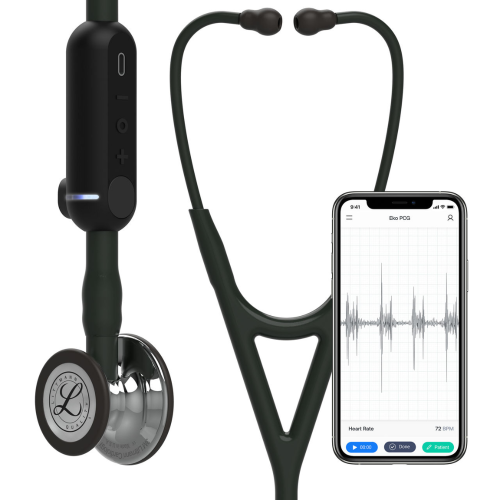
Emergency clinicians work in some of the most unpredictable and acoustically challenging environments in healthcare. Whether a paramedic is assessing a trauma patient in the back of a moving ambulance, a flight medic is performing auscultation over aircraft rotor noise, or an emergency physician is triaging chest pain in a crowded ED hallway, fast and accurate sound interpretation is essential. The Littmann CORE Digital Stethoscope is uniquely engineered to support these high-stakes moments by delivering reliable clarity where traditional acoustic stethoscope struggle.
As a modern digital stethoscope, and one of the most advanced electronic stethoscope options for emergency clinicians, the Littmann CORE is designed to overcome the environmental noise that makes traditional acoustic tools vulnerable to interference.
With up to 40x amplification, active noise cancellation (ANC), dual listening modes, and seamless integration with the Eko App for recording and documentation, the Littmann CORE has quickly become a preferred tool among paramedics, EMTs, emergency nurses, and critical care transport teams. It allows clinicians to hear critical heart and lung sounds despite movement, noise, PPE, or environmental interference, making it a powerful advantage in emergency and prehospital care. These capabilities set it apart from other electronic stethoscope models traditionally used in EMS.
This blog post explores why the Littmann CORE Digital Stethoscope is so impactful in emergency medicine, and how it performs in the real-world conditions paramedics face every day.
Why Auscultation Is Difficult in Emergency Medicine
Unlike clinic-based assessments, paramedics and ED clinicians rarely have quiet rooms, stable patients, or controlled environments. Instead, auscultation often happens:
- In moving ambulances at highway speeds
- In helicopters with constant vibration
- Beside sirens, traffic, machinery, or generators
- In chaotic emergency departments
- Outdoors in wind, rain, or extreme temperatures
- With distressed patients whose breathing is irregular or obstructed
Traditional acoustic stethoscopes cannot overcome this level of environmental noise. This is exactly why many EMS teams now rely on a digital stethoscope, which provide amplified, electronically processed sound designed to cut through noise. Low-level physiologic sounds are easily drowned out, forcing clinicians to rely on experience, guesswork, or repeat assessments.
The Littmann CORE scope directly addresses these challenges with digital amplification and noise-cancelling technology designed for unpredictable environments.
Why the Littmann CORE Excels in EMS & Emergency Medicine
The Littmann CORE offers several advantages that directly improve assessment accuracy in emergency settings. As a fully electronic stethoscope, the CORE provides digital enhancements that directly address the limitations of acoustic models in prehospital environments.
40x Amplification Helps You Hear What Matters
Amplification is one of the CORE stethoscopes biggest advantages, especially in prehospital care. Paramedics frequently assess patients in motion, through thick clothing, or in conditions where traditional auscultation is unreliable. With up to 40x amplification, the CORE elevated important physiological sounds, making it easier to detect wheezing, diminished breath sounds, faint crackles, low-grade murmurs, or early signs of fluid overload.
This heightened clarity is particularly valuable during respiratory calls, trauma assessments, pediatric emergencies, and cardiac complaints. The ability to hear soft or distant sounds despite chaos allows clinicians to intervene sooner and with greater accuracy. This level of clarity is one of the strongest advantages of using a digital stethoscope in emergency medicine, where faint or distant sounds often guide lifesaving decisions.
Active Noise Cancellation Cuts Through Ambulance, Aircraft, and ED Noise
The CORE’s active noise cancellation (ANC) is engineered for precisely the environments EMS clinicians work in. Rather than amplifying everything, including unwanted noise, ANC reduces distracting background sound so the clinician hears more of the patient and less of the environment.
ANC provides major advantages during:
- Ground ambulance transports
- Air medical missions
- Busy emergency departments
- Severe weather responses
- Mass-casualty or multi-patient incidents
- Loud trauma bays
Even in environments where traditional stethoscopes fail entirely, the CORE delivers usable and clinically meaningful audio. This advanced noise processing is a hallmark of modern electronic stethoscope technology, enabling reliable auscultation where acoustic stethoscopes simply cannot function.
Faster, More Confident Assessments When Seconds Matter
Emergency medicine is defined by rapid decision-making. The CORE supports faster assessments by delivering immediate clarity without requiring clinicians to reposition patients or wait for quieter conditions.
Paramedics often report that the CORE improves their ability to identify respiratory patterns, detect crackles from pulmonary edema, confirm wheezing severity, notice breath sound asymmetry (critical in trauma) and evaluate acute cardiac changes during chest pain calls. Clearer sound means fewer repeated assessments and more confident interventions. This is a key advantage of choosing a digital stethoscope for EMS, rapid clarity without repositioning, repeating, or guessing.
Reliable Tube Placement Verification During Airway Management
Endotracheal tube placement is one of the most critical skills in paramedicine. The CORE’s amplification and noise cancellation make it significantly easier to hear:
- Bilateral breath sounds
- Absent or diminished sounds on the left or right
- Gastric insufflation noises
- Complications such as right mainstem intubation
When verifying tube placement in noisy conditions, the precision of an electronic stethoscope provides an important safety benefit. In chaotic or loud environments, this additional clarity increases procedural confidence and reduces the risk of missed airway complications.
Works Through Clothing When Full Exposure Isn’t Immediately Possible
Because emergency clinicians often assess patients before clothing can be removed, amplification helps the CORE reproduce meaningful sounds through jackets, uniforms, or layers. While removing clothing remains best practice, when possible, amplification provides a crucial advantage in early triage or rapid assessments when seconds matter. This is another area where a digital stethoscope outperforms traditional models, especially during rapid trauma assessments.
A Major Advantage in Pediatric Emergencies
Pediatric assessments are notoriously challenging in EMS due to smaller chest walls, faster respiratory rates, and softer breath sounds. Amplification from the Littmann CORE helps clinicians hear subtle wheezing, early crackles, breath sound differences, or faint stridor, supporting quicker recognition of respiratory compromise in infants and children.
In high-stress pediatric calls, amplification offers reassurance and clarity when clinicians need it most. For EMS clinicians, theses benefits alone often justify upgrading to a digital stethoscope for pediatric calls.
Digital Recording Enhances Documentation, Handover, and Training
One of the Littmann CORE’s most valuable capabilities is digital recording through the Eko App. Paramedics can record heart and lung sounds during transport and upload or share them with receiving ED teams, allowing physicians to hear what the clinician heard in the field.
Recordings can support:
- Clearer, more complete handovers
- Improved continuity of care during long transports
- Training, QA, and case review
- Documentation for complex or unusual cases
For flight medicine and critical care transport, this feature is particularly useful. This recording capability is unique to electronic stethoscope models and is especially valuable for high-acuity EMS teams.
Designed for Flight Medicine, Tactical EMS, and Other Extreme Environments
Air medical clinicians frequently work in extreme noise conditions, while tactical paramedics may operate outdoors in unpredictable settings. The CORE’s combination of amplification + ANC makes it one of the few stethoscopes capable of providing meaningful auscultation in these environments.
It remains reliable during helicopter vibration, aircraft engine noise, wind exposure, and adverse weather, making it a trusted tool for high-acuity teams.Few digital stethoscope models offer this level of stability in extreme conditions, which is why the CORE is so widely trusted in flight and tactical EMS.
Built Tough for Prehospital Work
Despite its digital components, the CORE maintains the durability that clinicians expect from Littmann. The tubing resists oils and frequent cleaning, the chestpiece is robust and the digital module is made to withstand daily EMS use. With proper care, the CORE holds up extremely well in prehospital environments. Despite being an electronic stethoscope, the CORE is engineered to withstand the physical demands of EMS environments.
Analog Mode Provides a Backup in Any Situation
If the battery runs low or a clinician prefers a traditional acoustic experience, the CORE remains fully functional in analog mode. This redundancy ensures that paramedics always have a reliable tool, even in unexpected circumstances. This hybrid functionality—digital when needed, acoustic when preferred—makes it one of the most flexible electronic stethoscope options available.
Is the Littmann CORE Worth It for Paramedics and Emergency Clinicians?
For most EMS and emergency professionals, the answer is yes. The Littmann CORE is uniquely suited to the challenges of emergency medicine, offering:
- Enhanced clarity in noisy environments
- Amplified detection of subtle abnormalities
- Faster assessments
- Improved tube placement verification
- Better outcomes in pediatric calls
- Digital recording for stronger documentation
When clinical decisions must be made rapidly, and in less-than-ideal conditions, the Littmann CORE Stethoscope provides a level of reliability that traditional stethoscopes cannot. For clinicians who regularly work in loud, unpredictable environments, upgrading to a digital stethoscope often results in a dramatic improvement in diagnostic reliability.
Frequently Asked Questions
Does the CORE work well in ambulances?
Yes. Amplification and ANC dramatically improve clarity during transport.
Is it durable enough for prehospital work?
The CORE is robust, impact-resistant, and built to withstand clinical use, including EMS.
Can it help during airway management?
Absolutely. Amplified breath sounds support more confident tube placement verification.
Does it still work if the battery dies?
Yes. The CORE continues functioning in analog mode.
It is beneficial for pediatric calls?
Yes. Amplification helps clinicians detect faint pediatric breath and heart sounds.
Is it worth the investment for EMS?
Most emergency clinicians consider it invaluable due to reliability, clarity, and speed.
