
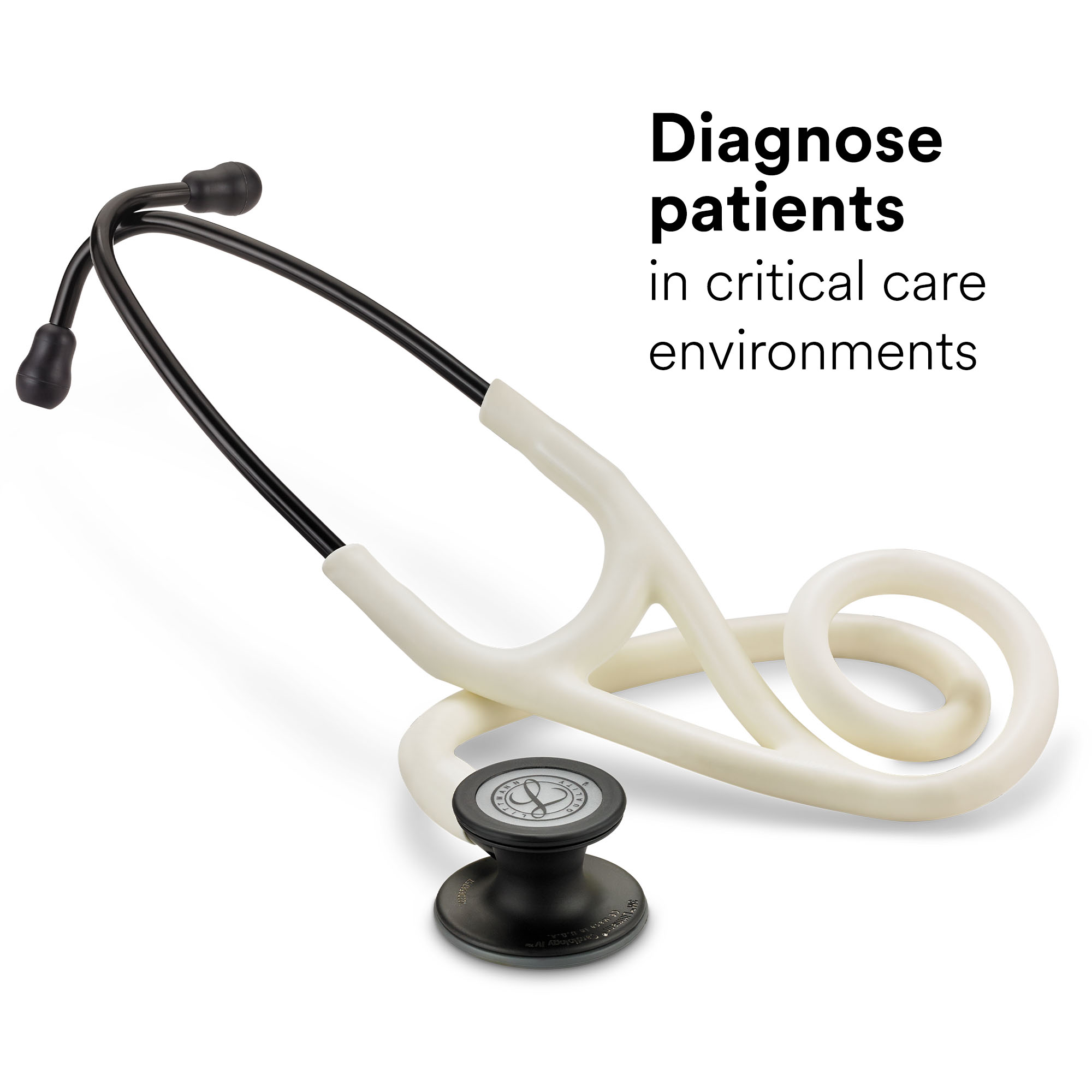
Why the Cardiology IV Stethosope is the preferred stethoscope for high-acuity clinical environments.
.jpg)
High-Acuity Care Benefits from Quality Acoustics
In the Emergency Department, ICU, and Cardiac ICU, auscultation provides important clinical information despite challenging environmental conditions. These settings are loud, time-pressured, and filled with patients whose cardiac and pulmonary findings are often subtle, evolving, or masked by ambient noise.
The Littmann Cardiology IV offers enhanced acoustic sensitivity, tunable diaphragms, and dual-lumen tubing design that may improve detection of subtle findings in high-acuity settings. Many critical care nurses, emergency physicians, cardiologists, respiratory therapists, NPs, and PAs choose the Cardiology IV for its acoustic performance.
This guide examines why the Cardiology IV is popular in ICU, ED, and cardiac units, what clinical advantages it may offer, and important limitations of auscultation in critically ill patients.
Why Critical Care Requires Advanced Acoustics
High-acuity patients frequently present with dynamic physiology and findings that are easy to miss without a high-resolution stethoscope. In emergency and critical care, clinicians are often assessing:
- Patients with rapidly changing volume status
- Complex cardiac histories or structural disease
- Tachyarrhythmias or irregular rhythms
- Ventilated or partially ventilated lungs
- Faint or positional auscultatory findings
- Overlapping cardiac and pulmonary pathology
In these scenarios, the difference between hearing something and hearing enough can directly impact clinical decisions.
The Cardiology IV is favored in critical care because it delivers:
→ More than twice the acoustic loudness of comparable stethoscopes
→ Exceptional low-frequency sensitivity for gallops and diastolic murmurs
→ Clearer separation of true sounds vs artifact
→ Consistent performance in noisy, crowded environments
→ A dual-sided chestpiece that adapts quickly to adult and focused assessments
In ICU and Ed practice, advanced acoustics are not optional, they are foundational.
Understanding "More Than Twice as Loud"
Littmann markets the Cardiology IV as "more than twice as loud" compared to standard stethoscopes. Here's what this actually means:
What the claim refers to:
- Acoustic output measured at specific frequencies (particularly below 120 Hz)
- Comparison to Littmann Classic III (their baseline model)
- Laboratory testing under controlled conditions
What this doesn't mean:
- Not twice as loud across ALL frequencies
- Not a comparison to other premium stethoscopes (like Cardiology III, Master Cardiology)
- Performance advantage varies by frequency range and clinical finding
Clinical reality: The Cardiology IV does provide noticeably better acoustic performance than entry-level stethoscopes, particularly for low-frequency sounds. However, the difference between the Cardiology IV and other high-quality stethoscopes (Cardiology III, Master series) is more subtle than marketing suggests.
If you're comparing to:
- Entry-level stethoscope (Classic II, Lightweight) → Significant upgrade
- Mid-range stethoscope (Classic III) → Noticeable improvement
- Premium stethoscope (Cardiology III, Master Cardiology) → Modest incremental improvement
Common Critical Care Findings: What the Cardiology IV Can Help Detect
The Cardiology IV's enhanced acoustics may improve detection of subtle cardiac and pulmonary findings in high-acuity patients. However, no stethoscope guarantees detection—clinical expertise, optimal positioning, and systematic examination remain essential.
Aortic Stenosis
Clinical challenge: Systolic murmurs may be faint in hypotensive, tachycardic, or low cardiac output states.
How Cardiology IV helps:
- Improved acoustic sensitivity may make murmurs more audible
- Tunable diaphragm allows frequency adjustment without repositioning
Important limitation: Severe aortic stenosis can paradoxically produce softer murmurs in critical illness. Always correlate auscultation with clinical presentation, ECG, and echocardiography.
S3 Gallop (Third Heart Sound)
Clinical challenge: Low-frequency sound (20-70 Hz) often missed without quality acoustics and optimal technique.
How Cardiology IV helps:
- Enhanced low-frequency sensitivity improves detection probability
- Bell-mode function optimizes for low-frequency sounds
Important limitation: S3 detection requires:
- Proper bell positioning (apex, left lateral decubitus position when possible)
- Quiet environment (often impossible in ICU/ED)
- Experienced examiner who knows what to listen for
- Patient cooperation with positioning (often not feasible in critical illness)
Reality check: Even with the Cardiology IV, S3 remains challenging to detect reliably in ICU/ED settings. Many experienced clinicians miss S3 gallops even when present. Don't rely solely on S3 detection for volume status assessment—use clinical context, vital signs, physical exam, chest X-ray, and ultrasound.
S4 Gallop (Fourth Heart Sound)
Clinical challenge: Soft presystolic sound easily masked by tachycardia or irregular rhythms.
How Cardiology IV helps:
- Improved acoustic resolution may enhance detection
- Deep chestpiece profile provides better contact
Important limitation:
- S4 is absent in atrial fibrillation (no atrial contraction)
- Difficult to distinguish from split S1 without extensive experience
- Tachycardia makes S4 detection nearly impossible
- Clinical significance varies (can be normal in elderly patients)
Mitral Stenosis
Clinical challenge: Low-pitched diastolic rumble requires excellent low-frequency sensitivity and optimal patient positioning.
How Cardiology IV helps:
- Bell-mode conversion enhances low-frequency transmission
- May improve detection in suboptimal positioning
Important limitation: Bedside detection of mitral stenosis is notoriously unreliable:
- Requires left lateral decubitus position (often not feasible in ICU)
- Opening snap may be absent with calcified valve
- Low cardiac output reduces murmur intensity
- Echo is gold standard—don't rule out mitral stenosis based on auscultation alone
Pulmonary Findings in Critical Care
Clinical challenge: Mechanical ventilation, body habitus, positioning constraints, and ambient noise all interfere with lung auscultation.
How Cardiology IV helps:
- Enhanced acoustic output improves detection of:
- Fine crackles (early pulmonary edema, pneumonia)
- Subtle wheezes (bronchospasm)
- Diminished breath sounds (effusion, pneumothorax, atelectasis)
- Asymmetric sounds (suggesting unilateral pathology)
Important limitations:
- Ventilator noise often overwhelms subtle lung sounds
- Anterior lung auscultation misses many posterior findings
- Crackles can be transient or position-dependent
- Many ICU patients can't cooperate with deep breathing
Critical care reality: Point-of-care ultrasound increasingly supplements or replaces lung auscultation in ICU/ED settings for assessing:
- Pneumothorax (ultrasound is more sensitive)
- Pulmonary edema (B-lines on ultrasound)
- Pleural effusions (easily visualized)
- Consolidation (more specific than crackles)
Bottom line: The Cardiology IV improves your ability to hear findings when they're detectable by auscultation. It doesn't overcome fundamental limitations of bedside auscultation in critically ill patients. Use complementary assessment methods (ultrasound, imaging, labs) for comprehensive evaluation.
Designed to Perform in Noisy, High-Motion Environments
ICUs and EDs are acoustically hostile spaces. Ventilators, alarms, pumps, staff movement, carts, and conversations, all compete with auscultation.
“More Than Twice as Loud” Where It Counts
The Cardiology IV’s increased acoustic output is especially impactful below 120 Hz, where many clinically significant cardiac sounds reside. This allows clinicians to hear faint gallops, murmurs, and distant lung sounds even during peak ED activity.
Dual-Lumen Tubing for Cleaner Sound
Unlike traditional double-tube designs, the Cardiology IV uses two internal sound paths within a single tube, eliminating rubbing noise and motion artifact. This is particularly valuable during:
- Patient transport
- Rapid repositioning
- Crowded resuscitation bays
- Bedside care with limited space
Tunable Diaphragms for Speed
In critical situations, repositioning the chestpiece costs time. Tunable diaphragms allow clinicians to transition between frequency ranges instantly by adjusting pressure, supporting faster assessments during codes, trauma activations, and rapid responses.
Cardiology IV Use Across High-Acuity Settings
Emergency Department (ED)
Why ED clinicians choose Cardiology IV:
- Need to assess undifferentiated presentations quickly
- Work in consistently loud environments
- Encounter wide range of severity (minor to critical)
- Limited time for detailed examination
Realistic benefits:
- Enhanced acoustics may speed detection of murmurs, gallops, wheezes
- Durable construction withstands frequent use and cleaning
- Dual-sided chestpiece supports rapid adult/pediatric switching
Limitations in ED:
- Noise often overwhelms even premium stethoscopes during peak activity
- Time pressure limits thorough auscultation
- Many ED clinicians increasingly rely on POCUS for cardiac/pulmonary assessment
Medical/Cardiac ICU
Why ICU clinicians choose Cardiology IV:
- Monitor patients with known complex cardiac disease
- Track subtle changes in volume status over time
- Assess post-cardiac surgery patients for complications
- Detect early signs of decompensation
Realistic benefits:
- Better low-frequency sensitivity for detecting S3 in volume overload
- Serial examinations benefit from consistent acoustic quality
- May detect subtle changes earlier than lower-quality stethoscopes
Limitations in ICU:
- Ventilator noise interferes significantly
- Positioning constraints limit examination quality
- POCUS provides more objective data for many assessments
- Many findings require echo confirmation regardless
Step-Down/Telemetry Units
Why step-down clinicians value Cardiology IV:
- Monitor recently extubated or step-down patients
- Detect early decompensation before ICU transfer needed
- Assess patients with evolving cardiac or pulmonary issues
Realistic benefits:
- Quieter environment than ICU allows better acoustic performance
- Patients more cooperative with positioning
- Serial assessments track clinical trajectory
Limitations:
- Still limited by patient factors (body habitus, positioning)
- Should prompt objective testing (echo, CXR) when abnormalities detected
Overall assessment: The Cardiology IV offers acoustic advantages in all these settings, but environmental and patient factors significantly limit what any stethoscope can achieve in critical care. It's a valuable tool, not a magic solution.
Recommended Cardiology IV Configurations for Critical Care
Tubing Length: 27" vs. 22"
27" length (most popular for ICU/ED):
- Better reach across beds and equipment
- More comfortable positioning for tall clinicians
- Allows maintaining distance during infectious disease precautions
- Can easily loop around neck when not in use
22" length:
- More compact for pocket storage
- Less tubing to manage in crowded spaces
- Some prefer less weight around neck
Recommendation: 27" for ICU/ED unless you strongly prefer compact design.
Chestpiece Finish Options
Stainless Steel (most common):
- Classic professional appearance
- Extremely durable
- Easy to clean and disinfect
- Won't show wear as obviously
Mirror/Champagne/High-Polish:
- Higher visibility (easier to spot on cluttered surfaces)
- More distinctive appearance
- Shows fingerprints more readily
Recommendation: Choose based on personal preference—all perform identically.
Tubing Color Selection
Practical considerations for critical care:
High-visibility colors prevent loss/mix-ups:
- Caribbean blue
- Burgundy
- Raspberry
- Plum
Professional neutral options:
- Black (most common overall)
- Navy
- Smoke
Newer satin finish options:
- Alabaster Satin (off-white, matte finish)
- Midnight Blue Satin (navy, matte finish)
- Softer feel, more comfortable for extended wear
- Limited color selection (only 2 options)
Recommendation: Choose bright color if your workplace has stethoscope theft/mix-up issues. Otherwise, personal preference.
Stem/Accent Colors
Many Cardiology IV models offer colored stems (the metal piece connecting tubing to chestpiece):
- Adds personalization
- Makes identification easier
- Purely aesthetic—no performance difference
Note: Not all color combinations available in all regions. Check current availability.
Maintaining Your Cardiology IV in ICU/ED Environments
Critical care settings demand frequent cleaning and expose stethoscopes to harsh conditions.
Cleaning After Each Patient Use
Required in ICU/ED:
- 70% isopropyl alcohol wipes (most common)
- Disinfectant wipes approved by your facility
- Focus on diaphragm and tubing (highest contact areas)
Frequency: After every single patient contact to prevent cross-contamination.
Deep Cleaning
Weekly or as needed:
- Mild soap and water for thorough cleaning
- Pay attention to crevices around chestpiece
- Dry completely before storage
What to Avoid
- Hand sanitizer - Degrades tubing over time
- Bleach or harsh chemicals - Can discolor or damage materials
- Autoclave/steam - Will destroy stethoscope
- Submersion in liquid - Not waterproof
Storage in Critical Care
Best practices:
- Hang when possible (reduces tubing stress)
- Avoid leaving in hot cars or near heat sources
- Keep away from sharp objects
- Don't wrap tightly around objects (causes tubing memory)
Theft prevention:
- Use high-visibility colors
- Label with engraving or permanent marker
- Store in locker when off shift
- Some clinicians use personal locking bags
Expected Lifespan in Critical Care
With proper care: 5-7+ years of daily intensive use
Signs it's time to replace:
- Tubing cracks, hardens, or loses flexibility
- Diaphragm tears or becomes loose
- Acoustic performance noticeably degrades
- Structural damage to chestpiece
Replacement parts available:
- Eartips (replace every 6-12 months for hygiene)
- Diaphragms (can extend stethoscope life)
- Rims (if damaged)
Note: Tubing is NOT replaceable—if tubing fails, you need a new stethoscope.
A Stethoscope Built for High-Acuity Medicine
The Littmann Cardiology IV is not just a premium stethoscope, it is a critical-care instrument. Its acoustic precision, noise-reducing design, and adaptability make it exceptionally well suited for ICU, ED, cardiac ICU, and step-down environments, where subtle findings often carry major clinical weight.
For clinicians working in high-acuity care, the Cardiology IV delivers the clarity, reliability, and confidence required to make timely, informed decisions.
Explore Littmann Cardiology IV stethoscopes at SurgoMed and choose the configuration that best supports your critical-care practice.
Frequently Asked Questions
Is the Cardiology IV significantly better than the Classic III for critical care?
Yes, the acoustic difference is noticeable. The Cardiology IV provides better low-frequency sensitivity and overall acoustic output, which matters when detecting subtle S3 gallops, faint murmurs, or distant breath sounds in noisy environments. If you currently use a Classic III or entry-level stethoscope in ICU/ED, upgrading to Cardiology IV will provide meaningful improvement.
However, examiner skill matters more than equipment, an experienced clinician with a Classic III will outperform a novice with a Cardiology IV.
Can the Cardiology IV overcome ICU/ED noise?
Partially, but not completely. The enhanced acoustic output helps, but extremely loud environments (active codes, trauma resuscitations, peak ED activity) can overwhelm even premium stethoscopes. In these situations, you may need to:
- Wait for quieter moments when possible
- Use point-of-care ultrasound instead
- Rely on other physical exam findings
- Move patient to quieter area if feasible
The Cardiology IV performs better than entry-level stethoscopes in noise, but it's not magic, physics limits what any acoustic stethoscope can achieve.
Is the Cardiology IV worth the cost for critical care nurses?
For most ICU and ED nurses: yes. You're using your stethoscope constantly throughout every shift, in challenging conditions, making critical assessments. The improved acoustics provide:
- Greater confidence in your findings
- Potentially earlier detection of changes
- Better performance in noisy environments
- Durability for intensive daily use
Cost consideration: Cardiology IV typically costs $180-220. Divided over 5-7 years of use, that's roughly $30-40 per year for better clinical performance.
When standard stethoscope may suffice: If you work in quieter step-down units, see primarily stable patients, or rarely encounter subtle findings, a mid-range stethoscope like the Classic III may meet your needs.
Does dual-lumen tubing make a noticeable difference?
In practice: somewhat, but it's not the most important feature. Dual-lumen design (two sound paths in one tube) reduces friction noise compared to traditional double-tube stethoscopes. You'll notice this most when:
- Moving quickly (rapid responses, codes)
- Tubing rubs against clothing
- Working in tight spaces
However, the acoustic performance and tunable diaphragm matter more than tubing design for most clinical scenarios.
Can I reliably detect S3 and S4 gallops with the Cardiology IV in critical care?
The Cardiology IV improves your chances but doesn't guarantee detection. S3 and S4 are low-frequency sounds that remain challenging even with premium stethoscopes because:
Patient factors that interfere:
- Tachycardia (obscures diastolic sounds)
- Body habitus
- Inability to position in left lateral decubitus
- Irregular rhythms
- Mechanical ventilation noise
Environmental factors:
- ICU/ED background noise
- Equipment interference
- Time pressure limiting careful examination
Clinical reality: Many experienced ICU clinicians miss S3/S4 gallops even when present. Don't rely solely on gallop detection for volume status assessment—use multiple data points (clinical presentation, chest X-ray, BNP, ultrasound, CVP monitoring).
The Cardiology IV gives you the best acoustic chance of hearing these sounds, but optimal positioning, quiet environment, and significant experience are equally important.
How does the Cardiology IV compare to digital stethoscopes for critical care?
Cardiology IV advantages:
- No battery to die mid-shift
- Lower cost ($180-220 vs. $400-500+)
- Simpler operation (no app, pairing, settings)
- Proven reliability over decades
Digital stethoscope advantages (Littmann CORE, Eko):
- Amplification (up to 40x) helps in extremely noisy environments
- Active noise cancellation
- Recording for documentation or consultation
- Visual waveforms for teaching
Who should consider digital:
- Clinicians with mild hearing loss
- Those who teach frequently
- Telemedicine practitioners
- Working in consistently extreme noise
Who should stick with Cardiology IV:
- Most critical care clinicians who want reliable, low-maintenance acoustic performance
Bottom line: Cardiology IV remains the standard for ICU/ED. Digital stethoscopes offer advantages in specific scenarios but add complexity and cost.
Is the Cardiology IV overkill for ED physicians who rely heavily on ultrasound?
This depends on your practice pattern. If you:
- Use POCUS for most cardiac/pulmonary assessments
- Rarely base decisions primarily on auscultation
- Have budget constraints
Then a mid-range stethoscope (Classic III) may suffice.
However, many ED physicians who rely heavily on ultrasound still value the Cardiology IV for:
- Quick screening before full ultrasound
- Situations where ultrasound unavailable
- Teaching residents/students
- Maintaining auscultation skills
- Having best tool available when it matters
Consider: Even if you use ultrasound 80% of the time, having excellent acoustics for the other 20% may be worth the investment.
How long will a Cardiology IV last in intensive ED/ICU use?
With proper care: 5-7+ years of daily intensive use. Many clinicians report 8-10 years, though tubing may harden slightly with age.
Factors affecting lifespan:
- Cleaning frequency (necessary but gradually wears tubing)
- Storage conditions (heat exposure shortens life)
- Physical stress (dropping, excessive coiling)
- Exposure to chemicals (hand sanitizer degrades tubing)
Cost per year: Even at the high end ($220 ÷ 5 years = $44/year), this is reasonable for a critical clinical tool used daily.
Replacement parts can extend life: Eartips and diaphragms are replaceable. However, tubing is not, when tubing fails, you need a new stethoscope.
Final Assessment: Is the Cardiology IV Right for Your Critical Care Practice?
The Cardiology IV Excels When:
- You work in consistently challenging acoustic environments
- Your patients frequently present with subtle cardiac or pulmonary findings
- You perform detailed auscultation regularly throughout your shifts
- Acoustic quality directly impacts your clinical confidence
- You're upgrading from an entry-level stethoscope
Consider Alternatives When:
- Budget is a primary constraint (Classic III performs well at lower cost)
- You have significant hearing loss (digital stethoscopes with amplification may be better)
- You use POCUS for most assessments and rarely rely on auscultation
- You primarily see stable, low-acuity patients
The Bottom Line
The Littmann Cardiology IV is an excellent stethoscope that delivers superior acoustic performance in challenging critical care environments. It won't overcome fundamental limitations of bedside auscultation in critically ill patients, but it gives you the best acoustic tool available for detecting subtle findings when they're present.
For most ICU, ED, and cardiac unit clinicians, the Cardiology IV represents a worthwhile investment that supports clinical excellence over many years of intensive use.
Explore Littmann Cardiology IV stethoscopes at SurgoMed to find the configuration that best fits your critical care practice.


Why the Cardiology IV Stethosope is the preferred stethoscope for high-acuity clinical environments.
High-Acuity Care Benefits from Quality Acoustics
In the Emergency Department, ICU, and Cardiac ICU, auscultation provides important clinical information despite challenging environmental conditions. These settings are loud, time-pressured, and filled with patients whose cardiac and pulmonary findings are often subtle, evolving, or masked by ambient noise.
The Littmann Cardiology IV offers enhanced acoustic sensitivity, tunable diaphragms, and dual-lumen tubing design that may improve detection of subtle findings in high-acuity settings. Many critical care nurses, emergency physicians, cardiologists, respiratory therapists, NPs, and PAs choose the Cardiology IV for its acoustic performance.
This guide examines why the Cardiology IV is popular in ICU, ED, and cardiac units, what clinical advantages it may offer, and important limitations of auscultation in critically ill patients.
Why Critical Care Requires Advanced Acoustics
High-acuity patients frequently present with dynamic physiology and findings that are easy to miss without a high-resolution stethoscope. In emergency and critical care, clinicians are often assessing:
- Patients with rapidly changing volume status
- Complex cardiac histories or structural disease
- Tachyarrhythmias or irregular rhythms
- Ventilated or partially ventilated lungs
- Faint or positional auscultatory findings
- Overlapping cardiac and pulmonary pathology
In these scenarios, the difference between hearing something and hearing enough can directly impact clinical decisions.
The Cardiology IV is favored in critical care because it delivers:
→ More than twice the acoustic loudness of comparable stethoscopes
→ Exceptional low-frequency sensitivity for gallops and diastolic murmurs
→ Clearer separation of true sounds vs artifact
→ Consistent performance in noisy, crowded environments
→ A dual-sided chestpiece that adapts quickly to adult and focused assessments
In ICU and Ed practice, advanced acoustics are not optional, they are foundational.
Understanding "More Than Twice as Loud"
Littmann markets the Cardiology IV as "more than twice as loud" compared to standard stethoscopes. Here's what this actually means:
What the claim refers to:
- Acoustic output measured at specific frequencies (particularly below 120 Hz)
- Comparison to Littmann Classic III (their baseline model)
- Laboratory testing under controlled conditions
What this doesn't mean:
- Not twice as loud across ALL frequencies
- Not a comparison to other premium stethoscopes (like Cardiology III, Master Cardiology)
- Performance advantage varies by frequency range and clinical finding
Clinical reality: The Cardiology IV does provide noticeably better acoustic performance than entry-level stethoscopes, particularly for low-frequency sounds. However, the difference between the Cardiology IV and other high-quality stethoscopes (Cardiology III, Master series) is more subtle than marketing suggests.
If you're comparing to:
- Entry-level stethoscope (Classic II, Lightweight) → Significant upgrade
- Mid-range stethoscope (Classic III) → Noticeable improvement
- Premium stethoscope (Cardiology III, Master Cardiology) → Modest incremental improvement
Common Critical Care Findings: What the Cardiology IV Can Help Detect
The Cardiology IV's enhanced acoustics may improve detection of subtle cardiac and pulmonary findings in high-acuity patients. However, no stethoscope guarantees detection—clinical expertise, optimal positioning, and systematic examination remain essential.
Aortic Stenosis
Clinical challenge: Systolic murmurs may be faint in hypotensive, tachycardic, or low cardiac output states.
How Cardiology IV helps:
- Improved acoustic sensitivity may make murmurs more audible
- Tunable diaphragm allows frequency adjustment without repositioning
Important limitation: Severe aortic stenosis can paradoxically produce softer murmurs in critical illness. Always correlate auscultation with clinical presentation, ECG, and echocardiography.
S3 Gallop (Third Heart Sound)
Clinical challenge: Low-frequency sound (20-70 Hz) often missed without quality acoustics and optimal technique.
How Cardiology IV helps:
- Enhanced low-frequency sensitivity improves detection probability
- Bell-mode function optimizes for low-frequency sounds
Important limitation: S3 detection requires:
- Proper bell positioning (apex, left lateral decubitus position when possible)
- Quiet environment (often impossible in ICU/ED)
- Experienced examiner who knows what to listen for
- Patient cooperation with positioning (often not feasible in critical illness)
Reality check: Even with the Cardiology IV, S3 remains challenging to detect reliably in ICU/ED settings. Many experienced clinicians miss S3 gallops even when present. Don't rely solely on S3 detection for volume status assessment—use clinical context, vital signs, physical exam, chest X-ray, and ultrasound.
S4 Gallop (Fourth Heart Sound)
Clinical challenge: Soft presystolic sound easily masked by tachycardia or irregular rhythms.
How Cardiology IV helps:
- Improved acoustic resolution may enhance detection
- Deep chestpiece profile provides better contact
Important limitation:
- S4 is absent in atrial fibrillation (no atrial contraction)
- Difficult to distinguish from split S1 without extensive experience
- Tachycardia makes S4 detection nearly impossible
- Clinical significance varies (can be normal in elderly patients)
Mitral Stenosis
Clinical challenge: Low-pitched diastolic rumble requires excellent low-frequency sensitivity and optimal patient positioning.
How Cardiology IV helps:
- Bell-mode conversion enhances low-frequency transmission
- May improve detection in suboptimal positioning
Important limitation: Bedside detection of mitral stenosis is notoriously unreliable:
- Requires left lateral decubitus position (often not feasible in ICU)
- Opening snap may be absent with calcified valve
- Low cardiac output reduces murmur intensity
- Echo is gold standard—don't rule out mitral stenosis based on auscultation alone
Pulmonary Findings in Critical Care
Clinical challenge: Mechanical ventilation, body habitus, positioning constraints, and ambient noise all interfere with lung auscultation.
How Cardiology IV helps:
- Enhanced acoustic output improves detection of:
- Fine crackles (early pulmonary edema, pneumonia)
- Subtle wheezes (bronchospasm)
- Diminished breath sounds (effusion, pneumothorax, atelectasis)
- Asymmetric sounds (suggesting unilateral pathology)
Important limitations:
- Ventilator noise often overwhelms subtle lung sounds
- Anterior lung auscultation misses many posterior findings
- Crackles can be transient or position-dependent
- Many ICU patients can't cooperate with deep breathing
Critical care reality: Point-of-care ultrasound increasingly supplements or replaces lung auscultation in ICU/ED settings for assessing:
- Pneumothorax (ultrasound is more sensitive)
- Pulmonary edema (B-lines on ultrasound)
- Pleural effusions (easily visualized)
- Consolidation (more specific than crackles)
Bottom line: The Cardiology IV improves your ability to hear findings when they're detectable by auscultation. It doesn't overcome fundamental limitations of bedside auscultation in critically ill patients. Use complementary assessment methods (ultrasound, imaging, labs) for comprehensive evaluation.
Designed to Perform in Noisy, High-Motion Environments
ICUs and EDs are acoustically hostile spaces. Ventilators, alarms, pumps, staff movement, carts, and conversations, all compete with auscultation.
“More Than Twice as Loud” Where It Counts
The Cardiology IV’s increased acoustic output is especially impactful below 120 Hz, where many clinically significant cardiac sounds reside. This allows clinicians to hear faint gallops, murmurs, and distant lung sounds even during peak ED activity.
Dual-Lumen Tubing for Cleaner Sound
Unlike traditional double-tube designs, the Cardiology IV uses two internal sound paths within a single tube, eliminating rubbing noise and motion artifact. This is particularly valuable during:
- Patient transport
- Rapid repositioning
- Crowded resuscitation bays
- Bedside care with limited space
Tunable Diaphragms for Speed
In critical situations, repositioning the chestpiece costs time. Tunable diaphragms allow clinicians to transition between frequency ranges instantly by adjusting pressure, supporting faster assessments during codes, trauma activations, and rapid responses.
Cardiology IV Use Across High-Acuity Settings
Emergency Department (ED)
Why ED clinicians choose Cardiology IV:
- Need to assess undifferentiated presentations quickly
- Work in consistently loud environments
- Encounter wide range of severity (minor to critical)
- Limited time for detailed examination
Realistic benefits:
- Enhanced acoustics may speed detection of murmurs, gallops, wheezes
- Durable construction withstands frequent use and cleaning
- Dual-sided chestpiece supports rapid adult/pediatric switching
Limitations in ED:
- Noise often overwhelms even premium stethoscopes during peak activity
- Time pressure limits thorough auscultation
- Many ED clinicians increasingly rely on POCUS for cardiac/pulmonary assessment
Medical/Cardiac ICU
Why ICU clinicians choose Cardiology IV:
- Monitor patients with known complex cardiac disease
- Track subtle changes in volume status over time
- Assess post-cardiac surgery patients for complications
- Detect early signs of decompensation
Realistic benefits:
- Better low-frequency sensitivity for detecting S3 in volume overload
- Serial examinations benefit from consistent acoustic quality
- May detect subtle changes earlier than lower-quality stethoscopes
Limitations in ICU:
- Ventilator noise interferes significantly
- Positioning constraints limit examination quality
- POCUS provides more objective data for many assessments
- Many findings require echo confirmation regardless
Step-Down/Telemetry Units
Why step-down clinicians value Cardiology IV:
- Monitor recently extubated or step-down patients
- Detect early decompensation before ICU transfer needed
- Assess patients with evolving cardiac or pulmonary issues
Realistic benefits:
- Quieter environment than ICU allows better acoustic performance
- Patients more cooperative with positioning
- Serial assessments track clinical trajectory
Limitations:
- Still limited by patient factors (body habitus, positioning)
- Should prompt objective testing (echo, CXR) when abnormalities detected
Overall assessment: The Cardiology IV offers acoustic advantages in all these settings, but environmental and patient factors significantly limit what any stethoscope can achieve in critical care. It's a valuable tool, not a magic solution.
Recommended Cardiology IV Configurations for Critical Care
Tubing Length: 27" vs. 22"
27" length (most popular for ICU/ED):
- Better reach across beds and equipment
- More comfortable positioning for tall clinicians
- Allows maintaining distance during infectious disease precautions
- Can easily loop around neck when not in use
22" length:
- More compact for pocket storage
- Less tubing to manage in crowded spaces
- Some prefer less weight around neck
Recommendation: 27" for ICU/ED unless you strongly prefer compact design.
Chestpiece Finish Options
Stainless Steel (most common):
- Classic professional appearance
- Extremely durable
- Easy to clean and disinfect
- Won't show wear as obviously
Mirror/Champagne/High-Polish:
- Higher visibility (easier to spot on cluttered surfaces)
- More distinctive appearance
- Shows fingerprints more readily
Recommendation: Choose based on personal preference—all perform identically.
Tubing Color Selection
Practical considerations for critical care:
High-visibility colors prevent loss/mix-ups:
- Caribbean blue
- Burgundy
- Raspberry
- Plum
Professional neutral options:
- Black (most common overall)
- Navy
- Smoke
Newer satin finish options:
- Alabaster Satin (off-white, matte finish)
- Midnight Blue Satin (navy, matte finish)
- Softer feel, more comfortable for extended wear
- Limited color selection (only 2 options)
Recommendation: Choose bright color if your workplace has stethoscope theft/mix-up issues. Otherwise, personal preference.
Stem/Accent Colors
Many Cardiology IV models offer colored stems (the metal piece connecting tubing to chestpiece):
- Adds personalization
- Makes identification easier
- Purely aesthetic—no performance difference
Note: Not all color combinations available in all regions. Check current availability.
Maintaining Your Cardiology IV in ICU/ED Environments
Critical care settings demand frequent cleaning and expose stethoscopes to harsh conditions.
Cleaning After Each Patient Use
Required in ICU/ED:
- 70% isopropyl alcohol wipes (most common)
- Disinfectant wipes approved by your facility
- Focus on diaphragm and tubing (highest contact areas)
Frequency: After every single patient contact to prevent cross-contamination.
Deep Cleaning
Weekly or as needed:
- Mild soap and water for thorough cleaning
- Pay attention to crevices around chestpiece
- Dry completely before storage
What to Avoid
- Hand sanitizer - Degrades tubing over time
- Bleach or harsh chemicals - Can discolor or damage materials
- Autoclave/steam - Will destroy stethoscope
- Submersion in liquid - Not waterproof
Storage in Critical Care
Best practices:
- Hang when possible (reduces tubing stress)
- Avoid leaving in hot cars or near heat sources
- Keep away from sharp objects
- Don't wrap tightly around objects (causes tubing memory)
Theft prevention:
- Use high-visibility colors
- Label with engraving or permanent marker
- Store in locker when off shift
- Some clinicians use personal locking bags
Expected Lifespan in Critical Care
With proper care: 5-7+ years of daily intensive use
Signs it's time to replace:
- Tubing cracks, hardens, or loses flexibility
- Diaphragm tears or becomes loose
- Acoustic performance noticeably degrades
- Structural damage to chestpiece
Replacement parts available:
- Eartips (replace every 6-12 months for hygiene)
- Diaphragms (can extend stethoscope life)
- Rims (if damaged)
Note: Tubing is NOT replaceable—if tubing fails, you need a new stethoscope.
A Stethoscope Built for High-Acuity Medicine
The Littmann Cardiology IV is not just a premium stethoscope, it is a critical-care instrument. Its acoustic precision, noise-reducing design, and adaptability make it exceptionally well suited for ICU, ED, cardiac ICU, and step-down environments, where subtle findings often carry major clinical weight.
For clinicians working in high-acuity care, the Cardiology IV delivers the clarity, reliability, and confidence required to make timely, informed decisions.
Explore Littmann Cardiology IV stethoscopes at SurgoMed and choose the configuration that best supports your critical-care practice.
Frequently Asked Questions
Is the Cardiology IV significantly better than the Classic III for critical care?
Yes, the acoustic difference is noticeable. The Cardiology IV provides better low-frequency sensitivity and overall acoustic output, which matters when detecting subtle S3 gallops, faint murmurs, or distant breath sounds in noisy environments. If you currently use a Classic III or entry-level stethoscope in ICU/ED, upgrading to Cardiology IV will provide meaningful improvement.
However, examiner skill matters more than equipment, an experienced clinician with a Classic III will outperform a novice with a Cardiology IV.
Can the Cardiology IV overcome ICU/ED noise?
Partially, but not completely. The enhanced acoustic output helps, but extremely loud environments (active codes, trauma resuscitations, peak ED activity) can overwhelm even premium stethoscopes. In these situations, you may need to:
- Wait for quieter moments when possible
- Use point-of-care ultrasound instead
- Rely on other physical exam findings
- Move patient to quieter area if feasible
The Cardiology IV performs better than entry-level stethoscopes in noise, but it's not magic, physics limits what any acoustic stethoscope can achieve.
Is the Cardiology IV worth the cost for critical care nurses?
For most ICU and ED nurses: yes. You're using your stethoscope constantly throughout every shift, in challenging conditions, making critical assessments. The improved acoustics provide:
- Greater confidence in your findings
- Potentially earlier detection of changes
- Better performance in noisy environments
- Durability for intensive daily use
Cost consideration: Cardiology IV typically costs $180-220. Divided over 5-7 years of use, that's roughly $30-40 per year for better clinical performance.
When standard stethoscope may suffice: If you work in quieter step-down units, see primarily stable patients, or rarely encounter subtle findings, a mid-range stethoscope like the Classic III may meet your needs.
Does dual-lumen tubing make a noticeable difference?
In practice: somewhat, but it's not the most important feature. Dual-lumen design (two sound paths in one tube) reduces friction noise compared to traditional double-tube stethoscopes. You'll notice this most when:
- Moving quickly (rapid responses, codes)
- Tubing rubs against clothing
- Working in tight spaces
However, the acoustic performance and tunable diaphragm matter more than tubing design for most clinical scenarios.
Can I reliably detect S3 and S4 gallops with the Cardiology IV in critical care?
The Cardiology IV improves your chances but doesn't guarantee detection. S3 and S4 are low-frequency sounds that remain challenging even with premium stethoscopes because:
Patient factors that interfere:
- Tachycardia (obscures diastolic sounds)
- Body habitus
- Inability to position in left lateral decubitus
- Irregular rhythms
- Mechanical ventilation noise
Environmental factors:
- ICU/ED background noise
- Equipment interference
- Time pressure limiting careful examination
Clinical reality: Many experienced ICU clinicians miss S3/S4 gallops even when present. Don't rely solely on gallop detection for volume status assessment—use multiple data points (clinical presentation, chest X-ray, BNP, ultrasound, CVP monitoring).
The Cardiology IV gives you the best acoustic chance of hearing these sounds, but optimal positioning, quiet environment, and significant experience are equally important.
How does the Cardiology IV compare to digital stethoscopes for critical care?
Cardiology IV advantages:
- No battery to die mid-shift
- Lower cost ($180-220 vs. $400-500+)
- Simpler operation (no app, pairing, settings)
- Proven reliability over decades
Digital stethoscope advantages (Littmann CORE, Eko):
- Amplification (up to 40x) helps in extremely noisy environments
- Active noise cancellation
- Recording for documentation or consultation
- Visual waveforms for teaching
Who should consider digital:
- Clinicians with mild hearing loss
- Those who teach frequently
- Telemedicine practitioners
- Working in consistently extreme noise
Who should stick with Cardiology IV:
- Most critical care clinicians who want reliable, low-maintenance acoustic performance
Bottom line: Cardiology IV remains the standard for ICU/ED. Digital stethoscopes offer advantages in specific scenarios but add complexity and cost.
Is the Cardiology IV overkill for ED physicians who rely heavily on ultrasound?
This depends on your practice pattern. If you:
- Use POCUS for most cardiac/pulmonary assessments
- Rarely base decisions primarily on auscultation
- Have budget constraints
Then a mid-range stethoscope (Classic III) may suffice.
However, many ED physicians who rely heavily on ultrasound still value the Cardiology IV for:
- Quick screening before full ultrasound
- Situations where ultrasound unavailable
- Teaching residents/students
- Maintaining auscultation skills
- Having best tool available when it matters
Consider: Even if you use ultrasound 80% of the time, having excellent acoustics for the other 20% may be worth the investment.
How long will a Cardiology IV last in intensive ED/ICU use?
With proper care: 5-7+ years of daily intensive use. Many clinicians report 8-10 years, though tubing may harden slightly with age.
Factors affecting lifespan:
- Cleaning frequency (necessary but gradually wears tubing)
- Storage conditions (heat exposure shortens life)
- Physical stress (dropping, excessive coiling)
- Exposure to chemicals (hand sanitizer degrades tubing)
Cost per year: Even at the high end ($220 ÷ 5 years = $44/year), this is reasonable for a critical clinical tool used daily.
Replacement parts can extend life: Eartips and diaphragms are replaceable. However, tubing is not, when tubing fails, you need a new stethoscope.
Final Assessment: Is the Cardiology IV Right for Your Critical Care Practice?
The Cardiology IV Excels When:
- You work in consistently challenging acoustic environments
- Your patients frequently present with subtle cardiac or pulmonary findings
- You perform detailed auscultation regularly throughout your shifts
- Acoustic quality directly impacts your clinical confidence
- You're upgrading from an entry-level stethoscope
Consider Alternatives When:
- Budget is a primary constraint (Classic III performs well at lower cost)
- You have significant hearing loss (digital stethoscopes with amplification may be better)
- You use POCUS for most assessments and rarely rely on auscultation
- You primarily see stable, low-acuity patients
The Bottom Line
The Littmann Cardiology IV is an excellent stethoscope that delivers superior acoustic performance in challenging critical care environments. It won't overcome fundamental limitations of bedside auscultation in critically ill patients, but it gives you the best acoustic tool available for detecting subtle findings when they're present.
For most ICU, ED, and cardiac unit clinicians, the Cardiology IV represents a worthwhile investment that supports clinical excellence over many years of intensive use.
Explore Littmann Cardiology IV stethoscopes at SurgoMed to find the configuration that best fits your critical care practice.
