
What You Can Hear With the Littmann Cardiology IV: Heart, Lung & Vascular Sounds
.jpg)
How the Cardiology IV enhances auscultation across cardiac, pulmonary, and vascular assessments.
.jpg)
Hear More of What Matters
The 3M Littmann® Cardiology IV™ Stethoscope is designed to help clinicians detect the subtle sounds that signal meaningful changes in patient status. With acoustic performance measured at more than twice the loudness of the next leading stethoscope, exceptional low-frequency sensitivity, and tunable diaphragms on both sides of the chestpiece, the Cardiology IV offers clearer sound reproduction for heart, lung, and vascular assessments. Its design helps clinicians identify abnormalities earlier, even in challenging environments like the ED, ICU, cardiac ICU, and step-down units.
Important context: The "more than twice as loud" specification refers to acoustic testing at specific frequencies compared to the Littmann Classic III. While the Cardiology IV does provide noticeably superior acoustic performance—particularly for low-frequency sounds, this advantage is most apparent when comparing to entry-level stethoscopes. The difference between the Cardiology IV and other premium models is more incremental. Regardless, enhanced acoustics combined with proper examination technique support more confident clinical assessments.
.png)
Cardiac Sounds: Enhanced Low-Frequency Sensitivity for Improved Detection
The Littmann Cardiology IV is built to isolate the subtle low-frequency sounds that clinicians rely on when monitoring cardiac function, particularly in high-acuity settings. Its tunable diaphragm technology allows users to hear high or low frequencies simply by adjusting pressure on the chestpiece, helping clinicians assess patients more quickly and efficiently.
The stethoscope’s improved low-frequency performance means clinicians can more reliably detect cardiac sounds below 120 Hz, including those associated with Korotkoff sounds, Mitral Stenosis, and S3 and S4 gallops. These low-frequency sounds often indicate early or evolving changes in cardiovascular status. The Cardiology IV’s acoustic design, featuring a distinctive chalice-shaped chestpiece and dual-lumen tubing, helps clinicians hear these sounds with greater clarity and consistency than standard stethoscopes.
Clinical perspective: While the Cardiology IV's enhanced acoustics improve detection probability for subtle findings like S3 and S4 gallops, detecting these sounds still requires proper technique, optimal patient positioning, and clinical experience. Quality acoustics are one component of successful auscultation—examiner skill and systematic technique remain equally important.
.png)
Lung Sounds: Greater Clarity for Subtle Pulmonary Changes
The Cardiology IV’s tunable diaphragms and high acoustic performance make it easier to hear subtle respiratory sounds, including faint or early pulmonary anomalies. The enhanced audibility of high-frequency sounds, especially when firm pressure is applied to the adult diaphragm, supports clinicians in identifying difficult-to-hear abnormalities such as:
- Fine crackles - Early signs of pulmonary edema, interstitial lung disease, or pneumonia
- Subtle wheezes - Mild bronchospasm or early COPD exacerbation
- Diminished breath sounds - Suggesting pleural effusion, pneumothorax, or atelectasis
- Asymmetric sounds - Indicating unilateral pathology requiring further investigation
In critical care settings such as the ED, ICU, cardiac ICU, and step-down units, early recognition of these pulmonary changes is essential. The Cardiology IV's acoustic design helps clinicians hear these subtle shifts in respiratory status more clearly, supporting timely clinical decision-making.
Vascular Sounds: Precise Detection with Reduced Noise Interference
The Littmann Cardiology IV enhances the detection of vascular sounds, especially those occurring at lower frequencies. Because the stethoscope is more than twice as loud as comparable models, it supports clearer identification of vascular abnormalities, even in noisy environments.
Clinicians benefit from improved clarity when listening for:
- Korotkoff sounds during manual blood pressure measurement
- Low-frequency vascular sounds that may indicate changes in flow or pressure
The dual-lumen tubing eliminates the rubbing noise common in older double-tube designs, allowing vascular sounds to stand out more distinctly. This is particularly helpful when assessing unstable or complex patients whose hemodynamic status may change rapidly.
Note on vascular assessment: While the Cardiology IV enhances audibility of Korotkoff sounds and other vascular sounds, many factors affect blood pressure measurement accuracy, including cuff size, patient positioning, arm circumference, and technique. Quality acoustics support accurate measurement but don't replace proper BP technique and appropriate equipment selection.
Why the Cardiology IV Helps Clinicians Hear More
The Cardiology IV’s performance advantages are rooting in its engineering, all of which was described in your original product material:
More Than Twice as Loud as the Next Leading Stethoscope
This increased audibility allows clinicians to hear faint or low-intensity sounds more reliably, especially in high-noise clinical environments.
Tunable Diaphragms on Both Sides
Clinicians can switch between low and high frequencies by adjusting pressure, improving efficiency during cardiac, pulmonary, and vascular assessments.
Dual-Lumen Tubing
Two sound paths in one tube reduce extraneous noise and improve sound isolation.
Chalice-Shaped, Dual-Sided Chestpiece
Optimized for both adult and pediatric patients, with the pediatric side convertible to an open bell using the included non-chill sleeve.
Enhanced High-Frequency Audibility
Better reproduction of high-frequency sounds (firm pressure) supports more detailed respiratory and cardiovascular evaluations.
Who Benefits Most From the Cardiology IV’s Acoustic Performance?
Your original product information emphasized the stethoscope’s value for clinicians working in critical care and dynamic environments, including:
- Emergency Department clinicians
- ICU and Cardiac ICU teams
- Step-down unit staff
- Cardiologists and internal medicine physicians
- Nurse practitioners and physician assistants
- Respiratory specialists
- Medical and nursing students seeking advanced performance
Important qualifier: While the Cardiology IV provides acoustic advantages for all these clinicians, examiner experience and systematic examination technique matter more than equipment quality. An experienced clinician with a mid-range stethoscope will consistently outperform a novice with a Cardiology IV. The stethoscope enhances what skilled clinicians can already do, it doesn't replace the need for extensive practice and clinical exposure.
The Cardiology IV is engineered for clinicians who need to hear subtle changes in patient condition, detect low-frequency cardiac sounds, and accurately assess faint pulmonary anomalies, making it a highly reliable choice across specialties.
Hear Subtle Changes Earlier and Make Decisions with Confidence
The Littmann Cardiology IV is designed to help clinicians:
- Detect subtle heart sounds, including low-frequency abnormalities
- Identify faint pulmonary anomalies in high-acuity settings
- Hear low-frequency vascular sounds, such as Korotkoff sounds, with greater precision
- Perform assessments confidently in noisy, dynamic clinical environments
With its tunable diaphragms, dual-lumen tubing, enhanced acoustics, and versatility across pediatric and adult care, the Cardiology IV provides clinicians with an excellent tool that supports more confident auscultation when combined with proper technique and clinical judgment. Quality equipment amplifies clinical skill, it doesn't replace it.
Explore Littmann Cardiology IV stethoscopes at SurgoMed to find the model, color, and finish that best supports your clinical practice.
Common Questions About Cardiology IV Acoustic Performance
Will the Cardiology IV help me hear S3 and S4 gallops more easily?
The enhanced low-frequency sensitivity improves your chances of detecting these sounds when present, but S3 and S4 remain challenging even with premium stethoscopes. Detection requires optimal patient positioning (left lateral decubitus for S3), quiet environment, and significant clinical experience. The Cardiology IV gives you better acoustic capability, but doesn't guarantee detection—technique and pattern recognition remain critical.
Is the acoustic difference noticeable compared to my current stethoscope?
If you're currently using an entry-level stethoscope (Lightweight, Classic II), the upgrade to Cardiology IV is very noticeable, particularly for low-frequency cardiac sounds and subtle lung findings. If you're using a mid-range model (Classic III), the improvement is moderate. If you're already using another premium stethoscope (Master Cardiology, older Cardiology III), the difference is incremental rather than dramatic.
Does "twice as loud" mean I'll hear twice as much detail?
The "twice as loud" specification refers to acoustic output at specific frequencies in laboratory testing, not a doubling of clinical detail or diagnostic capability. In practice, this translates to better detection of soft sounds in noisy environments and improved confidence in your findings, but it doesn't fundamentally change what's audible versus inaudible—proper technique and patient cooperation still matter significantly.


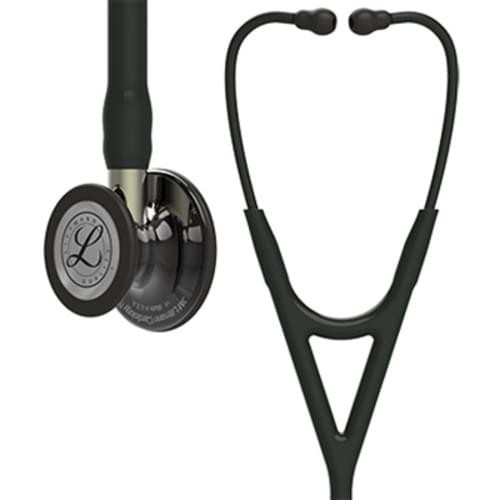
How the Cardiology IV enhances auscultation across cardiac, pulmonary, and vascular assessments.
Hear More of What Matters
The 3M Littmann® Cardiology IV™ Stethoscope is designed to help clinicians detect the subtle sounds that signal meaningful changes in patient status. With acoustic performance measured at more than twice the loudness of the next leading stethoscope, exceptional low-frequency sensitivity, and tunable diaphragms on both sides of the chestpiece, the Cardiology IV offers clearer sound reproduction for heart, lung, and vascular assessments. Its design helps clinicians identify abnormalities earlier, even in challenging environments like the ED, ICU, cardiac ICU, and step-down units.
Important context: The "more than twice as loud" specification refers to acoustic testing at specific frequencies compared to the Littmann Classic III. While the Cardiology IV does provide noticeably superior acoustic performance—particularly for low-frequency sounds, this advantage is most apparent when comparing to entry-level stethoscopes. The difference between the Cardiology IV and other premium models is more incremental. Regardless, enhanced acoustics combined with proper examination technique support more confident clinical assessments.
Cardiac Sounds: Enhanced Low-Frequency Sensitivity for Improved Detection
The Littmann Cardiology IV is built to isolate the subtle low-frequency sounds that clinicians rely on when monitoring cardiac function, particularly in high-acuity settings. Its tunable diaphragm technology allows users to hear high or low frequencies simply by adjusting pressure on the chestpiece, helping clinicians assess patients more quickly and efficiently.
The stethoscope’s improved low-frequency performance means clinicians can more reliably detect cardiac sounds below 120 Hz, including those associated with Korotkoff sounds, Mitral Stenosis, and S3 and S4 gallops. These low-frequency sounds often indicate early or evolving changes in cardiovascular status. The Cardiology IV’s acoustic design, featuring a distinctive chalice-shaped chestpiece and dual-lumen tubing, helps clinicians hear these sounds with greater clarity and consistency than standard stethoscopes.
Clinical perspective: While the Cardiology IV's enhanced acoustics improve detection probability for subtle findings like S3 and S4 gallops, detecting these sounds still requires proper technique, optimal patient positioning, and clinical experience. Quality acoustics are one component of successful auscultation—examiner skill and systematic technique remain equally important.
Lung Sounds: Greater Clarity for Subtle Pulmonary Changes
The Cardiology IV’s tunable diaphragms and high acoustic performance make it easier to hear subtle respiratory sounds, including faint or early pulmonary anomalies. The enhanced audibility of high-frequency sounds, especially when firm pressure is applied to the adult diaphragm, supports clinicians in identifying difficult-to-hear abnormalities such as:
- Fine crackles - Early signs of pulmonary edema, interstitial lung disease, or pneumonia
- Subtle wheezes - Mild bronchospasm or early COPD exacerbation
- Diminished breath sounds - Suggesting pleural effusion, pneumothorax, or atelectasis
- Asymmetric sounds - Indicating unilateral pathology requiring further investigation
In critical care settings such as the ED, ICU, cardiac ICU, and step-down units, early recognition of these pulmonary changes is essential. The Cardiology IV's acoustic design helps clinicians hear these subtle shifts in respiratory status more clearly, supporting timely clinical decision-making.
Vascular Sounds: Precise Detection with Reduced Noise Interference
The Littmann Cardiology IV enhances the detection of vascular sounds, especially those occurring at lower frequencies. Because the stethoscope is more than twice as loud as comparable models, it supports clearer identification of vascular abnormalities, even in noisy environments.
Clinicians benefit from improved clarity when listening for:
- Korotkoff sounds during manual blood pressure measurement
- Low-frequency vascular sounds that may indicate changes in flow or pressure
The dual-lumen tubing eliminates the rubbing noise common in older double-tube designs, allowing vascular sounds to stand out more distinctly. This is particularly helpful when assessing unstable or complex patients whose hemodynamic status may change rapidly.
Note on vascular assessment: While the Cardiology IV enhances audibility of Korotkoff sounds and other vascular sounds, many factors affect blood pressure measurement accuracy, including cuff size, patient positioning, arm circumference, and technique. Quality acoustics support accurate measurement but don't replace proper BP technique and appropriate equipment selection.
Why the Cardiology IV Helps Clinicians Hear More
The Cardiology IV’s performance advantages are rooting in its engineering, all of which was described in your original product material:
More Than Twice as Loud as the Next Leading Stethoscope
This increased audibility allows clinicians to hear faint or low-intensity sounds more reliably, especially in high-noise clinical environments.
Tunable Diaphragms on Both Sides
Clinicians can switch between low and high frequencies by adjusting pressure, improving efficiency during cardiac, pulmonary, and vascular assessments.
Dual-Lumen Tubing
Two sound paths in one tube reduce extraneous noise and improve sound isolation.
Chalice-Shaped, Dual-Sided Chestpiece
Optimized for both adult and pediatric patients, with the pediatric side convertible to an open bell using the included non-chill sleeve.
Enhanced High-Frequency Audibility
Better reproduction of high-frequency sounds (firm pressure) supports more detailed respiratory and cardiovascular evaluations.
Who Benefits Most From the Cardiology IV’s Acoustic Performance?
Your original product information emphasized the stethoscope’s value for clinicians working in critical care and dynamic environments, including:
- Emergency Department clinicians
- ICU and Cardiac ICU teams
- Step-down unit staff
- Cardiologists and internal medicine physicians
- Nurse practitioners and physician assistants
- Respiratory specialists
- Medical and nursing students seeking advanced performance
Important qualifier: While the Cardiology IV provides acoustic advantages for all these clinicians, examiner experience and systematic examination technique matter more than equipment quality. An experienced clinician with a mid-range stethoscope will consistently outperform a novice with a Cardiology IV. The stethoscope enhances what skilled clinicians can already do, it doesn't replace the need for extensive practice and clinical exposure.
The Cardiology IV is engineered for clinicians who need to hear subtle changes in patient condition, detect low-frequency cardiac sounds, and accurately assess faint pulmonary anomalies, making it a highly reliable choice across specialties.
Hear Subtle Changes Earlier and Make Decisions with Confidence
The Littmann Cardiology IV is designed to help clinicians:
- Detect subtle heart sounds, including low-frequency abnormalities
- Identify faint pulmonary anomalies in high-acuity settings
- Hear low-frequency vascular sounds, such as Korotkoff sounds, with greater precision
- Perform assessments confidently in noisy, dynamic clinical environments
With its tunable diaphragms, dual-lumen tubing, enhanced acoustics, and versatility across pediatric and adult care, the Cardiology IV provides clinicians with an excellent tool that supports more confident auscultation when combined with proper technique and clinical judgment. Quality equipment amplifies clinical skill, it doesn't replace it.
Explore Littmann Cardiology IV stethoscopes at SurgoMed to find the model, color, and finish that best supports your clinical practice.
Common Questions About Cardiology IV Acoustic Performance
Will the Cardiology IV help me hear S3 and S4 gallops more easily?
The enhanced low-frequency sensitivity improves your chances of detecting these sounds when present, but S3 and S4 remain challenging even with premium stethoscopes. Detection requires optimal patient positioning (left lateral decubitus for S3), quiet environment, and significant clinical experience. The Cardiology IV gives you better acoustic capability, but doesn't guarantee detection—technique and pattern recognition remain critical.
Is the acoustic difference noticeable compared to my current stethoscope?
If you're currently using an entry-level stethoscope (Lightweight, Classic II), the upgrade to Cardiology IV is very noticeable, particularly for low-frequency cardiac sounds and subtle lung findings. If you're using a mid-range model (Classic III), the improvement is moderate. If you're already using another premium stethoscope (Master Cardiology, older Cardiology III), the difference is incremental rather than dramatic.
Does "twice as loud" mean I'll hear twice as much detail?
The "twice as loud" specification refers to acoustic output at specific frequencies in laboratory testing, not a doubling of clinical detail or diagnostic capability. In practice, this translates to better detection of soft sounds in noisy environments and improved confidence in your findings, but it doesn't fundamentally change what's audible versus inaudible—proper technique and patient cooperation still matter significantly.
