
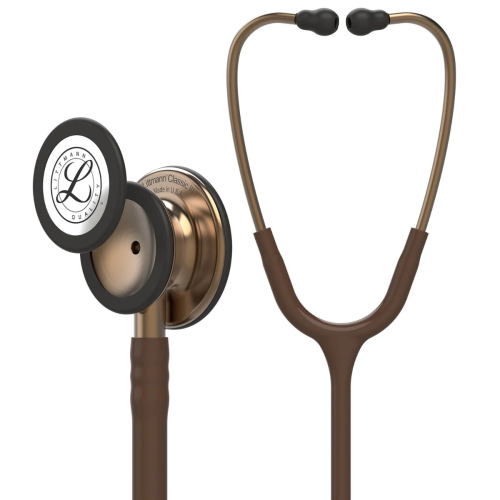
A professional stethoscope that helps students build confident auscultation skills from day one.
Why Your First Serious Stethoscope Matters
For medical, nursing, and allied health students, learning auscultation is a foundational clinical skill. Being able to clearly hear heart sounds, lung sounds, and blood pressure is critical, not only for exams and skill labs, but for developing confidence during real patient interactions.
The Littmann Classic III Stethoscope is widely recommended for students because it delivers professional-level sound quality without the complexity or cost of cardiology-grade models. It helps trainees focus on learning what they’re hearing, rather than struggling to hear it.
This guide explains why the Classic III is one of the most popular stethoscope choices for students and healthcare trainees.
Why the Classic III Is Ideal for Learning Auscultation
Students need a stethoscope that provides clear, accurate sound reproduction. Entry-level stethoscopes often dampen subtle sounds, making it harder to differentiate normal from abnormal findings.
The Classic III’s high acoustic sensitivity allows students to:
- Hear heart and lung sounds more clearly
- Identify subtle changes in rhythm or airflow
- Build confidence during skills practice and clinical rotations
Clear sound early in training supports better learning outcomes.
What the Classic III Will (and Won't) Do for Your Learning
What Quality Acoustics Help With:
✓ Hearing sounds more clearly when present - Makes normal S1/S2, common murmurs, crackles, wheezes more audible
✓ Reducing frustration - Less "I can't hear anything" moments in skills labs
✓ Building confidence - Trusting what you hear supports learning
✓ Distinguishing subtle differences - Helps you learn to differentiate fine vs. coarse crackles, different murmur qualities
What Quality Acoustics Don't Guarantee:
✗ Instant competence - You'll still struggle initially; this is normal and expected
✗ Hearing everything easily - S3/S4 gallops, faint murmurs remain challenging even with excellent stethoscopes
✗ Automatic interpretation - Hearing sounds clearly ≠ knowing what they mean (requires extensive practice and teaching)
✗ Perfect performance on OSCE exams - Stethoscope quality helps, but exam success depends primarily on knowledge and systematic technique
The Learning Reality:
First 6-12 months: You'll struggle to hear and interpret findings even with the Classic III. This is normal. Everyone goes through this.
Months 12-24: Pattern recognition starts developing. You'll notice the Classic III makes sounds clearer than entry-level stethoscopes classmates use.
Years 2-4+: Increased experience lets you appreciate subtle acoustic differences. The Classic III's quality becomes more valuable as your skills develop.
Bottom line: The Classic III provides quality acoustics that support learning, but can't shortcut the thousands of hours of practice needed to become proficient. Use it extensively, seek feedback from experienced clinicians, and be patient with yourself.
Tunable Diaphragms for Developing Listening Skills
One of the Classic III’s most valuable learning tools is Littmann’s tunable diaphragm technology. By adjusting pressure on the chestpiece, students can hear different frequency sounds without repositioning the stethoscope.
- Light pressure emphasizes low-frequency sounds
- Firm pressure emphasizes high-frequency sounds
This reinforces proper auscultation technique and helps students understand how sound characteristics change, an essential clinical skill.
Lightweight Comfort for Long Study & Clinical Days
Students often wear their stethoscope for long periods during labs, clinical placements, and hospital rounds. The Classic III’s lightweight design reduce strain on the neck and shoulders, making it comfortable to wear throughout the day.
Comfort matters when you’re focusing on learning, not adjusting your equipment.
Durable Design for Years of Training
Medical and nursing training can be demanding on equipment. The Classic III is built with next-generation tubing that:
- Retains its shape after repeated folding
- Resists damage from skin oils and alcohol
- Is less prone to cracking or staining
This durability makes it a long-term investment that can last through school and into early professional practice.
Adult & Pediatric Practice with One Stethoscope
During training, students rotate through multiple settings and patient populations. The Classic III’s dual-sided chestpiece allows:
- Adult assessment on one side
- Pediatric assessment on the smaller side
- Open-bell conversion using the included non-chill sleeve
This versatility means students don’t need multiple stethoscopes for different rotations.
How Much You'll Actually Use Your Stethoscope During Training
Preclinical Years (Year 1-2 for most programs):
Reality: Limited clinical use in most curricula
- Physical diagnosis course skills labs (weekly or biweekly)
- Simulated patient encounters
- Practice with classmates
- Maybe early clinical exposure
Usage: 1-3 hours per week typically
Implication: Don't panic if your stethoscope sits unused for weeks during basic sciences, this is normal
Clinical Rotations (Years 3-4 medical school, throughout nursing/PA programs):
Reality: Heavy daily use on most rotations
- Internal medicine: Several hours daily
- Pediatrics: Frequent use
- Surgery: Less frequent (but still needed for pre/post-op assessments)
- Psychiatry: Minimal use
- OB/GYN: Moderate use
Usage: Varies by rotation, from daily (medicine) to rarely (psychiatry)
Skills That Develop Over Time:
Month 1-6 of clinical rotations:
- Struggling to find heart sounds reliably
- Uncertain about normal vs. abnormal
- Taking a long time for each assessment
- Feeling frustrated and incompetent (completely normal)
Month 6-12:
- Reliably hearing S1 and S2
- Identifying obvious murmurs
- Assessing breath sounds with increasing confidence
- Starting to develop systematic examination routine
Year 2-3+:
- Confident routine cardiac and pulmonary assessment
- Detecting subtle findings sometimes
- Comfortable teaching junior students
- Appreciating your stethoscope's quality
Be patient with yourself, competence develops over thousands of patient encounters, not overnight.
What Medical and Nursing Schools Actually Recommend
Common School Recommendations:
Many programs suggest:
- "Professional-grade stethoscope with adult and pediatric capabilities"
- "Littmann Classic III or equivalent quality"
- "Stethoscope with dual-sided chestpiece"
Some programs:
- Remain brand-agnostic (any quality stethoscope acceptable)
- Negotiate bulk purchase discounts with specific retailers
- Provide loaner stethoscopes for first-year skills labs
A few programs:
- Require specific models for standardization
- Include stethoscope in first-year supply package
- Expect students to purchase their own without specific recommendation
Why Classic III Appears on Recommended Lists:
✓ Proven track record across decades of medical education
✓ Professional-grade acoustics without premium pricing
✓ Dual-sided design suits diverse training rotations
✓ Durable enough for repeated student use (labs can be rough on equipment)
✓ Widely available through campus bookstores and retailers
✓ Students who buy it rarely need replacement during training
Check Your Specific Program:
- Review your school's required/recommended equipment list
- Ask second-year students what they use
- Check if your program has negotiated bulk purchase discounts
- Confirm whether loaner stethoscopes available for first-year skills labs
Bottom line: The Classic III meets or exceeds most program requirements and has satisfied millions of healthcare students over decades. It's a safe choice that won't limit your training.

Classic III vs Entry-Level Student Stethoscopes
While basic student stethoscopes may be less expensive, they often compromise on sound quality and durability.
Compared to entry-level models, the Classic III offers:
- Clearer sound transmission
- Better detection of subtle abnormalities
- Dual adult/pediatric functionality
- Longer lifespan and better value over time
For many students, the Classic III eliminates the need to upgrade shortly after graduation.
Should Students Buy the Cardiology IV Instead?
The Cardiology IV costs $180-220 (roughly $80-100 more than Classic III). Is the upgrade worth it for students?
For Most Students: No, Stick with Classic III
Reasoning:
- Pattern recognition skills aren't developed yet - You can't appreciate subtle acoustic differences when you're still learning to reliably identify S1 vs. S2
- Financial constraints usually more significant - $80-100 matters more in student budgets
- Risk of damage or loss higher - Moving between hospitals, lockers, shared spaces increases loss risk
- May change career direction - If you end up in psychiatry, dermatology, radiology, pathology, the premium acoustics won't matter
- Classic III acoustics sufficient for learning - Provides clear sounds for developing fundamental skills
Consider Cardiology IV If:
✓ You're certain about cardiology, critical care, or emergency medicine career path
✓ Financial difference isn't significant burden ($80-100 doesn't strain budget)
✓ You're in later clinical years and frequently rotate in ICU/cardiology
✓ You have fellowship plans in cardiac subspecialty
✓ You received it as a gift (great graduation present)
The Smart Approach for Most Students:
- Start with Classic III during preclinical and early clinical years
- Reassess during final year or residency based on specialty choice
- Upgrade to Cardiology IV during residency or fellowship if entering cardiology, critical care, or EM
- Keep Classic III for general use if entering non-cardiac specialty
Reality check: Your attendings won't judge your clinical acumen based on stethoscope model. Focus on developing systematic examination technique and pattern recognition—that matters infinitely more than equipment.
What About Digital Stethoscopes (Littmann CORE)?
For students: Generally not recommended
Why:
- High cost ($500-600), 2-3x more than already-expensive textbooks
- Battery management adds complexity
- Recording features rarely used in student context
- Amplification not needed for learning normal sounds
- Better to master acoustic auscultation first
Exception: Students with documented hearing loss may benefit from amplification features, consult with disability services about appropriate accommodations.
Who the Classic III Is Best For as a Student
The Classic III is an excellent choice for:
- Medical students
- Nursing students (LPN, RN, NP programs)
- Physician assistant students
- Allied health and clinical trainees
It’s especially well suited for students who want a single stethoscope that can carry them from training into professional practice.
Final Recommendations for Students Choosing Their First Professional Stethoscope
The Classic III Is an Excellent Choice If:
✓ You want professional-grade acoustics that support learning
✓ You can reasonably afford $80-110 (with student discount)
✓ You want one versatile stethoscope for all rotations
✓ You value durability for years of training and early practice
✓ You want the standard that most programs recommend
Start with Something Cheaper If:
✓ The $100 cost creates genuine financial hardship
✓ Your program provides loaners for first year
✓ You're genuinely uncertain about continuing in healthcare
✓ You already own functional stethoscope from previous training
For most students, the Classic III represents a smart investment in your clinical education and early career.
What Matters More Than Stethoscope Model:
- Extensive practice - Thousands of patient encounters
- Systematic technique - Consistent examination routine
- Seeking feedback - Learning from experienced clinicians
- Pattern recognition - Exposure to diverse patient presentations
- Supplementary resources - Online libraries, apps, teaching files
Buy the Classic III (or appropriate alternative based on budget), then invest your energy in developing the skills that actually matter. The stethoscope is a tool, your clinical judgment is what makes the difference.
Explore Littmann Classic III stethoscopes at SurgoMed, take advantage of student discounts, and focus on building the auscultation skills that will serve your patients for decades to come.
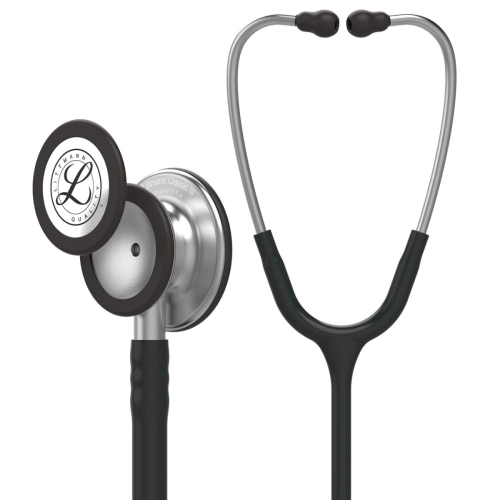

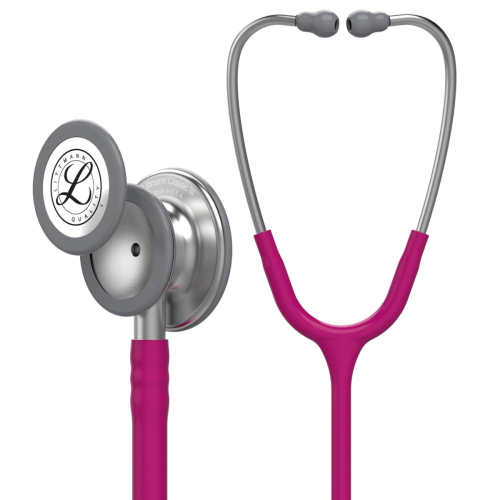
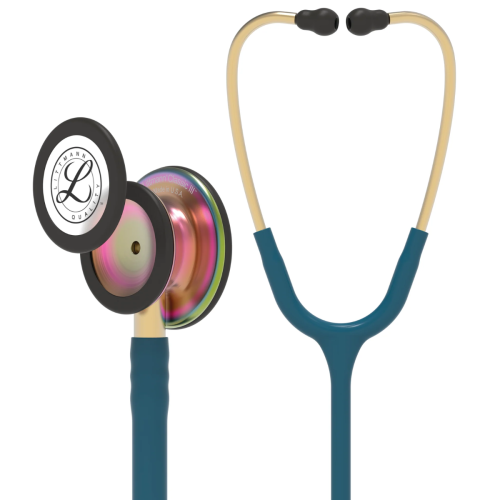

A professional stethoscope that helps students build confident auscultation skills from day one.
Why Your First Serious Stethoscope Matters
For medical, nursing, and allied health students, learning auscultation is a foundational clinical skill. Being able to clearly hear heart sounds, lung sounds, and blood pressure is critical, not only for exams and skill labs, but for developing confidence during real patient interactions.
The Littmann Classic III Stethoscope is widely recommended for students because it delivers professional-level sound quality without the complexity or cost of cardiology-grade models. It helps trainees focus on learning what they’re hearing, rather than struggling to hear it.
This guide explains why the Classic III is one of the most popular stethoscope choices for students and healthcare trainees.
Why the Classic III Is Ideal for Learning Auscultation
Students need a stethoscope that provides clear, accurate sound reproduction. Entry-level stethoscopes often dampen subtle sounds, making it harder to differentiate normal from abnormal findings.
The Classic III’s high acoustic sensitivity allows students to:
- Hear heart and lung sounds more clearly
- Identify subtle changes in rhythm or airflow
- Build confidence during skills practice and clinical rotations
Clear sound early in training supports better learning outcomes.
What the Classic III Will (and Won't) Do for Your Learning
What Quality Acoustics Help With:
✓ Hearing sounds more clearly when present - Makes normal S1/S2, common murmurs, crackles, wheezes more audible
✓ Reducing frustration - Less "I can't hear anything" moments in skills labs
✓ Building confidence - Trusting what you hear supports learning
✓ Distinguishing subtle differences - Helps you learn to differentiate fine vs. coarse crackles, different murmur qualities
What Quality Acoustics Don't Guarantee:
✗ Instant competence - You'll still struggle initially; this is normal and expected
✗ Hearing everything easily - S3/S4 gallops, faint murmurs remain challenging even with excellent stethoscopes
✗ Automatic interpretation - Hearing sounds clearly ≠ knowing what they mean (requires extensive practice and teaching)
✗ Perfect performance on OSCE exams - Stethoscope quality helps, but exam success depends primarily on knowledge and systematic technique
The Learning Reality:
First 6-12 months: You'll struggle to hear and interpret findings even with the Classic III. This is normal. Everyone goes through this.
Months 12-24: Pattern recognition starts developing. You'll notice the Classic III makes sounds clearer than entry-level stethoscopes classmates use.
Years 2-4+: Increased experience lets you appreciate subtle acoustic differences. The Classic III's quality becomes more valuable as your skills develop.
Bottom line: The Classic III provides quality acoustics that support learning, but can't shortcut the thousands of hours of practice needed to become proficient. Use it extensively, seek feedback from experienced clinicians, and be patient with yourself.
Tunable Diaphragms for Developing Listening Skills
One of the Classic III’s most valuable learning tools is Littmann’s tunable diaphragm technology. By adjusting pressure on the chestpiece, students can hear different frequency sounds without repositioning the stethoscope.
- Light pressure emphasizes low-frequency sounds
- Firm pressure emphasizes high-frequency sounds
This reinforces proper auscultation technique and helps students understand how sound characteristics change, an essential clinical skill.
Lightweight Comfort for Long Study & Clinical Days
Students often wear their stethoscope for long periods during labs, clinical placements, and hospital rounds. The Classic III’s lightweight design reduce strain on the neck and shoulders, making it comfortable to wear throughout the day.
Comfort matters when you’re focusing on learning, not adjusting your equipment.
Durable Design for Years of Training
Medical and nursing training can be demanding on equipment. The Classic III is built with next-generation tubing that:
- Retains its shape after repeated folding
- Resists damage from skin oils and alcohol
- Is less prone to cracking or staining
This durability makes it a long-term investment that can last through school and into early professional practice.
Adult & Pediatric Practice with One Stethoscope
During training, students rotate through multiple settings and patient populations. The Classic III’s dual-sided chestpiece allows:
- Adult assessment on one side
- Pediatric assessment on the smaller side
- Open-bell conversion using the included non-chill sleeve
This versatility means students don’t need multiple stethoscopes for different rotations.
How Much You'll Actually Use Your Stethoscope During Training
Preclinical Years (Year 1-2 for most programs):
Reality: Limited clinical use in most curricula
- Physical diagnosis course skills labs (weekly or biweekly)
- Simulated patient encounters
- Practice with classmates
- Maybe early clinical exposure
Usage: 1-3 hours per week typically
Implication: Don't panic if your stethoscope sits unused for weeks during basic sciences, this is normal
Clinical Rotations (Years 3-4 medical school, throughout nursing/PA programs):
Reality: Heavy daily use on most rotations
- Internal medicine: Several hours daily
- Pediatrics: Frequent use
- Surgery: Less frequent (but still needed for pre/post-op assessments)
- Psychiatry: Minimal use
- OB/GYN: Moderate use
Usage: Varies by rotation, from daily (medicine) to rarely (psychiatry)
Skills That Develop Over Time:
Month 1-6 of clinical rotations:
- Struggling to find heart sounds reliably
- Uncertain about normal vs. abnormal
- Taking a long time for each assessment
- Feeling frustrated and incompetent (completely normal)
Month 6-12:
- Reliably hearing S1 and S2
- Identifying obvious murmurs
- Assessing breath sounds with increasing confidence
- Starting to develop systematic examination routine
Year 2-3+:
- Confident routine cardiac and pulmonary assessment
- Detecting subtle findings sometimes
- Comfortable teaching junior students
- Appreciating your stethoscope's quality
Be patient with yourself, competence develops over thousands of patient encounters, not overnight.
What Medical and Nursing Schools Actually Recommend
Common School Recommendations:
Many programs suggest:
- "Professional-grade stethoscope with adult and pediatric capabilities"
- "Littmann Classic III or equivalent quality"
- "Stethoscope with dual-sided chestpiece"
Some programs:
- Remain brand-agnostic (any quality stethoscope acceptable)
- Negotiate bulk purchase discounts with specific retailers
- Provide loaner stethoscopes for first-year skills labs
A few programs:
- Require specific models for standardization
- Include stethoscope in first-year supply package
- Expect students to purchase their own without specific recommendation
Why Classic III Appears on Recommended Lists:
✓ Proven track record across decades of medical education
✓ Professional-grade acoustics without premium pricing
✓ Dual-sided design suits diverse training rotations
✓ Durable enough for repeated student use (labs can be rough on equipment)
✓ Widely available through campus bookstores and retailers
✓ Students who buy it rarely need replacement during training
Check Your Specific Program:
- Review your school's required/recommended equipment list
- Ask second-year students what they use
- Check if your program has negotiated bulk purchase discounts
- Confirm whether loaner stethoscopes available for first-year skills labs
Bottom line: The Classic III meets or exceeds most program requirements and has satisfied millions of healthcare students over decades. It's a safe choice that won't limit your training.
Classic III vs Entry-Level Student Stethoscopes
While basic student stethoscopes may be less expensive, they often compromise on sound quality and durability.
Compared to entry-level models, the Classic III offers:
- Clearer sound transmission
- Better detection of subtle abnormalities
- Dual adult/pediatric functionality
- Longer lifespan and better value over time
For many students, the Classic III eliminates the need to upgrade shortly after graduation.
Should Students Buy the Cardiology IV Instead?
The Cardiology IV costs $180-220 (roughly $80-100 more than Classic III). Is the upgrade worth it for students?
For Most Students: No, Stick with Classic III
Reasoning:
- Pattern recognition skills aren't developed yet - You can't appreciate subtle acoustic differences when you're still learning to reliably identify S1 vs. S2
- Financial constraints usually more significant - $80-100 matters more in student budgets
- Risk of damage or loss higher - Moving between hospitals, lockers, shared spaces increases loss risk
- May change career direction - If you end up in psychiatry, dermatology, radiology, pathology, the premium acoustics won't matter
- Classic III acoustics sufficient for learning - Provides clear sounds for developing fundamental skills
Consider Cardiology IV If:
✓ You're certain about cardiology, critical care, or emergency medicine career path
✓ Financial difference isn't significant burden ($80-100 doesn't strain budget)
✓ You're in later clinical years and frequently rotate in ICU/cardiology
✓ You have fellowship plans in cardiac subspecialty
✓ You received it as a gift (great graduation present)
The Smart Approach for Most Students:
- Start with Classic III during preclinical and early clinical years
- Reassess during final year or residency based on specialty choice
- Upgrade to Cardiology IV during residency or fellowship if entering cardiology, critical care, or EM
- Keep Classic III for general use if entering non-cardiac specialty
Reality check: Your attendings won't judge your clinical acumen based on stethoscope model. Focus on developing systematic examination technique and pattern recognition—that matters infinitely more than equipment.
What About Digital Stethoscopes (Littmann CORE)?
For students: Generally not recommended
Why:
- High cost ($500-600), 2-3x more than already-expensive textbooks
- Battery management adds complexity
- Recording features rarely used in student context
- Amplification not needed for learning normal sounds
- Better to master acoustic auscultation first
Exception: Students with documented hearing loss may benefit from amplification features, consult with disability services about appropriate accommodations.
Who the Classic III Is Best For as a Student
The Classic III is an excellent choice for:
- Medical students
- Nursing students (LPN, RN, NP programs)
- Physician assistant students
- Allied health and clinical trainees
It’s especially well suited for students who want a single stethoscope that can carry them from training into professional practice.
Final Recommendations for Students Choosing Their First Professional Stethoscope
The Classic III Is an Excellent Choice If:
✓ You want professional-grade acoustics that support learning
✓ You can reasonably afford $80-110 (with student discount)
✓ You want one versatile stethoscope for all rotations
✓ You value durability for years of training and early practice
✓ You want the standard that most programs recommend
Start with Something Cheaper If:
✓ The $100 cost creates genuine financial hardship
✓ Your program provides loaners for first year
✓ You're genuinely uncertain about continuing in healthcare
✓ You already own functional stethoscope from previous training
For most students, the Classic III represents a smart investment in your clinical education and early career.
What Matters More Than Stethoscope Model:
- Extensive practice - Thousands of patient encounters
- Systematic technique - Consistent examination routine
- Seeking feedback - Learning from experienced clinicians
- Pattern recognition - Exposure to diverse patient presentations
- Supplementary resources - Online libraries, apps, teaching files
Buy the Classic III (or appropriate alternative based on budget), then invest your energy in developing the skills that actually matter. The stethoscope is a tool, your clinical judgment is what makes the difference.
Explore Littmann Classic III stethoscopes at SurgoMed, take advantage of student discounts, and focus on building the auscultation skills that will serve your patients for decades to come.
