
.jpg)
Battery life is one of the most important considerations for digital stethoscope users, especially nurses, physicians, paramedics, and respiratory therapists who depend on reliable performance throughout long clinical shifts. The Littmann CORE Digital Stethoscope contains a rechargeable lithium-ion battery engineered to deliver stable digital performance, consistent amplification, and dependable active noise cancellation (ANC).
How Long Does the Littmann CORE Battery Last per Charge?
Under normal clinical use, the Littmann CORE offers:
8 hours of continuous digital use
This depends on:
- Volume level
- Noise cancellation settings
- Temperature
- Frequency of digital node use
- Firmware version
In typical workflows (turning digital mode on/off throughout the day), most clinicians get a full shift before needing a recharge. Because the CORE functions as a true digital stethoscope, battery duration depends heavily on how often electronic features are activated.
What "8 Hours" Actually Means in Practice
The 8-hour specification assumes continuous digital mode operation, meaning the device is actively amplifying or using ANC non-stop. In real clinical use:
- Heavy users (digital mode for most assessments, ANC frequently on): 1-2 full shifts
- Moderate users (mix of analog/digital, selective ANC): 2-3 shifts
- Light users (primarily analog, occasional digital): 3-5 shifts
Most clinicians charge every 1-2 days depending on their workflow and patient volume. This usage pattern is typical for modern electronic stethoscope devices that combine amplification, noise cancellation, and Bluetooth connectivity.
How Long Does It Take to Fully Charge?
A full charge from 0% to 100% takes:
About 2 hours
A quick 15-minute charge provides enough power for short assessments if you're in a pinch.
LED Light Guide: Battery Indicators
Understanding the LED indicators helps you know when to charge.
|
LED Light |
Meaning |
|
Solid Yellow |
Charging |
|
Flashing Yellow |
Low on battery |
|
Solid Green |
Fully Charged |
|
Flashing White |
Digital mode on & seeking device |
|
Solid White |
On & connected |
|
Flashing Blue |
Recording |
What You'll See Most Often:
- Flashing Yellow = Charge soon (you have 30-60 minutes of digital use left)
- Solid White = Connected to Eko App and ready
- Flashing White = Trying to connect to your phone (check Bluetooth)
If LED behavior seems unusual, try restarting the device or checking for firmware updates in the Eko App.
What Affects Battery Life?
Several factors impact how long your CORE lasts each shift:
- Volume level - Higher volume level drains the battery faster.
- Noise cancellation (ANC) - ANC is power-intensive. Turning it OFF when not needed extends battery life significantly.
- Temperature - Cold environments temporarily reduce battery performance.
- Age of the battery - Lithium-ion batteries naturally degrade after 2-4 years of daily use.
- Frequency of digital mode - Analog mode uses zero battery, so switching between analog/digital conserves power.
Understanding these variables helps clinicians get the most out of their digital stethoscope without unexpected power loss during patient care.
How to Extend Littmann CORE Battery Life (Simple Daily Habits)
Below are the most effective ways to maximize battery health and longevity. These habits apply to most rechargable electronic stethoscope models, but are especially important for clinicians who rely heavily on digital amplification.
1. Avoid regularly draining to 0%
Lithium-ion batteries experience slightly faster degradation when repeatedly fully discharged. However:
- The CORE's battery management system provides protection against deep discharge damage
- Occasional full drains won't significantly harm the battery
- Obsessing over charge levels isn't necessary for most users
Practical approach: Charge when the yellow LED flashes (low battery warning). Don't stress about the exact percentage.
Realistic expectation: Even with optimal charging habits, lithium-ion batteries naturally lose capacity after 2-4 years of daily use.
2. Charge more frequently in shorter bursts
Topping up is healthier than full cycles. Example: plug in during lunch or between shifts instead of waiting until empty.
Sample Daily Charging Routine
Night shift nurse:
- Start shift: 100% charged
- Use throughout night (mix of analog/digital)
- End shift: 40-60% remaining
- Charge during next day's sleep
Busy clinic physician:
- Charge overnight
- Morning clinic: Heavy use
- Lunch break: Quick 15-min top-up if needed
- Afternoon: Finish shift comfortably
EMS/Paramedic:
- Charge between calls in rig
- Keep backup charging cable in vehicle
- Use analog mode for routine vitals
- Digital mode for critical assessments
3. Turn off noise cancellation when unnecessary
ANC is powerful but drains battery quickly. Turn it off if you’re: in a quiet exam room, doing vitals, using analog mode, or not needing amplified clarity.
4. Use analog mode strategically
Analog mode uses no battery, so use it for quick checks. This hybrid design is one of the major advantages of the CORE as a digital stethoscope, allowing uninterrupted use even if electronic features are unavailable. Digital mode is best reserved for:
- Lung sound differentiation
- Murmurs
- Noisy environments
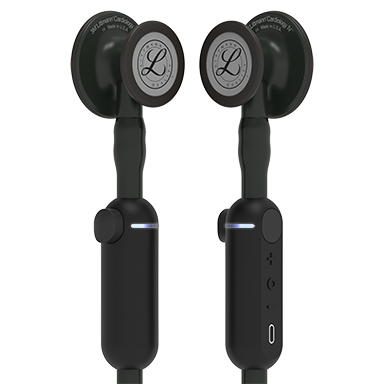
5. Protect from temperature extremes
Cold environments (below 32°F/0°C):
- Battery temporarily loses capacity
- Digital performance may become sluggish
- Keep device close to body warmth when working outdoors
Hot environments (above 95°F/35°C):
- Accelerated battery degradation over time
- Risk of overheating during charging
Most problematic: Leaving device in hot cars (can exceed 140°F/60°C in summer)
Storage recommendation: Room temperature (60-80°F / 15-27°C) is ideal
6. Use the included USB cable
The CORE comes with a quality USB-A to micro-USB cable designed for safe charging.
For wall charging: Use any UL-certified or CE-marked 5V USB adapter (standard phone charger works fine)
Avoid: Damaged cables, ultra-cheap gas station chargers, or cables with exposed wiring
Reality check: Most modern USB cables and chargers work perfectly well. The main risk is using physically damaged equipment, not brand-name vs. generic.
7. When the Battery Dies During Your Shift
If your battery depletes unexpectedly, you can still use the CORE.
- Analog mode works with zero battery power
- The stethoscope functions exactly like a Littmann Cardiology IV
- You lose amplification, ANC, and recording capabilities only
- No need to switch devices mid-shift
Limitation: You cannot charge and use simultaneously, the device must be disconnected from power during use.
Backup strategy: Keep a charging cable in your locker or car for quick top-ups during breaks.
Battery Life FAQ
Can I use the Littmann CORE while it’s charging?
No. The Littmann CORE cannot be used while charging. The device must be disconnected from the charger before auscultation. This design protects both the battery and internal electronics.
Does the Littmann CORE work in analog mode without battery power?
Yes. The COREs analog mode works with no battery power at all. If the digital functions turn off, you can still use the stethoscope like a standard Littmann Cardiology IV and continue assessing patients without disruption.
Should I let the battery fully die before recharging it?
No. You should avoid letting the Littmann CORE battery drain completely. Allowing the battery to reach zero too often can shorten its lifespan. Frequent, partial recharges are healthier for lithium-ion batteries.
Does Active Noise Cancellation (ANC) drain the battery faster?
Yes. ANC significantly increases battery consumption because it requires constant digital processing. If you need longer battery life, switch off ANC when working in quieter environments.
How often should I charge the Littmann CORE?
Most clinicians charge the CORE every shift or every 1-2 days, depending on how heavily they use features like amplification and ANC. Regular charging helps maintain optimal performance and ensures digital functions are always available when needed.
How do I know when my battery is degrading?
Signs your battery may be aging (typically after 2-4 years):
- Noticeably shorter time between charges
- Device powers off even with charge remaining
- Longer charging times
The battery is not user-replaceable, but 3M offers servicing options. Contact 3M customer service if battery performance significantly declines.
Can I replace the battery myself?
No. The Littmann CORE battery is not designed for user replacement. If battery degradation becomes problematic after years of use, contact 3M for service options or consider device replacement.
Does firmware affect battery life?
Potentially, yes. Firmware updates occasionally include battery optimization improvements. Keep your device updated through the Eko App for best performance.
What if I don't use my CORE for weeks or months?
For long-term storage:
- Charge to approximately 50%
- Store in cool, dry location
- Recharge every 2-3 months to prevent deep discharge
- Batteries stored at 0% for extended periods may not recover
Will Battery Management Be Annoying?
Honest assessment:
For most clinicians: No. Charging every 1-2 days becomes routine, like charging a phone.
Battery life may frustrate you if:
- You work extremely long shifts (12+ hours with heavy digital use)
- You frequently forget to charge devices
- You want a completely "maintenance-free" tool
Battery life is unlikely to be an issue if:
- You're already comfortable charging daily devices (phones, smartwatches)
- You use digital mode selectively rather than constantly
- You can access charging during breaks
Bottom line: Battery management requires minimal effort for most users, but it's a consideration that doesn't exist with acoustic stethoscopes.
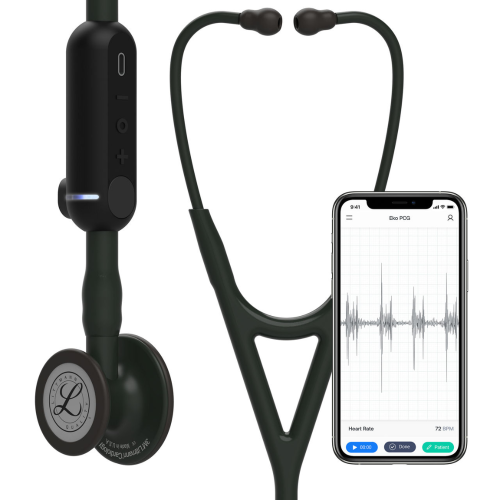

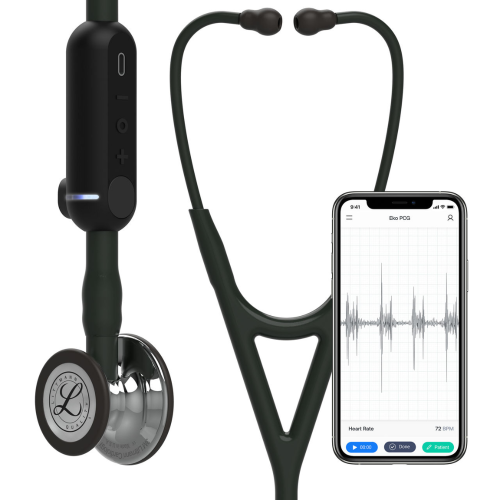
Battery life is one of the most important considerations for digital stethoscope users, especially nurses, physicians, paramedics, and respiratory therapists who depend on reliable performance throughout long clinical shifts. The Littmann CORE Digital Stethoscope contains a rechargeable lithium-ion battery engineered to deliver stable digital performance, consistent amplification, and dependable active noise cancellation (ANC).
How Long Does the Littmann CORE Battery Last per Charge?
Under normal clinical use, the Littmann CORE offers:
8 hours of continuous digital use
This depends on:
- Volume level
- Noise cancellation settings
- Temperature
- Frequency of digital node use
- Firmware version
In typical workflows (turning digital mode on/off throughout the day), most clinicians get a full shift before needing a recharge. Because the CORE functions as a true digital stethoscope, battery duration depends heavily on how often electronic features are activated.
What "8 Hours" Actually Means in Practice
The 8-hour specification assumes continuous digital mode operation, meaning the device is actively amplifying or using ANC non-stop. In real clinical use:
- Heavy users (digital mode for most assessments, ANC frequently on): 1-2 full shifts
- Moderate users (mix of analog/digital, selective ANC): 2-3 shifts
- Light users (primarily analog, occasional digital): 3-5 shifts
Most clinicians charge every 1-2 days depending on their workflow and patient volume. This usage pattern is typical for modern electronic stethoscope devices that combine amplification, noise cancellation, and Bluetooth connectivity.
How Long Does It Take to Fully Charge?
A full charge from 0% to 100% takes:
About 2 hours
A quick 15-minute charge provides enough power for short assessments if you're in a pinch.
LED Light Guide: Battery Indicators
Understanding the LED indicators helps you know when to charge.
|
LED Light |
Meaning |
|
Solid Yellow |
Charging |
|
Flashing Yellow |
Low on battery |
|
Solid Green |
Fully Charged |
|
Flashing White |
Digital mode on & seeking device |
|
Solid White |
On & connected |
|
Flashing Blue |
Recording |
What You'll See Most Often:
- Flashing Yellow = Charge soon (you have 30-60 minutes of digital use left)
- Solid White = Connected to Eko App and ready
- Flashing White = Trying to connect to your phone (check Bluetooth)
If LED behavior seems unusual, try restarting the device or checking for firmware updates in the Eko App.
What Affects Battery Life?
Several factors impact how long your CORE lasts each shift:
- Volume level - Higher volume level drains the battery faster.
- Noise cancellation (ANC) - ANC is power-intensive. Turning it OFF when not needed extends battery life significantly.
- Temperature - Cold environments temporarily reduce battery performance.
- Age of the battery - Lithium-ion batteries naturally degrade after 2-4 years of daily use.
- Frequency of digital mode - Analog mode uses zero battery, so switching between analog/digital conserves power.
Understanding these variables helps clinicians get the most out of their digital stethoscope without unexpected power loss during patient care.
How to Extend Littmann CORE Battery Life (Simple Daily Habits)
Below are the most effective ways to maximize battery health and longevity. These habits apply to most rechargable electronic stethoscope models, but are especially important for clinicians who rely heavily on digital amplification.
1. Avoid regularly draining to 0%
Lithium-ion batteries experience slightly faster degradation when repeatedly fully discharged. However:
- The CORE's battery management system provides protection against deep discharge damage
- Occasional full drains won't significantly harm the battery
- Obsessing over charge levels isn't necessary for most users
Practical approach: Charge when the yellow LED flashes (low battery warning). Don't stress about the exact percentage.
Realistic expectation: Even with optimal charging habits, lithium-ion batteries naturally lose capacity after 2-4 years of daily use.
2. Charge more frequently in shorter bursts
Topping up is healthier than full cycles. Example: plug in during lunch or between shifts instead of waiting until empty.
Sample Daily Charging Routine
Night shift nurse:
- Start shift: 100% charged
- Use throughout night (mix of analog/digital)
- End shift: 40-60% remaining
- Charge during next day's sleep
Busy clinic physician:
- Charge overnight
- Morning clinic: Heavy use
- Lunch break: Quick 15-min top-up if needed
- Afternoon: Finish shift comfortably
EMS/Paramedic:
- Charge between calls in rig
- Keep backup charging cable in vehicle
- Use analog mode for routine vitals
- Digital mode for critical assessments
3. Turn off noise cancellation when unnecessary
ANC is powerful but drains battery quickly. Turn it off if you’re: in a quiet exam room, doing vitals, using analog mode, or not needing amplified clarity.
4. Use analog mode strategically
Analog mode uses no battery, so use it for quick checks. This hybrid design is one of the major advantages of the CORE as a digital stethoscope, allowing uninterrupted use even if electronic features are unavailable. Digital mode is best reserved for:
- Lung sound differentiation
- Murmurs
- Noisy environments
5. Protect from temperature extremes
Cold environments (below 32°F/0°C):
- Battery temporarily loses capacity
- Digital performance may become sluggish
- Keep device close to body warmth when working outdoors
Hot environments (above 95°F/35°C):
- Accelerated battery degradation over time
- Risk of overheating during charging
Most problematic: Leaving device in hot cars (can exceed 140°F/60°C in summer)
Storage recommendation: Room temperature (60-80°F / 15-27°C) is ideal
6. Use the included USB cable
The CORE comes with a quality USB-A to micro-USB cable designed for safe charging.
For wall charging: Use any UL-certified or CE-marked 5V USB adapter (standard phone charger works fine)
Avoid: Damaged cables, ultra-cheap gas station chargers, or cables with exposed wiring
Reality check: Most modern USB cables and chargers work perfectly well. The main risk is using physically damaged equipment, not brand-name vs. generic.
7. When the Battery Dies During Your Shift
If your battery depletes unexpectedly, you can still use the CORE.
- Analog mode works with zero battery power
- The stethoscope functions exactly like a Littmann Cardiology IV
- You lose amplification, ANC, and recording capabilities only
- No need to switch devices mid-shift
Limitation: You cannot charge and use simultaneously, the device must be disconnected from power during use.
Backup strategy: Keep a charging cable in your locker or car for quick top-ups during breaks.
Battery Life FAQ
Can I use the Littmann CORE while it’s charging?
No. The Littmann CORE cannot be used while charging. The device must be disconnected from the charger before auscultation. This design protects both the battery and internal electronics.
Does the Littmann CORE work in analog mode without battery power?
Yes. The COREs analog mode works with no battery power at all. If the digital functions turn off, you can still use the stethoscope like a standard Littmann Cardiology IV and continue assessing patients without disruption.
Should I let the battery fully die before recharging it?
No. You should avoid letting the Littmann CORE battery drain completely. Allowing the battery to reach zero too often can shorten its lifespan. Frequent, partial recharges are healthier for lithium-ion batteries.
Does Active Noise Cancellation (ANC) drain the battery faster?
Yes. ANC significantly increases battery consumption because it requires constant digital processing. If you need longer battery life, switch off ANC when working in quieter environments.
How often should I charge the Littmann CORE?
Most clinicians charge the CORE every shift or every 1-2 days, depending on how heavily they use features like amplification and ANC. Regular charging helps maintain optimal performance and ensures digital functions are always available when needed.
How do I know when my battery is degrading?
Signs your battery may be aging (typically after 2-4 years):
- Noticeably shorter time between charges
- Device powers off even with charge remaining
- Longer charging times
The battery is not user-replaceable, but 3M offers servicing options. Contact 3M customer service if battery performance significantly declines.
Can I replace the battery myself?
No. The Littmann CORE battery is not designed for user replacement. If battery degradation becomes problematic after years of use, contact 3M for service options or consider device replacement.
Does firmware affect battery life?
Potentially, yes. Firmware updates occasionally include battery optimization improvements. Keep your device updated through the Eko App for best performance.
What if I don't use my CORE for weeks or months?
For long-term storage:
- Charge to approximately 50%
- Store in cool, dry location
- Recharge every 2-3 months to prevent deep discharge
- Batteries stored at 0% for extended periods may not recover
Will Battery Management Be Annoying?
Honest assessment:
For most clinicians: No. Charging every 1-2 days becomes routine, like charging a phone.
Battery life may frustrate you if:
- You work extremely long shifts (12+ hours with heavy digital use)
- You frequently forget to charge devices
- You want a completely "maintenance-free" tool
Battery life is unlikely to be an issue if:
- You're already comfortable charging daily devices (phones, smartwatches)
- You use digital mode selectively rather than constantly
- You can access charging during breaks
Bottom line: Battery management requires minimal effort for most users, but it's a consideration that doesn't exist with acoustic stethoscopes.
