

Pediatric and neonatal care require a different level of precision and sensitivity than adult medicine. Children, especially infants and newborns, have smaller chest cavities, softer breath sounds, faster heart rates, and subtle early warning signs that are easy to miss without exceptional auscultation tools. In NICU and PICU environments, even the quietest abnormalities can signal significant clinical concerns.
The Littmann CORE Digital Stethoscope has quickly become a valuable tool for pediatricians, NICU nurses, pediatric RTs, family physicians, and pediatric residents, because it enhances auscultation clarity in the way pediatric care demands. With powerful amplification, active noise cancellation, and digital visualization, the CORE helps clinicians hear the nuances that matter most in small and vulnerable patients. As a modern digital stethoscope, and one of the most advanced electronic stethoscope options available for pediatric and neonatal care, the CORE offers clarity that traditional acoustic tools simply cannot match.
This guide explains why the Littmann CORE is so beneficial in pediatric and neonatal care, and how its features directly support early detection, accurate assessment, and confident clinical decision-making. This distinction is especially important in pediatrics, where a high-performance electronic stethoscope can reeal subtle clues that may be missed with acoustic models.
Why Auscultation in Pediatric & NICU Care Is So Challenging
Unlike adults, pediatric and neonatal patients present unique auscultation challenges, including:
- Very soft breath sounds
- Rapid heart and respiratory rates
- Subtle early lung abnormalities
- Small intercostal spaces
- Higher variability between patients
- Difficulty cooperating during assessments
- Crying and movement noise
- Neonatal chest walls that transmit sound differently
Additionally, pediatric patients often decline quickly, making early detection critically important. A slight change in breath sound or a new murmur can indicate meaningful clinical worsening. Digital clarity can help clinicians catch these changes earlier. This is one of the primary reasons many NICU and pediatric teams are turning to digital stethoscope technology for more reliable early detection.
How the Littmann CORE Supports Pediatric & Neonatal Auscultation
The CORE offers several advantages specifically suited to pediatric and neonatal care.
Amplification Helps You Hear Extremely Soft Breath Sounds
Young children often have breath sounds that are significantly quieter than adults. The CORE’s up to 40x amplification enhances sound intensity without distorting it. Amplification helps clinicians better hear:
- Early inspiratory crackles
- Soft expiratory wheezing
- Stridor and airway turbulence
- Diminished breath sounds
- Subtle grunting
- Delicate newborn breath sounds
This is especially valuable when assessing:
- Premature infants
- Infants with underdeveloped lungs
- Children with bronchiolitis
- Children with pneumonia
- Infants with congenital cardiac or respiratory issues.
This level of detail is one of the strongest advantages of upgrading to a digital stethoscope for pediatric respiratory assessments.
Ideal for Small Chest Cavities & Tiny Intercostal Spaces
The Littmann CORE uses a dual-sided chestpiece, and the pediatric diaphragm is perfectly sized for:
- Infants
- Toddlers
- Preschoolers
- Small school-aged children
- Neonates (when used carefully)
Smaller chestpieces help clinicians navigate:
- Narrow rib spaces
- Tiny thoracic cavities
- Sensitive or fragile skin
- Curved anatomy in infants
The pediatric side can also be converted to an open bell, offering gentle low-frequency sensitivity for certain neonatal assessments. When paired with the precision of a digital stethoscope, these pediatric-sized components help clinicians pick up subtle low-frequency sounds that can be missed with other models.
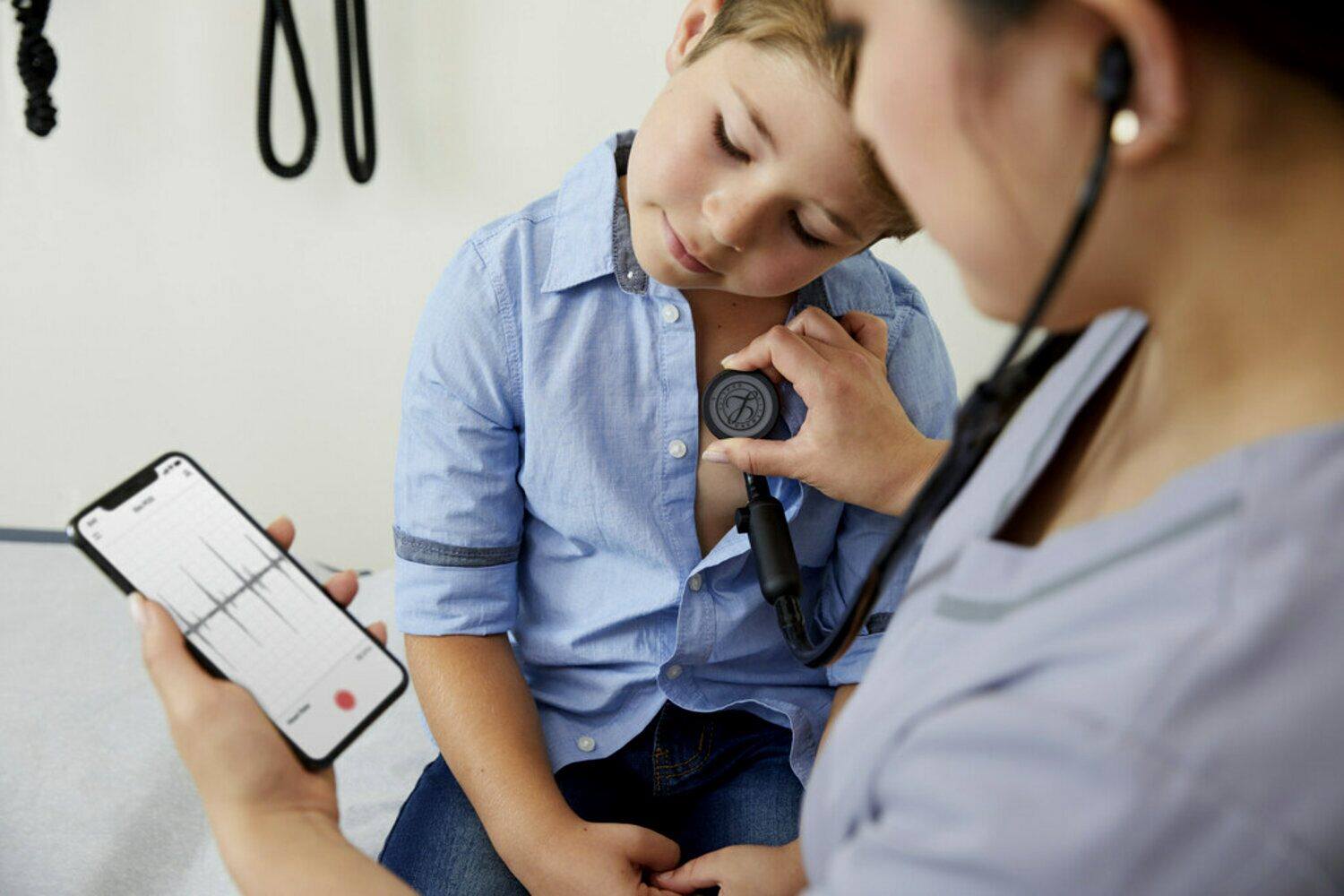
Active Noise Cancellation Helps During Crying & Movement
One of the hardest parts of pediatric auscultation is dealing with movement, fussing, crying, and environmental noise. The CORE’s active noise cancellation (ANC) filters out distractions, helping clinicians focus on what they’re actually trying to hear. ANC helps reduce interference from:
- Crying or fussing
- Background pediatric ward noise
- Monitors and alarms
- Movement rustling
- Caregiver conversation
- Ventilator sounds in NICU
This kind of noise filtering is possible only with an advanced electronic stethoscope, giving clinicians clearer sound even during restless or noisy pediatric exams.
Digital Visualization Is Especially Helpful for Pediatrics
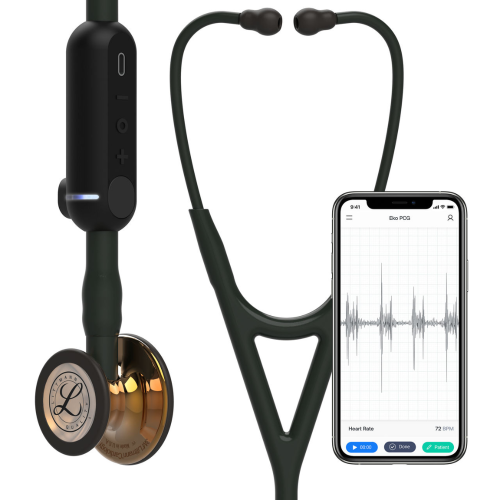
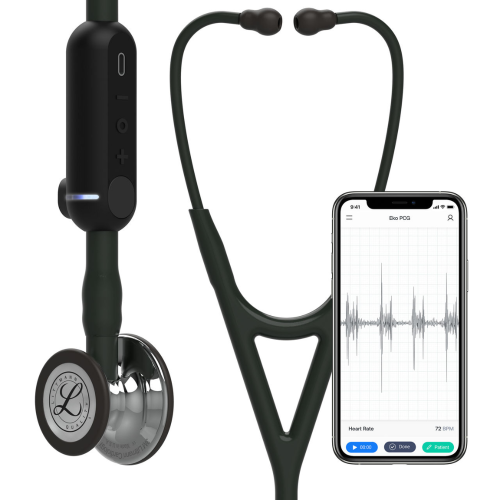
Because pediatric patients often have fast, high-pitched, or subtle sounds, the ability to visualize waveforms through the Eko App can help clinicians, and learners, better interpret what they’re hearing. Visualization supports:
- Recognizing patterns in breath sounds
- Seeing the timing of heart sounds in tachycardic infants
- Comparing waveforms between lung fields
- Teaching parents during education
- Supporting new staff and residents learning pediatric auscultation
Pediatricians often use waveform visualization during teaching on rounds or during consults with learners. This visualization capability is a unique advantage of using a digital stethoscope, especially in pediatric environments where fast or subtle sounds benefit from real-time interpretation.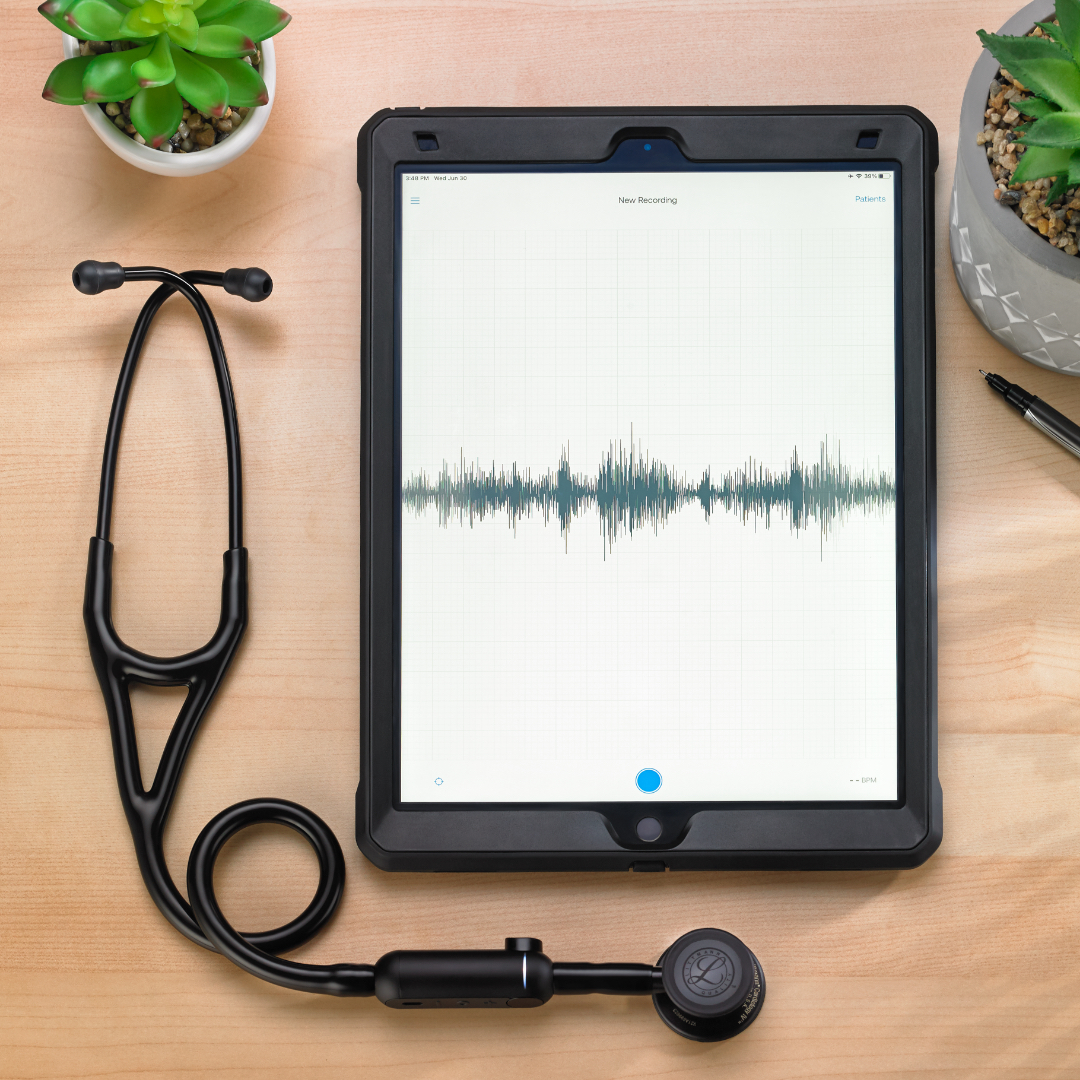
Helps During Neonatal Assessments & NICU Care
Neonatal clinicians need to detect tiny, delicate, and easily missed abnormalities. The CORE’s digital clarity supports:
- Evaluating premature lungs
- Identifying early respiratory distress
- Checking tube placement
- Assessing for pneumothorax
- Detecting apnea-related changes
In NICUs where ventilators, incubators, and alarms create constant noise, the CORE’s ANC significantly improves auscultation quality. These improvements make the CORE one of the few electronic stethoscope models capable of delivering reliable auscultation in high-noise neonatal environments.
Valuable for Pediatricians Who Teach or Supervise Learners
The CORE is an incredible teaching tool for:
- Pediatric residents
- Medical students
- New nurses
- NICU fellows
- Pediatric RT students
Clinical educators often use:
- Recorded lung sounds
- Heart sound waveforms
- Saved case examples
- Shared audio clips
These tools help learners build confidence and speed in pediatric auscultation. Because the CORE is a true digital stethoscope, instructors can demonstrate findings more clearly and support learners with real sound examples.
Is the Littmann CORE Worth It for Pediatric & NICU Clinicians?
For most pediatric professionals, yes. The CORE is especially valuable if you:
- Treat infants or toddlers
- Work in NICU or PICU
- Manage frequent respiratory cases
- Need help hearing subtle abnormalities
- Work in noisy pediatric environments
- Teach residents or students
- Want more accurate breath sound detection
For clinicians who rely heavily on auscultation in neonates and young children, upgrading to a digital stethoscope offers reliable early detection.
Frequently Asked Questions
Can amplification startle sensitive infants?
The amplification affects what the clinician hears through the earpieces, not what the patient experiences. The chestpiece itself doesn't produce sound.
How do you clean it between isolettes in the NICU?
Use standard hospital-approved disinfectant wipes on the chestpiece and tubing, following your unit's infection control protocols. Allow proper contact time before the next use.
What happens if the battery dies mid-shift?
The CORE functions as a traditional acoustic stethoscope when the battery is depleted, so you can continue using it without interruption.
Does it work for extremely premature infants under 1 kg?
Yes, with careful technique. Use the pediatric side with gentle pressure and ensure the chestpiece is warmed to body temperature first.
Is the weight increase noticeable during long shifts?
The CORE is slightly heavier than acoustic models, but most clinicians report adjusting within a few days. The weight difference is minimal compared to the functional benefits.
Can you use it through incubator ports without opening the isolette?
The chestpiece needs direct skin contact for accurate assessment, so you'll still need to access the infant directly. However, the ANC helps reduce incubator noise interference.
How does it compare to other digital stethoscopes?
The CORE balances advanced features with Littmann's proven acoustic quality. It's a middle-tier option in Eko's lineup, more advanced than basic models but less expensive than their most premium devices.
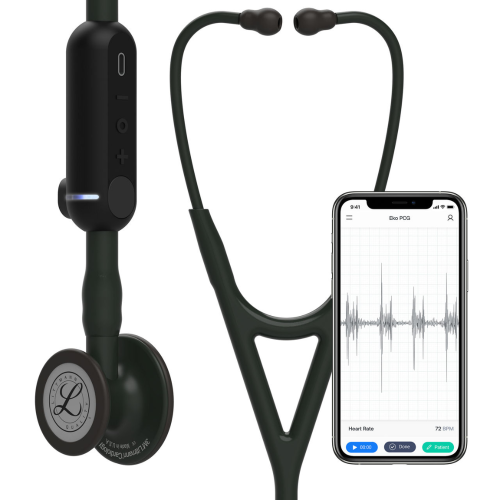

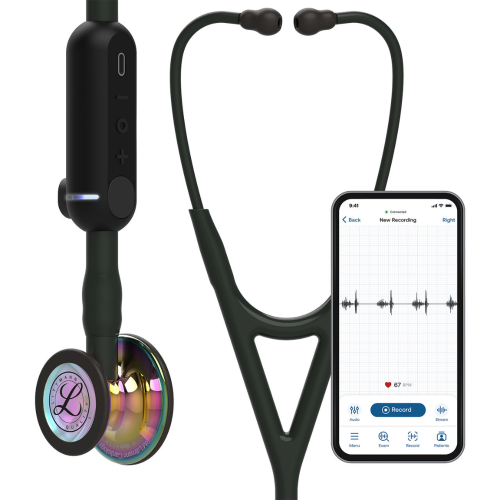
Pediatric and neonatal care require a different level of precision and sensitivity than adult medicine. Children, especially infants and newborns, have smaller chest cavities, softer breath sounds, faster heart rates, and subtle early warning signs that are easy to miss without exceptional auscultation tools. In NICU and PICU environments, even the quietest abnormalities can signal significant clinical concerns.
The Littmann CORE Digital Stethoscope has quickly become a valuable tool for pediatricians, NICU nurses, pediatric RTs, family physicians, and pediatric residents, because it enhances auscultation clarity in the way pediatric care demands. With powerful amplification, active noise cancellation, and digital visualization, the CORE helps clinicians hear the nuances that matter most in small and vulnerable patients. As a modern digital stethoscope, and one of the most advanced electronic stethoscope options available for pediatric and neonatal care, the CORE offers clarity that traditional acoustic tools simply cannot match.
This guide explains why the Littmann CORE is so beneficial in pediatric and neonatal care, and how its features directly support early detection, accurate assessment, and confident clinical decision-making. This distinction is especially important in pediatrics, where a high-performance electronic stethoscope can reeal subtle clues that may be missed with acoustic models.
Why Auscultation in Pediatric & NICU Care Is So Challenging
Unlike adults, pediatric and neonatal patients present unique auscultation challenges, including:
- Very soft breath sounds
- Rapid heart and respiratory rates
- Subtle early lung abnormalities
- Small intercostal spaces
- Higher variability between patients
- Difficulty cooperating during assessments
- Crying and movement noise
- Neonatal chest walls that transmit sound differently
Additionally, pediatric patients often decline quickly, making early detection critically important. A slight change in breath sound or a new murmur can indicate meaningful clinical worsening. Digital clarity can help clinicians catch these changes earlier. This is one of the primary reasons many NICU and pediatric teams are turning to digital stethoscope technology for more reliable early detection.
How the Littmann CORE Supports Pediatric & Neonatal Auscultation
The CORE offers several advantages specifically suited to pediatric and neonatal care.
Amplification Helps You Hear Extremely Soft Breath Sounds
Young children often have breath sounds that are significantly quieter than adults. The CORE’s up to 40x amplification enhances sound intensity without distorting it. Amplification helps clinicians better hear:
- Early inspiratory crackles
- Soft expiratory wheezing
- Stridor and airway turbulence
- Diminished breath sounds
- Subtle grunting
- Delicate newborn breath sounds
This is especially valuable when assessing:
- Premature infants
- Infants with underdeveloped lungs
- Children with bronchiolitis
- Children with pneumonia
- Infants with congenital cardiac or respiratory issues.
This level of detail is one of the strongest advantages of upgrading to a digital stethoscope for pediatric respiratory assessments.
Ideal for Small Chest Cavities & Tiny Intercostal Spaces
The Littmann CORE uses a dual-sided chestpiece, and the pediatric diaphragm is perfectly sized for:
- Infants
- Toddlers
- Preschoolers
- Small school-aged children
- Neonates (when used carefully)
Smaller chestpieces help clinicians navigate:
- Narrow rib spaces
- Tiny thoracic cavities
- Sensitive or fragile skin
- Curved anatomy in infants
The pediatric side can also be converted to an open bell, offering gentle low-frequency sensitivity for certain neonatal assessments. When paired with the precision of a digital stethoscope, these pediatric-sized components help clinicians pick up subtle low-frequency sounds that can be missed with other models.
Active Noise Cancellation Helps During Crying & Movement
One of the hardest parts of pediatric auscultation is dealing with movement, fussing, crying, and environmental noise. The CORE’s active noise cancellation (ANC) filters out distractions, helping clinicians focus on what they’re actually trying to hear. ANC helps reduce interference from:
- Crying or fussing
- Background pediatric ward noise
- Monitors and alarms
- Movement rustling
- Caregiver conversation
- Ventilator sounds in NICU
This kind of noise filtering is possible only with an advanced electronic stethoscope, giving clinicians clearer sound even during restless or noisy pediatric exams.
Digital Visualization Is Especially Helpful for Pediatrics
Because pediatric patients often have fast, high-pitched, or subtle sounds, the ability to visualize waveforms through the Eko App can help clinicians, and learners, better interpret what they’re hearing. Visualization supports:
- Recognizing patterns in breath sounds
- Seeing the timing of heart sounds in tachycardic infants
- Comparing waveforms between lung fields
- Teaching parents during education
- Supporting new staff and residents learning pediatric auscultation
Pediatricians often use waveform visualization during teaching on rounds or during consults with learners. This visualization capability is a unique advantage of using a digital stethoscope, especially in pediatric environments where fast or subtle sounds benefit from real-time interpretation.
Helps During Neonatal Assessments & NICU Care
Neonatal clinicians need to detect tiny, delicate, and easily missed abnormalities. The CORE’s digital clarity supports:
- Evaluating premature lungs
- Identifying early respiratory distress
- Checking tube placement
- Assessing for pneumothorax
- Detecting apnea-related changes
In NICUs where ventilators, incubators, and alarms create constant noise, the CORE’s ANC significantly improves auscultation quality. These improvements make the CORE one of the few electronic stethoscope models capable of delivering reliable auscultation in high-noise neonatal environments.
Valuable for Pediatricians Who Teach or Supervise Learners
The CORE is an incredible teaching tool for:
- Pediatric residents
- Medical students
- New nurses
- NICU fellows
- Pediatric RT students
Clinical educators often use:
- Recorded lung sounds
- Heart sound waveforms
- Saved case examples
- Shared audio clips
These tools help learners build confidence and speed in pediatric auscultation. Because the CORE is a true digital stethoscope, instructors can demonstrate findings more clearly and support learners with real sound examples.
Is the Littmann CORE Worth It for Pediatric & NICU Clinicians?
For most pediatric professionals, yes. The CORE is especially valuable if you:
- Treat infants or toddlers
- Work in NICU or PICU
- Manage frequent respiratory cases
- Need help hearing subtle abnormalities
- Work in noisy pediatric environments
- Teach residents or students
- Want more accurate breath sound detection
For clinicians who rely heavily on auscultation in neonates and young children, upgrading to a digital stethoscope offers reliable early detection.
Frequently Asked Questions
Can amplification startle sensitive infants?
The amplification affects what the clinician hears through the earpieces, not what the patient experiences. The chestpiece itself doesn't produce sound.
How do you clean it between isolettes in the NICU?
Use standard hospital-approved disinfectant wipes on the chestpiece and tubing, following your unit's infection control protocols. Allow proper contact time before the next use.
What happens if the battery dies mid-shift?
The CORE functions as a traditional acoustic stethoscope when the battery is depleted, so you can continue using it without interruption.
Does it work for extremely premature infants under 1 kg?
Yes, with careful technique. Use the pediatric side with gentle pressure and ensure the chestpiece is warmed to body temperature first.
Is the weight increase noticeable during long shifts?
The CORE is slightly heavier than acoustic models, but most clinicians report adjusting within a few days. The weight difference is minimal compared to the functional benefits.
Can you use it through incubator ports without opening the isolette?
The chestpiece needs direct skin contact for accurate assessment, so you'll still need to access the infant directly. However, the ANC helps reduce incubator noise interference.
How does it compare to other digital stethoscopes?
The CORE balances advanced features with Littmann's proven acoustic quality. It's a middle-tier option in Eko's lineup, more advanced than basic models but less expensive than their most premium devices.
