
.png)
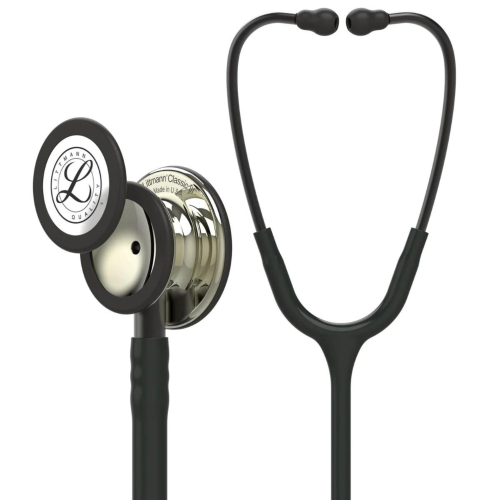
A dependable, high-performance stethoscope for everyday clinical environments.
Non-Critical Care Still Demands High-Quality Auscultation
Non-critical care does not mean low-importance care. In clinics, general wards, urgent care centers, and outpatient settings, clinicians make countless diagnostic decisions every day based on what they hear through their stethoscope.
The Littmann Classic III Stethoscope has become one of the most widely used stethoscopes in general clinical practice because it delivers clear, consistent acoustics, exceptional comfort, and long-term durability, without the added bulk or cost of cardiology-grade models.
This guide explains what defines a non-critical care stethoscope and why the Classic III continues to be the preferred choice for everyday patient assessment.
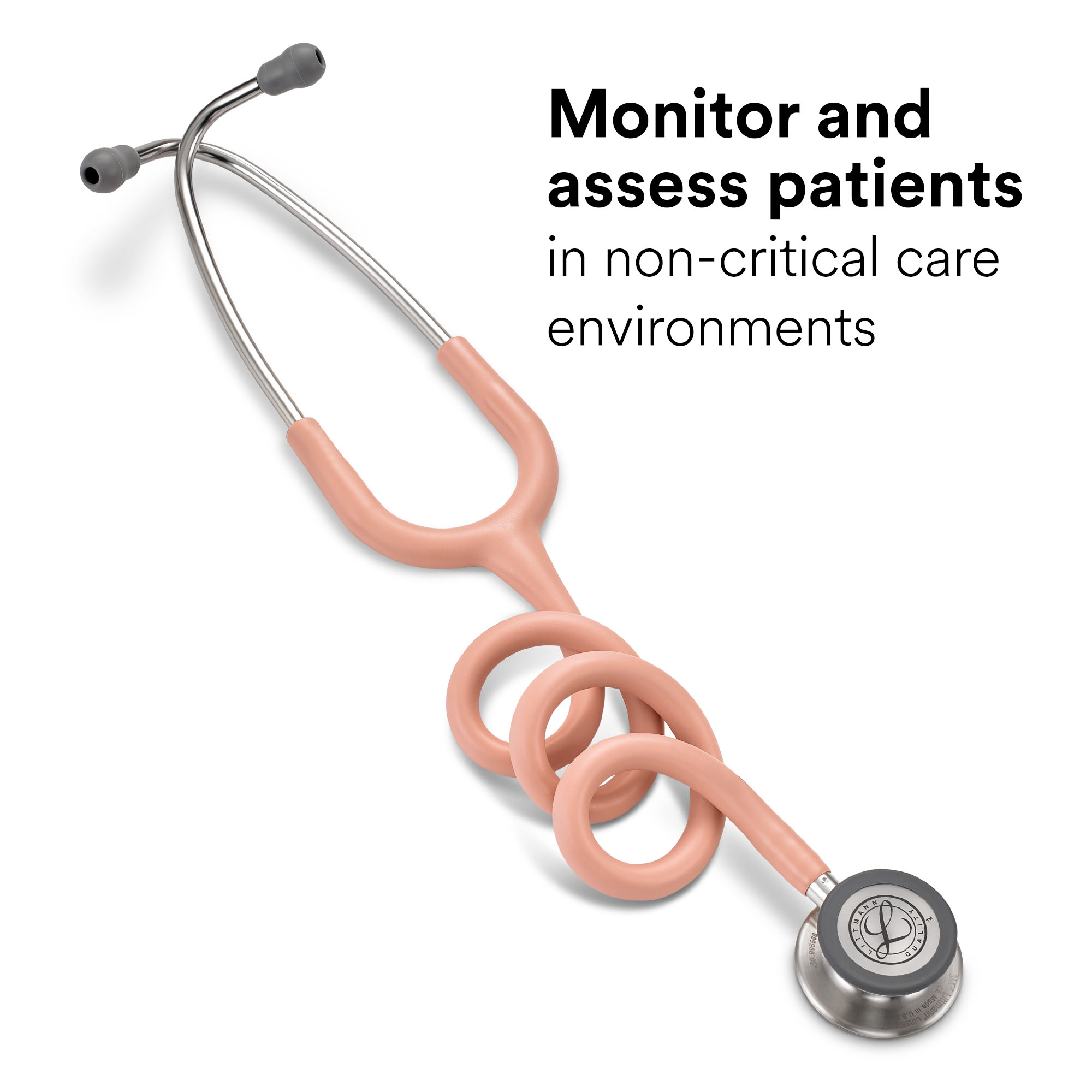
What Makes an Excellent General-Purpose Clinical Stethoscope?
A general-purpose clinical stethoscope is designed for routine physical assessments across diverse patient populations and settings. It prioritizes:
- Reliable heart and lung sound clarity for common assessments
- Efficient workflow during routine exams
- Comfort for repeated, all-day use
- Versatility across adult and pediatric patients
- Durability for frequent clinical use
- Cost-effectiveness compared to specialized cardiology models
The Classic III meets all of these needs while delivering professional-level acoustic performance suitable for the majority of clinical encounters.
Ideal Clinical Environments for the Classic III
The Littmann Classic III is ideally suited for healthcare settings where clinicians perform frequent, routine auscultation, including:
- Medical offices and family practices
- General hospital wards
- Ambulatory and outpatient clinics
- Urgent care centers
- OB/GYN and women’s health clinics
- Long-term care and rehabilitation settings
In these environments, clinicians need speed, clarity, and comfort, exactly where the Classic III excels.
Acoustic Performance in Everyday Practice
The Classic III offers acoustic sensitivity well-suited for routine clinical assessments in moderately quiet to moderately noisy environments such as exam rooms, shared hospital rooms, or busy outpatient clinics.
What You Can Reliably Hear with the Classic III:
Cardiac assessment:
- Normal S1 and S2 heart sounds
- Common systolic murmurs (mitral regurgitation, aortic stenosis)
- Irregular rhythms (atrial fibrillation, frequent ectopy)
- Prominent S3 gallops (though subtle S3 may be challenging)
Pulmonary assessment:
- Normal breath sounds and symmetry
- Crackles (fine and coarse)
- Wheezes and rhonchi
- Diminished or absent breath sounds
- Stridor
Vascular assessment:
- Korotkoff sounds for blood pressure measurement
- Prominent bruits (carotid, renal, femoral)
Abdominal assessment:
- Bowel sound presence and character
What May Be Challenging:
- Very subtle S3 and S4 gallops (even experienced clinicians may miss these)
- Faint diastolic murmurs
- Sounds in patients with significant obesity or thick chest walls
- Assessments in extremely loud environments (active resuscitations, noisy ICU bays)
Clinical reality: The Classic III handles the vast majority of routine auscultation needs confidently. When you encounter findings at the edge of audibility, clinical context and additional diagnostic tools (ECG, echo, chest X-ray) guide next steps—as they should regardless of stethoscope quality.
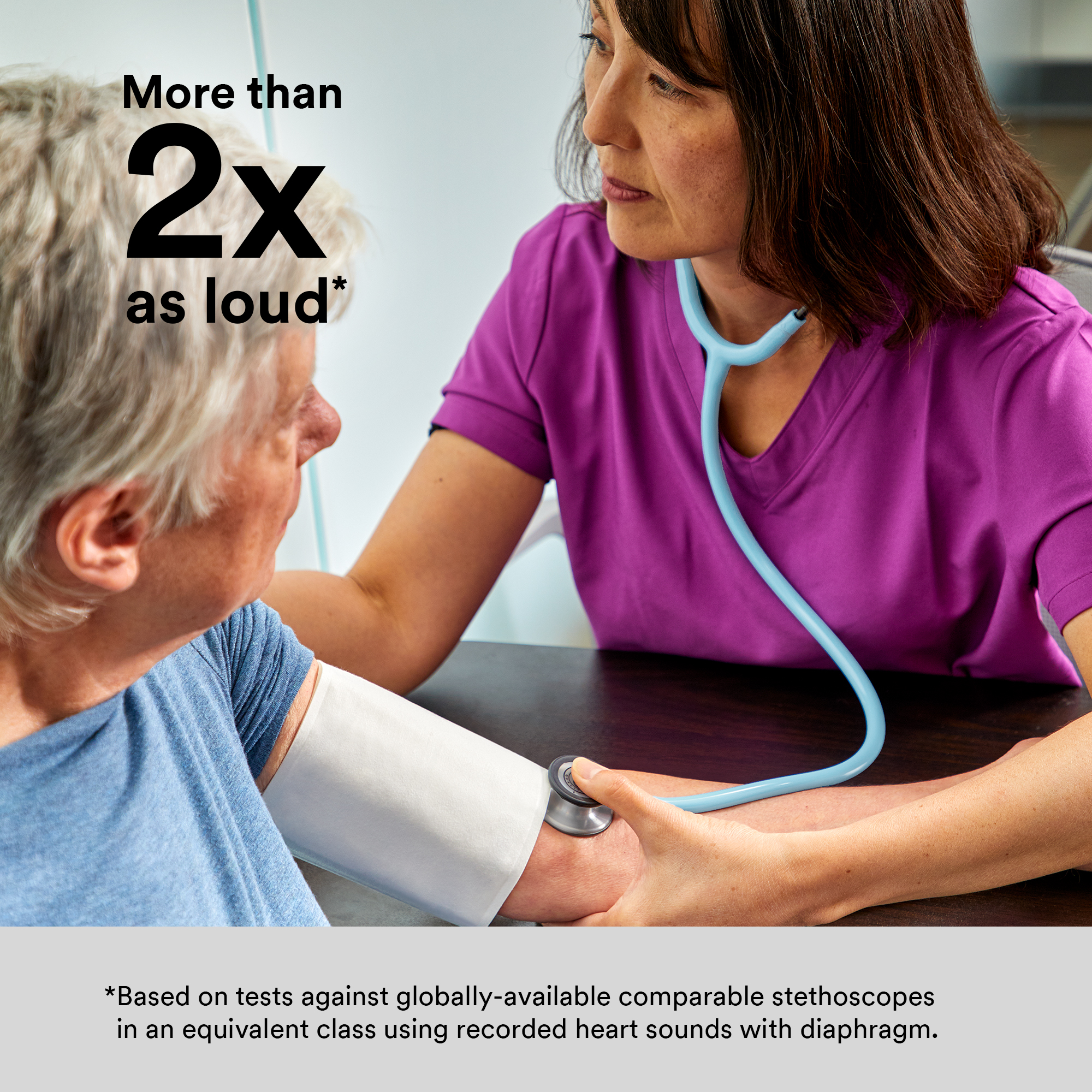
Hearing Subtle Heart & Lung Sounds Reliably
One of the reasons the Classic III stands out is its ability to transmit subtle sounds more effectively than basic stethoscopes. Clinicians can more reliably hear:
- Normal and abnormal heart sounds
- Breath sounds and airflow changes
- Korotkoff sounds during BP measurement
This clarity supports earlier recognition of changes in patient status.
Designed for Busy, High-Volume Patient Settings
In general clinical practice, efficiency directly impacts patient throughput and clinician workload. The Classic III's tunable diaphragm technology streamlines auscultation by allowing clinicians to hear both low- and high-frequency sounds simply by adjusting pressure—no need to flip the chestpiece or reposition.
Practical workflow benefits:
In a typical patient encounter:
- Place diaphragm on chest with light pressure (low-frequency mode)
- Listen to heart sounds, assess for murmurs or gallops
- Increase pressure (high-frequency mode) for clearer S1/S2 splitting
- Move to lung fields—firm pressure captures high-frequency crackles and wheezes
- Adjust pressure as needed without interrupting examination flow
Time saved: Approximately 5-10 seconds per patient by eliminating chestpiece flipping. Over 20-30 patients per day, this adds up to meaningful efficiency gains.
Especially valuable in:
- Walk-in and urgent care clinics (high patient volume)
- Family practice with mixed adult/pediatric schedules
- General hospital wards with frequent routine assessments
- Occupational health screenings
- Pre-operative assessments
The pediatric side (smaller diaphragm) provides appropriate sizing for children and allows bell function with the non-chill sleeve, making the Classic III truly versatile across patient populations.
How the Classic III Supports Diagnostic Confidence
When clinicians trust what they hear, they can act more decisively. The Classic III supports diagnostic confidence by delivering:
- Consistent sound transmission
- Reduced listening fatigue
- Reliable performance across patients and settings
This reliability helps clinicians focus on patient care rather than second-guessing their tools.

Why Professionals Choose the Classic III Over Entry-Level Models
While entry-level stethoscopes may be sufficient for basic listening, many clinicians quickly outgrow them. Compared to basic models, the Classic III offers:
- Higher acoustic sensitivity
- Dual-sided chestpiece for adult and pediatric patients
- Better durability and longevity
- Greater comfort during long shifts
For many professionals, it represents the ideal step up without moving into specialized cardiology stethoscopes.
Classic III vs. Cardiology IV: Which Should You Choose?
Many clinicians wonder whether to invest in the Classic III or upgrade to the Cardiology IV. Here's an honest comparison:
Choose the Classic III If:
✓ You work primarily in outpatient, clinic, or general ward settings
✓ You perform mostly routine cardiac and lung assessments
✓ You're not frequently assessing subtle murmurs or low-frequency cardiac sounds
✓ Budget is a consideration (Classic III costs $60-80 less)
✓ You want excellent acoustics without premium features you won't regularly use
✓ You're a student or early-career clinician building your toolkit
Consider Upgrading to Cardiology IV If:
✓ You work in ICU, ED, cardiac units, or other high-acuity settings
✓ You frequently need to detect S3/S4 gallops or subtle murmurs
✓ You work in consistently noisy environments where maximum acoustic performance matters
✓ Low-frequency cardiac sound detection is critical to your practice
✓ You're a cardiologist, intensivist, or frequently manage complex cardiac patients
✓ Budget allows and you want the best acoustic performance available
The Honest Truth:
For most general clinical practice (family medicine, internal medicine clinics, general hospital wards, urgent care), the Classic III provides excellent acoustic performance that meets clinical needs reliably. The Cardiology IV offers incremental acoustic improvements that matter most in specialized or high-acuity settings.
Don't overspend on features you won't use. If 90% of your assessments are routine heart/lung checks in relatively quiet environments, the Classic III is an excellent choice that will serve you well for 5-7+ years.
Do invest in the Cardiology IV if you regularly encounter situations where that extra acoustic sensitivity makes a clinical difference.
Realistic Limitations: What the Classic III Won't Do
The Classic III is an excellent general-purpose stethoscope, but it's important to understand its limitations:
Acoustic Performance Constraints:
❌ Not optimized for very subtle low-frequency sounds - S3 and S4 gallops are challenging to detect even with the Cardiology IV; the Classic III makes these even more difficult
❌ Less effective in extremely noisy environments - ICU/ED noise levels may overwhelm the Classic III more than premium models
❌ No amplification or digital features - If you have hearing difficulties or need recording capabilities, consider the Littmann CORE instead
❌ Single-frequency tunable diaphragm - Unlike the Cardiology IV's dual-sided tunability, the Classic III has one tunable side and one traditional bell side
When Classic III May Not Be Sufficient:
- Cardiology subspecialty practice - Frequent subtle murmur assessment benefits from Cardiology IV's enhanced acoustics
- Neonatal/NICU settings - Specialized neonatal stethoscopes provide better size and acoustic match
- Significant hearing loss - Digital stethoscopes with amplification more appropriate
- Research or teaching requiring recordings - Digital models offer recording capabilities
This doesn't mean the Classic III is inadequate—it means understanding which tool best matches your specific clinical needs. For general practice, the Classic III excels. For specialized scenarios, other models may be better suited.
Who the Classic III Is Best Suited For
The Littmann Classic III is an excellent choice for clinicians who:
- Work primarily in non-critical care environments
- Perform frequent routine assessments
- Need one stethoscope for adult and pediatric patients
- Want professional performance without unnecessary complexity
When a Higher-Acuity Stethoscope May Be Needed
While the Classic III is highly capable, some clinicians may require a different Littmann model:
- Cardiology or critical care specialists may benefit from the Cardiology IV
- Clinicians seeking amplification or digital features may prefer the Littmann CORE
- Neonatal providers should consider neonatal-specific Littmann models
SurgoMed can help match you with the right stethoscope for your clinical needs.
Final Assessment: Is the Classic III Right for You?
The Littmann Classic III has become one of the most widely used stethoscopes in general clinical practice because it delivers what everyday clinicians need: clear acoustics, lasting comfort, dependable performance, and excellent value.
The Classic III Excels When:
- You perform mostly routine cardiac and pulmonary assessments
- You work in outpatient, clinic, or general ward settings
- You need one versatile stethoscope for diverse patient populations
- You want professional-grade acoustics without premium pricing
- Durability and long-term reliability matter to you
Consider Alternatives When:
- You work primarily in high-acuity critical care settings (Cardiology IV better suited)
- You have hearing difficulties requiring amplification (Littmann CORE more appropriate)
- You specialize in neonatal care (neonatal-specific models available)
- You frequently assess very subtle cardiac findings (Cardiology IV offers advantages)
For the majority of clinicians in family medicine, internal medicine, urgent care, general hospital medicine, and outpatient specialties, the Classic III represents the optimal balance of performance, versatility, durability, and value.
Explore Littmann Classic III stethoscopes at SurgoMed and choose the color and finish that fits your clinical practice and personal style.
Common Questions About the Littmann Classic III
Is the Classic III good enough for medical students and residents?
Yes, absolutely. The Classic III provides professional-grade acoustics suitable for learning and practicing auscultation skills. Many medical schools and residency programs recommend it as the standard stethoscope for trainees.
However: If you're entering a cardiology, critical care, or emergency medicine residency, you may eventually want to upgrade to a Cardiology IV for enhanced low-frequency sensitivity. Start with the Classic III during medical school and reassess based on your specialty choice during residency.
How does the Classic III compare to the older Classic II or Classic II S.E.?
The Classic III offers significantly better acoustic performance than the Classic II models:
- Improved diaphragm design for better sound transmission
- Tunable diaphragm technology (Classic II requires flipping)
- Enhanced low-frequency response
- Better overall durability
If you currently own a Classic II: Upgrading to Classic III is worthwhile. The acoustic and workflow improvements are noticeable.
Will the Classic III work well for blood pressure measurement?
Yes. The Classic III provides clear Korotkoff sound transmission suitable for accurate manual blood pressure measurement. The bell side (or light pressure on the tunable diaphragm) works well for this purpose.
For patients with difficult-to-hear BP sounds (obesity, very low BP, high ambient noise), any stethoscope faces challenges—proper cuff size and quiet environment matter more than stethoscope model in these cases.
How long does a Classic III last with regular use?
With proper care: 5-7+ years of daily clinical use. Many clinicians report 8-10 years before needing replacement.
Factors affecting lifespan:
- Frequency of cleaning (necessary but gradually wears tubing)
- Storage conditions (heat exposure shortens tubing life)
- Physical stress (dropping, excessive coiling damages components)
Replacement parts available: Eartips, diaphragms, and non-chill sleeves are replaceable and inexpensive, extending the stethoscope's useful life.
Should I get the Classic III or pay extra for the Cardiology IV?
Choose Classic III if: You work in general practice, clinics, or general hospital wards and perform mostly routine assessments. The $60-80 savings is significant, and the Classic III meets your clinical needs.
Upgrade to Cardiology IV if: You work in high-acuity settings (ICU, ED, cardiology), frequently assess subtle cardiac findings, or work in consistently noisy environments where maximum acoustic performance matters.
For most clinicians: The Classic III is the smarter purchase—excellent performance at a better value.
Can I use the Classic III in the ICU or ED if that's where I work?
You can, but it's not ideal. The Classic III will work adequately for many ICU/ED assessments, but:
- Background noise may overwhelm subtle findings more than with Cardiology IV
- Low-frequency cardiac sounds (S3, S4) harder to detect
- You may second-guess findings more frequently
If you work primarily in high-acuity settings: Invest in the Cardiology IV. If you occasionally cover ICU/ED but work mostly in lower-acuity areas, the Classic III is sufficient.
What colors and finishes are available?
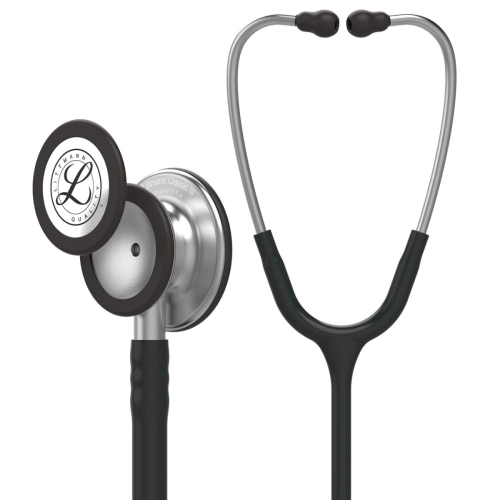
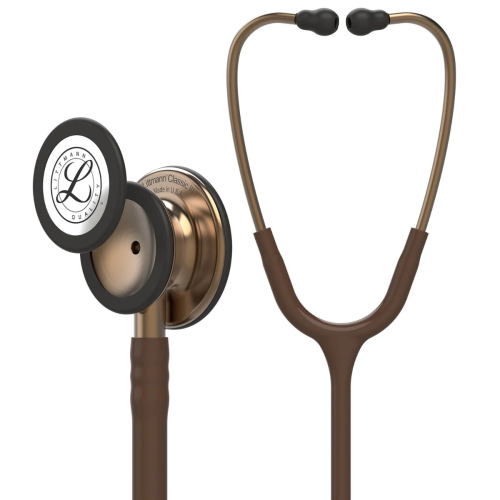
The Classic III comes in a wide variety of tubing colors and chestpiece finishes:
Popular combinations:
- Black tubing + Standard chestpiece (most common)
- Caribbean blue, raspberry, navy, burgundy (high visibility)
- Smoke finish for modern aesthetic
- Various colored tubing options
All finishes provide identical acoustic performance, choose based on personal preference and visibility needs. Explore Littmann Classic III stethoscopes at SurgoMed and choose the model designed to support your daily clinical practice.

A dependable, high-performance stethoscope for everyday clinical environments.
Non-Critical Care Still Demands High-Quality Auscultation
Non-critical care does not mean low-importance care. In clinics, general wards, urgent care centers, and outpatient settings, clinicians make countless diagnostic decisions every day based on what they hear through their stethoscope.
The Littmann Classic III Stethoscope has become one of the most widely used stethoscopes in general clinical practice because it delivers clear, consistent acoustics, exceptional comfort, and long-term durability, without the added bulk or cost of cardiology-grade models.
This guide explains what defines a non-critical care stethoscope and why the Classic III continues to be the preferred choice for everyday patient assessment.
What Makes an Excellent General-Purpose Clinical Stethoscope?
A general-purpose clinical stethoscope is designed for routine physical assessments across diverse patient populations and settings. It prioritizes:
- Reliable heart and lung sound clarity for common assessments
- Efficient workflow during routine exams
- Comfort for repeated, all-day use
- Versatility across adult and pediatric patients
- Durability for frequent clinical use
- Cost-effectiveness compared to specialized cardiology models
The Classic III meets all of these needs while delivering professional-level acoustic performance suitable for the majority of clinical encounters.
Ideal Clinical Environments for the Classic III
The Littmann Classic III is ideally suited for healthcare settings where clinicians perform frequent, routine auscultation, including:
- Medical offices and family practices
- General hospital wards
- Ambulatory and outpatient clinics
- Urgent care centers
- OB/GYN and women’s health clinics
- Long-term care and rehabilitation settings
In these environments, clinicians need speed, clarity, and comfort, exactly where the Classic III excels.
Acoustic Performance in Everyday Practice
The Classic III offers acoustic sensitivity well-suited for routine clinical assessments in moderately quiet to moderately noisy environments such as exam rooms, shared hospital rooms, or busy outpatient clinics.
What You Can Reliably Hear with the Classic III:
Cardiac assessment:
- Normal S1 and S2 heart sounds
- Common systolic murmurs (mitral regurgitation, aortic stenosis)
- Irregular rhythms (atrial fibrillation, frequent ectopy)
- Prominent S3 gallops (though subtle S3 may be challenging)
Pulmonary assessment:
- Normal breath sounds and symmetry
- Crackles (fine and coarse)
- Wheezes and rhonchi
- Diminished or absent breath sounds
- Stridor
Vascular assessment:
- Korotkoff sounds for blood pressure measurement
- Prominent bruits (carotid, renal, femoral)
Abdominal assessment:
- Bowel sound presence and character
What May Be Challenging:
- Very subtle S3 and S4 gallops (even experienced clinicians may miss these)
- Faint diastolic murmurs
- Sounds in patients with significant obesity or thick chest walls
- Assessments in extremely loud environments (active resuscitations, noisy ICU bays)
Clinical reality: The Classic III handles the vast majority of routine auscultation needs confidently. When you encounter findings at the edge of audibility, clinical context and additional diagnostic tools (ECG, echo, chest X-ray) guide next steps—as they should regardless of stethoscope quality.
Hearing Subtle Heart & Lung Sounds Reliably
One of the reasons the Classic III stands out is its ability to transmit subtle sounds more effectively than basic stethoscopes. Clinicians can more reliably hear:
- Normal and abnormal heart sounds
- Breath sounds and airflow changes
- Korotkoff sounds during BP measurement
This clarity supports earlier recognition of changes in patient status.
Designed for Busy, High-Volume Patient Settings
In general clinical practice, efficiency directly impacts patient throughput and clinician workload. The Classic III's tunable diaphragm technology streamlines auscultation by allowing clinicians to hear both low- and high-frequency sounds simply by adjusting pressure—no need to flip the chestpiece or reposition.
Practical workflow benefits:
In a typical patient encounter:
- Place diaphragm on chest with light pressure (low-frequency mode)
- Listen to heart sounds, assess for murmurs or gallops
- Increase pressure (high-frequency mode) for clearer S1/S2 splitting
- Move to lung fields—firm pressure captures high-frequency crackles and wheezes
- Adjust pressure as needed without interrupting examination flow
Time saved: Approximately 5-10 seconds per patient by eliminating chestpiece flipping. Over 20-30 patients per day, this adds up to meaningful efficiency gains.
Especially valuable in:
- Walk-in and urgent care clinics (high patient volume)
- Family practice with mixed adult/pediatric schedules
- General hospital wards with frequent routine assessments
- Occupational health screenings
- Pre-operative assessments
The pediatric side (smaller diaphragm) provides appropriate sizing for children and allows bell function with the non-chill sleeve, making the Classic III truly versatile across patient populations.
How the Classic III Supports Diagnostic Confidence
When clinicians trust what they hear, they can act more decisively. The Classic III supports diagnostic confidence by delivering:
- Consistent sound transmission
- Reduced listening fatigue
- Reliable performance across patients and settings
This reliability helps clinicians focus on patient care rather than second-guessing their tools.
Why Professionals Choose the Classic III Over Entry-Level Models
While entry-level stethoscopes may be sufficient for basic listening, many clinicians quickly outgrow them. Compared to basic models, the Classic III offers:
- Higher acoustic sensitivity
- Dual-sided chestpiece for adult and pediatric patients
- Better durability and longevity
- Greater comfort during long shifts
For many professionals, it represents the ideal step up without moving into specialized cardiology stethoscopes.
Classic III vs. Cardiology IV: Which Should You Choose?
Many clinicians wonder whether to invest in the Classic III or upgrade to the Cardiology IV. Here's an honest comparison:
Choose the Classic III If:
✓ You work primarily in outpatient, clinic, or general ward settings
✓ You perform mostly routine cardiac and lung assessments
✓ You're not frequently assessing subtle murmurs or low-frequency cardiac sounds
✓ Budget is a consideration (Classic III costs $60-80 less)
✓ You want excellent acoustics without premium features you won't regularly use
✓ You're a student or early-career clinician building your toolkit
Consider Upgrading to Cardiology IV If:
✓ You work in ICU, ED, cardiac units, or other high-acuity settings
✓ You frequently need to detect S3/S4 gallops or subtle murmurs
✓ You work in consistently noisy environments where maximum acoustic performance matters
✓ Low-frequency cardiac sound detection is critical to your practice
✓ You're a cardiologist, intensivist, or frequently manage complex cardiac patients
✓ Budget allows and you want the best acoustic performance available
The Honest Truth:
For most general clinical practice (family medicine, internal medicine clinics, general hospital wards, urgent care), the Classic III provides excellent acoustic performance that meets clinical needs reliably. The Cardiology IV offers incremental acoustic improvements that matter most in specialized or high-acuity settings.
Don't overspend on features you won't use. If 90% of your assessments are routine heart/lung checks in relatively quiet environments, the Classic III is an excellent choice that will serve you well for 5-7+ years.
Do invest in the Cardiology IV if you regularly encounter situations where that extra acoustic sensitivity makes a clinical difference.
Realistic Limitations: What the Classic III Won't Do
The Classic III is an excellent general-purpose stethoscope, but it's important to understand its limitations:
Acoustic Performance Constraints:
❌ Not optimized for very subtle low-frequency sounds - S3 and S4 gallops are challenging to detect even with the Cardiology IV; the Classic III makes these even more difficult
❌ Less effective in extremely noisy environments - ICU/ED noise levels may overwhelm the Classic III more than premium models
❌ No amplification or digital features - If you have hearing difficulties or need recording capabilities, consider the Littmann CORE instead
❌ Single-frequency tunable diaphragm - Unlike the Cardiology IV's dual-sided tunability, the Classic III has one tunable side and one traditional bell side
When Classic III May Not Be Sufficient:
- Cardiology subspecialty practice - Frequent subtle murmur assessment benefits from Cardiology IV's enhanced acoustics
- Neonatal/NICU settings - Specialized neonatal stethoscopes provide better size and acoustic match
- Significant hearing loss - Digital stethoscopes with amplification more appropriate
- Research or teaching requiring recordings - Digital models offer recording capabilities
This doesn't mean the Classic III is inadequate—it means understanding which tool best matches your specific clinical needs. For general practice, the Classic III excels. For specialized scenarios, other models may be better suited.
Who the Classic III Is Best Suited For
The Littmann Classic III is an excellent choice for clinicians who:
- Work primarily in non-critical care environments
- Perform frequent routine assessments
- Need one stethoscope for adult and pediatric patients
- Want professional performance without unnecessary complexity
When a Higher-Acuity Stethoscope May Be Needed
While the Classic III is highly capable, some clinicians may require a different Littmann model:
- Cardiology or critical care specialists may benefit from the Cardiology IV
- Clinicians seeking amplification or digital features may prefer the Littmann CORE
- Neonatal providers should consider neonatal-specific Littmann models
SurgoMed can help match you with the right stethoscope for your clinical needs.
Final Assessment: Is the Classic III Right for You?
The Littmann Classic III has become one of the most widely used stethoscopes in general clinical practice because it delivers what everyday clinicians need: clear acoustics, lasting comfort, dependable performance, and excellent value.
The Classic III Excels When:
- You perform mostly routine cardiac and pulmonary assessments
- You work in outpatient, clinic, or general ward settings
- You need one versatile stethoscope for diverse patient populations
- You want professional-grade acoustics without premium pricing
- Durability and long-term reliability matter to you
Consider Alternatives When:
- You work primarily in high-acuity critical care settings (Cardiology IV better suited)
- You have hearing difficulties requiring amplification (Littmann CORE more appropriate)
- You specialize in neonatal care (neonatal-specific models available)
- You frequently assess very subtle cardiac findings (Cardiology IV offers advantages)
For the majority of clinicians in family medicine, internal medicine, urgent care, general hospital medicine, and outpatient specialties, the Classic III represents the optimal balance of performance, versatility, durability, and value.
Explore Littmann Classic III stethoscopes at SurgoMed and choose the color and finish that fits your clinical practice and personal style.
Common Questions About the Littmann Classic III
Is the Classic III good enough for medical students and residents?
Yes, absolutely. The Classic III provides professional-grade acoustics suitable for learning and practicing auscultation skills. Many medical schools and residency programs recommend it as the standard stethoscope for trainees.
However: If you're entering a cardiology, critical care, or emergency medicine residency, you may eventually want to upgrade to a Cardiology IV for enhanced low-frequency sensitivity. Start with the Classic III during medical school and reassess based on your specialty choice during residency.
How does the Classic III compare to the older Classic II or Classic II S.E.?
The Classic III offers significantly better acoustic performance than the Classic II models:
- Improved diaphragm design for better sound transmission
- Tunable diaphragm technology (Classic II requires flipping)
- Enhanced low-frequency response
- Better overall durability
If you currently own a Classic II: Upgrading to Classic III is worthwhile. The acoustic and workflow improvements are noticeable.
Will the Classic III work well for blood pressure measurement?
Yes. The Classic III provides clear Korotkoff sound transmission suitable for accurate manual blood pressure measurement. The bell side (or light pressure on the tunable diaphragm) works well for this purpose.
For patients with difficult-to-hear BP sounds (obesity, very low BP, high ambient noise), any stethoscope faces challenges—proper cuff size and quiet environment matter more than stethoscope model in these cases.
How long does a Classic III last with regular use?
With proper care: 5-7+ years of daily clinical use. Many clinicians report 8-10 years before needing replacement.
Factors affecting lifespan:
- Frequency of cleaning (necessary but gradually wears tubing)
- Storage conditions (heat exposure shortens tubing life)
- Physical stress (dropping, excessive coiling damages components)
Replacement parts available: Eartips, diaphragms, and non-chill sleeves are replaceable and inexpensive, extending the stethoscope's useful life.
Should I get the Classic III or pay extra for the Cardiology IV?
Choose Classic III if: You work in general practice, clinics, or general hospital wards and perform mostly routine assessments. The $60-80 savings is significant, and the Classic III meets your clinical needs.
Upgrade to Cardiology IV if: You work in high-acuity settings (ICU, ED, cardiology), frequently assess subtle cardiac findings, or work in consistently noisy environments where maximum acoustic performance matters.
For most clinicians: The Classic III is the smarter purchase—excellent performance at a better value.
Can I use the Classic III in the ICU or ED if that's where I work?
You can, but it's not ideal. The Classic III will work adequately for many ICU/ED assessments, but:
- Background noise may overwhelm subtle findings more than with Cardiology IV
- Low-frequency cardiac sounds (S3, S4) harder to detect
- You may second-guess findings more frequently
If you work primarily in high-acuity settings: Invest in the Cardiology IV. If you occasionally cover ICU/ED but work mostly in lower-acuity areas, the Classic III is sufficient.
What colors and finishes are available?
The Classic III comes in a wide variety of tubing colors and chestpiece finishes:
Popular combinations:
- Black tubing + Standard chestpiece (most common)
- Caribbean blue, raspberry, navy, burgundy (high visibility)
- Smoke finish for modern aesthetic
- Various colored tubing options
All finishes provide identical acoustic performance, choose based on personal preference and visibility needs. Explore Littmann Classic III stethoscopes at SurgoMed and choose the model designed to support your daily clinical practice.
